Everest Season at Risk as 30m Glacier Block Blocks Main Route
Everest Season at Risk as Glacier Block Blocks Route

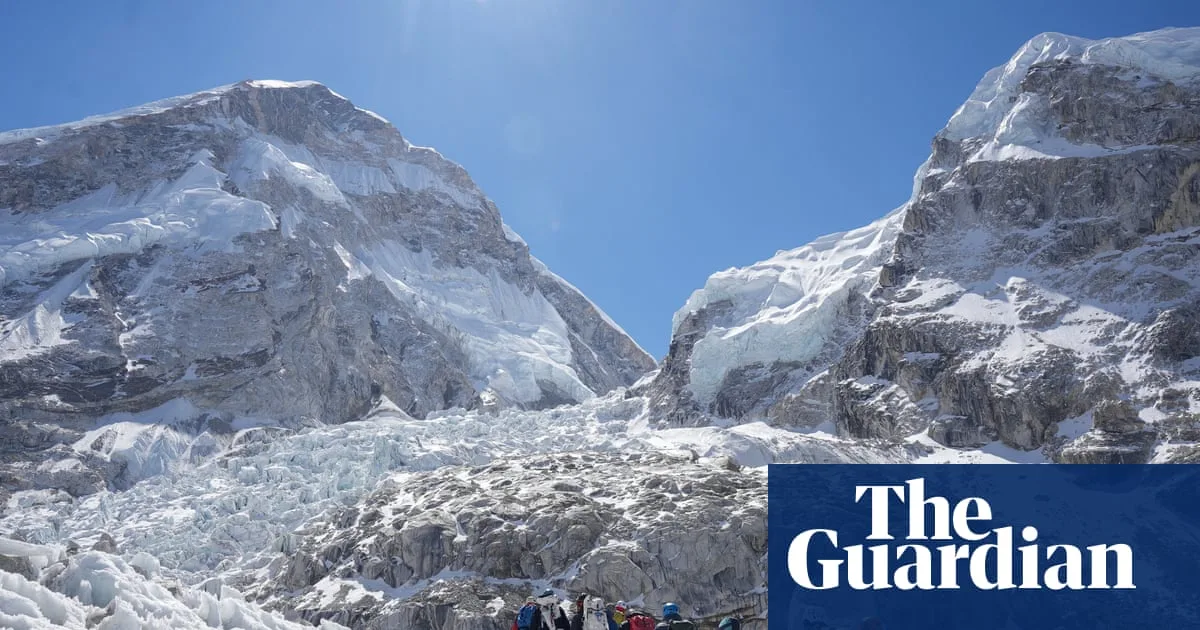
A colossal block of glacier, standing 30 metres tall, is obstructing the primary route to Mount Everest just as the peak climbing season commences, prompting concerns over hazardous congestion on the world’s tallest summit.

Obstruction on the Khumbu Icefall

The ice block, formally termed a serac, is situated nearly 600 metres below Camp 1 on the Nepalese side of the mountain, as reported by the BBC. Icefall doctors—specialist Sherpas tasked with installing ropes and ladders on the lower segment of the route—have spent days attempting to locate a bypass but have been unsuccessful.

“We haven’t found artificial ways to melt it so far, so we don’t have any options other than to wait for it melting and crumbling itself,” stated Tshering Tenzing Sherpa, the base camp coordinator for the Sagarmatha Pollution Control Committee, in an interview with the BBC.

Wide Pickt banner — collaborative shopping lists app for Telegram, phone mockup with grocery list

Delays Compress Climbing Window

Typically by late April, the route would be established as far as Camp 3. However, the icefall doctors arrived three weeks ago and remain stalled well below Camp 1. Sherpas indicate that the serac’s lower section is already weakening, and they anticipate its collapse within days. Nevertheless, the delay is significantly compressing the climbing window; favourable weather on Everest is usually reliable only until the end of May.

“This is not something you can fix or move,” Himal Gautam, a spokesperson for Nepal’s Department of Tourism, told reporters. “It’s natural. We can only wait and assess.”

Potential Airlift Solution

The tourism department is exploring the possibility of airlifting rope-fixing teams and equipment directly to Camp 2 to open the upper route while awaiting the clearance of the obstruction below. “We will wait for the ice to melt at the place where there is an obstruction and work there when everything is safe,” Ram Krishna Lamichhane, the department’s director general, was quoted as saying by the BBC.

Concerns Over Crowding

Prominent Nepali climber and photographer Purnima Shrestha, currently acclimatising at base camp ahead of what would be her sixth Everest summit, voiced concerns that the delay could exacerbate overcrowding. “We usually climb between Camp 1, Camp 2 and Camp 3 back and forth during this acclimatising process,” she told the BBC. “Delays in the opening of the route have added concerns of possible traffic jams to the peak this year.” Even if the route opens soon, she warned, the climbing window could be narrow, forcing large numbers of climbers into a shorter period.

Permit System Tightened

Nepal has issued 367 climbing permits for Everest this spring, predominantly to Chinese nationals. Fees for foreign climbers have been increased to $15,000 this year, up from $11,000, while the fee for Nepalis has doubled to $1,000. The country has been tightening its permit system and raising prices since images of climbers queuing on the mountain went viral in 2019. Despite the Iran war’s impact on fuel costs and international travel, expedition operators report that demand has held up, with mountaineering affected less than trekking.

Pickt after-article banner — collaborative shopping lists app with family illustration