Europe's Nuclear Retreat Was a 'Strategic Mistake', Admits EU Chief
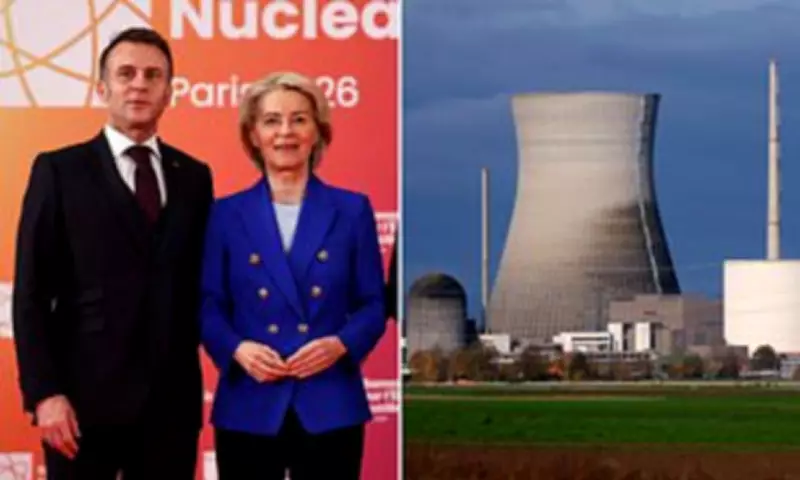
European Commission President Ursula von der Leyen has publicly acknowledged that Europe's rapid phase-out of nuclear power plants constituted a "strategic mistake", leaving the continent dangerously reliant on expensive and volatile fossil fuel imports. Speaking at the Nuclear Energy Summit in Paris, von der Leyen highlighted how nuclear's share of electricity generation has plummeted from around one-third in 1990 to just 15% today.
Dependence on Volatile Imports
Von der Leyen warned that being "completely dependent on expensive and volatile imports" of oil and gas has placed Europe at a significant disadvantage compared to other global regions. This vulnerability was starkly exposed in 2022 when Russia slashed gas deliveries following its invasion of Ukraine, sending energy prices soaring across European nations.
Germany's Political Decision and Growing Rethink
The retreat was largely driven by political decisions, most notably in Germany where then-Chancellor Angela Merkel committed to phasing out nuclear plants after the 2011 Fukushima disaster, citing public opposition and safety concerns. Ironically, von der Leyen served as a minister in Merkel's government when that fateful decision was made.

"This reduction in the share of nuclear was a choice. I believe that it was a strategic mistake for Europe to turn its back on a reliable, affordable source of low-emissions power," she stated candidly.
In a significant policy shift, the European Commission will now offer a 200-million-euro guarantee for private investments in innovative nuclear technologies, funded through the EU's carbon market. This move signals growing acceptance, with previously opposed nations like Denmark and the Netherlands softening their stance as they seek stable, low-carbon electricity for heavy industry.
Diverging Views Across the Continent
However, the debate remains deeply polarized. Germany's Environment Minister Carsten Schneider criticized von der Leyen's approach as a "backward-looking strategy", arguing that cleaner, safer electricity from wind and solar is cheaper and produces no radioactive waste.
Meanwhile, nations like Austria and Luxembourg remain firmly opposed to nuclear energy. Spain's government continues its push to close remaining plants, despite their crucial role during a massive nationwide blackout last spring.
France Champions Nuclear Sovereignty
France, Europe's largest nuclear producer, argues that stable, low-carbon nuclear power is essential for industrial competitiveness. President Emmanuel Macron emphasized the need for Europe to diversify uranium supplies, noting that nuclear power producers still imported 15% of their uranium from Russia in 2024.
"Nuclear power is key to reconciling both independence — and thus energy sovereignty — with decarbonization," Macron told the summit, proposing standardized reactor designs across Europe—a move that could benefit France's struggling state-owned nuclear giant EDF.
Political Repercussions and Economic Impact
The admission has sparked political reactions. Jordan Bardella, deputy to French far-right leader Marine Le Pen, decried Germany's approach as a "historic blunder" that has harmed European competitiveness and eroded citizens' purchasing power. He called for a fundamental rethinking of European energy market rules.
The economic implications are significant. Germany's DIW economic research institute expects the country's GDP to grow by just 1% this year, with rising energy prices from geopolitical conflicts and trade policies slightly dampening recovery. The energy crisis continues to dominate high-level discussions, with G7 leaders convening to address the Iran crisis and price volatility, though they stopped short of agreeing on a release of strategic oil reserves.
As Europe grapples with energy security, decarbonization goals, and economic stability, von der Leyen's stark admission marks a potential turning point in the continent's long-running nuclear debate.