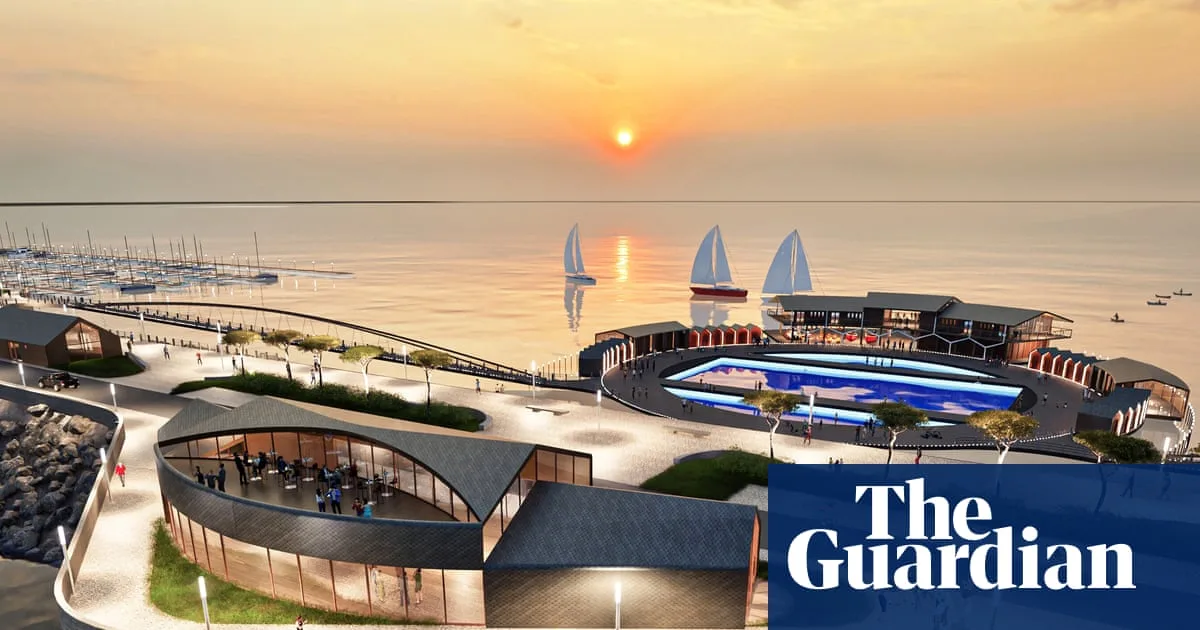
A consortium including Julia Barfield, architect of the London Eye, has unveiled plans for a £11bn tidal power station off the Somerset coast. The West Somerset Lagoon would form a 14-mile arc from Minehead to Watchet, housing 125 underwater turbines to harness the Bristol Channel's second-highest tidal range in the world.
The project aims to meet surging electricity demand driven by artificial intelligence, which the government estimates could more than double UK power needs by 2050. Barfield noted that datacentres could double energy demand, making renewable sources like tidal power essential. The lagoon would have a maximum output of 2.5GW, enough to power 2 million homes.
Plans include a path for walkers and cyclists, a water-sports marina, lido, and observation tower. Local MP Rachel Gilmour, who supports the proposal, said the pathway would become 'absolutely iconic'. Designers also suggest installing datacentres within the structure for cheap seawater cooling, alongside oyster beds, floating solar panels, and a coastal amphitheatre to boost Minehead's economy.
Consortium CEO Aidan Clegg stated that investors are ready but require government backing. A Department for Energy Security and Net Zero spokesperson said they are open to well-developed tidal proposals that demonstrate value for money, while the AI energy council explores low-carbon power for datacentres.
Tidal power is more predictable than wind or solar, though output dips during tidal turns. Backers claim the lagoon would last 120 years and produce cheaper power than nuclear. The project is the latest in a series of Severn estuary proposals, following earlier lagoons and a full barrage plan that raised environmental concerns.