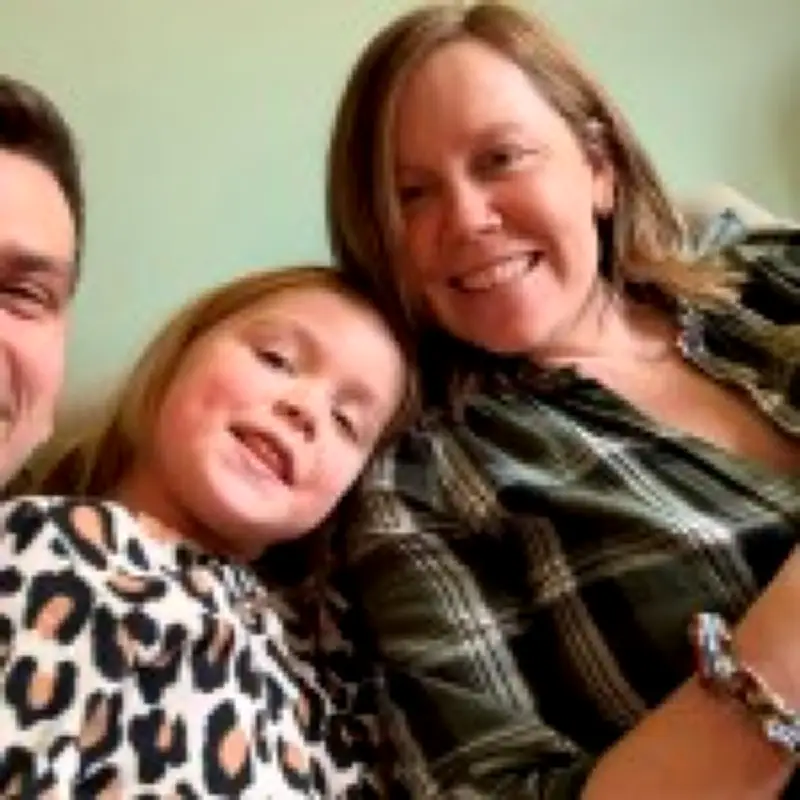
Grace Lee-Brindle, 36, and her partner Mike, 36, endured four years of hospital visits, three rounds of IVF, and spent nearly £40,000 trying to have a second child. Throughout their journey, Grace often heard the question: 'Why are you doing this? You already have a daughter.'
The Reality of Secondary Infertility
According to Fertility Network, fertility problems affect about 15% of the population, while secondary infertility—when a person has already had a pregnancy—affects around 5%. A UK study by Wild Nutrition found that 79% of parents wanted more children, rising to 88% among those with one child. Couples with secondary infertility often face stigma.
'People would tell me: You've got a lovely life,' says Grace, already mum to Marley, now five. 'It was really hard to hear, because it feels like you're being judged—especially as it wasn't just about us, we were putting Marley through this as well. You feel lonely, even in the fertility space. You can't talk to people struggling with primary fertility because of course they're thinking: You've already got a baby!'
The Journey Begins
Grace conceived Marley after just two months of trying. As a clinical psychologist specializing in fertility and perinatal mental health, she often spoke to people struggling to start a family. But after six months of trying for a second child, she began to worry. 'I was feeling uneasy,' she says. 'I tried to find the silver lining, telling myself that at least I get longer with Marley as an only child. But after a year or so, we reached out to the NHS.'
The couple were told they had 'unexplained infertility'—neither Mike's sperm nor Grace's eggs raised any red flags. They kept trying, and 18 months in, because the NHS does not fund IVF for secondary infertility (depending on location), they turned to a private clinic.
'The consultant recommended ovulation induction, where they give you medication to increase the number of eggs you produce each month,' Grace explains. But shortly after, she developed ovarian hyperstimulation syndrome, where the ovaries overrespond to fertility drugs. 'My body started filling with fluid and pushing against my lungs so I couldn't breathe very well,' she says.
IVF Attempts and Setbacks
After recovering, doctors adjusted her medication, but two months later, Grace still wasn't pregnant. The pair decided to try IVF, knowing the odds were against them. On average, only 31% of UK couples achieve pregnancy on the first round of IVF using fresh embryo transfers. Despite collecting 24 eggs, they ended up with just 'two poor quality embryos.' What followed was a miscarriage and another unsuccessful round of IVF.
'In the worst moments, your brain goes to: Is this your body, or the universe, telling you that you're not a good enough parent to have a second child?' Grace says. 'My daughter would say to me: Mummy, why don't we have a baby? because all of her friends had baby siblings. So, on one hand I was doing it for her, but in another sense I was just a wreck, and I felt like I wasn't being the best parent I could be.'
Many women in her life, including her twin sister, offered to donate eggs. 'I'd never ask anyone to do that but I was so lucky, I had five friends offer eggs to me. It's so lovely people were willing to do such a huge thing for us.'
A Thyroid Diagnosis
In 2024, they planned another round of IVF with Grace's eggs, but she was diagnosed with an overactive thyroid. 'You can't get pregnant while you're on the medication for an overactive thyroid. I was smack bang in infertility world and I had to start using contraception. I remember thinking it's laughable how ridiculous this is.'
For Grace and Mike, it felt like a constant waiting game. Speaking about why she longed for a second child, she says: 'Some people choose to have one child and I'm totally respectful of that, but I liked the idea of Marley having someone to do life with. I kept thinking about Marley in the future, as an adult. I have such a strong relationship with my sister—I can't imagine my life without her. I would think about Marley sitting with us, or coming to see us when we're older, and be sad that she wouldn't have a pal.'
The Third Round of IVF
Almost a year later, in summer 2025, after spending nearly £40,000 trying to get pregnant, Grace and Mike finally went through their third round of IVF. 'When I got the positive result, Mike actually thought someone had died by the look of my face. I wasn't excited. The fear that came over me was just horrendous. I didn't enjoy the pregnancy at all. And that's the weird thing because all I've wanted for four years is to be pregnant. But the second I had it, I couldn't trust it.'
She told her family: 'You can have your excitement outside of my space, but I can't have it, because I can't handle the pressure. At 12 weeks, I had to accept that this might happen. Then at 20 weeks I thought we're now going to need to get prepared. But there was honestly no point where I thought it'd actually be okay.'
A Happy Ending
In March 2026, Grace had a planned C-section. 'We wanted prediction, we couldn't handle any more drama or uncertainty,' she says. Little Ziggy was born healthy and happy, and Grace says he's 'completed' their family, but the ordeal has had a lasting impact.
'It makes you question yourself,' she says. 'You think: Am I finding parenting so stressful that my body won't let me get pregnant? Is it some way of protecting me from doing it again because I couldn't cope? It starts to feel like a judgement on your parenting and your relationship with your first child. You are looking for every reason to try and find out why this isn't happening, because no-one is giving you a physical reason. So, you go to what horrendous thing must I have done something in the past to deserve this.'
If you're going through secondary infertility, Grace advises being kind to yourself. 'In the end, it was just luck. So, stop beating yourself up, you're not doing anything wrong. We just got lucky.'