

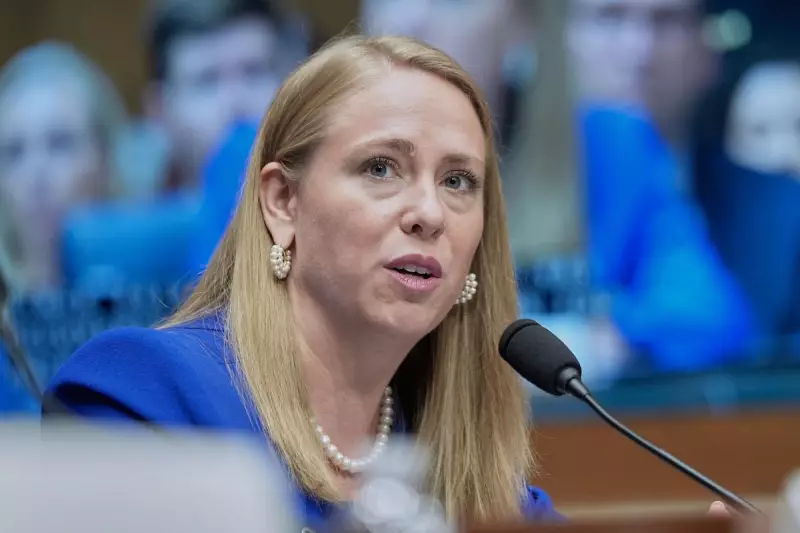
The chair of the United States' primary workplace civil rights enforcement agency has issued a direct and controversial appeal on social media, specifically calling on white men to report instances of race or sex discrimination they have faced in employment.
A Direct Appeal Sparks Widespread Debate
Andrea Lucas, the Chair of the U.S. Equal Employment Opportunity Commission (EEOC), posted the message on the platform X on Wednesday evening. A noted critic of Diversity, Equity, and Inclusion (DEI) programmes, Lucas wrote: "Are you a white male who has experienced discrimination at work based on your race or sex? You may have a claim to recover money under federal civil rights laws."
The post, which garnered millions of views, directed eligible workers to contact the agency promptly and referenced an EEOC fact sheet on "DEI-related discrimination." This document has previously drawn criticism from former agency commissioners for potentially misleading employers by framing DEI efforts as legally risky, when proactive steps to remove barriers are lawful and encouraged.

The call-out came roughly two hours after Vice President JD Vance shared an article criticising what he termed "the evil of DEI." Lucas responded to Vance's post, stating: "Absolutely right... And precisely because this widespread, systemic, unlawful discrimination primarily harmed white men, elites didn’t just turn a blind eye; they celebrated it." She affirmed the EEOC "won’t rest until this discrimination is eliminated."
Experts Question the Premise and Priority
Legal experts were quick to challenge the framing of the issue. David Glasgow, executive director of the Meltzer Center for Diversity, Inclusion, and Belonging at NYU School of Law, argued the posts demonstrate a "fundamental misunderstanding of what DEI is."
"Opponents of DEI tend to frame it as a set of illegal preferences," Glasgow said. "It’s really much more about creating a culture... where everyone experiences fairness and equal opportunity, including white men."
He pointed to a lack of systematic evidence for widespread discrimination against white men, noting their overrepresentation in senior leadership roles, Fortune 500 CEO positions, and Congress. "If DEI has been this engine of discrimination against white men, I have to say it hasn’t really been doing a very good job at achieving that," Glasgow remarked.
EEOC's Aggressive Enforcement Stance Under Lucas
Chair Lucas signalled her intent to target certain DEI practices upon becoming acting chair in January, naming "rooting out unlawful DEI-motivated race and sex discrimination" a priority. After the EEOC regained a quorum in October, her actions intensified.
The agency has sent letters to 20 major law firms demanding information on diversity fellowships, leading several to alter programmes. Furthermore, in November, the EEOC filed a federal court action to compel financial services firm Northwestern Mutual to provide details on its DEI practices related to a discrimination charge.
In a 20 November press release, Lucas stated: "When we see clear indications that an employer’s DEI program may violate federal prohibitions... we will use the full extent of our authority."
Concerns Over Selective Enforcement and Agency Mission
The explicit focus on one demographic has raised alarms among former EEOC officials. Jenny Yang, a former EEOC Chair now in private practice, called it "unusual" and "problematic" for the agency head to single out a specific group.
"It suggests some sort of priority treatment," Yang said. "That’s not something that sounds to me like equal opportunity for all." She contrasted this approach with the deprioritisation or dropping of discrimination complaints from transgender workers, arguing that differentiating cases based on identity contradicts the agency's core mission.
"It worries me that a message is being sent that the EEOC only cares about some workers and not others," Yang concluded.






