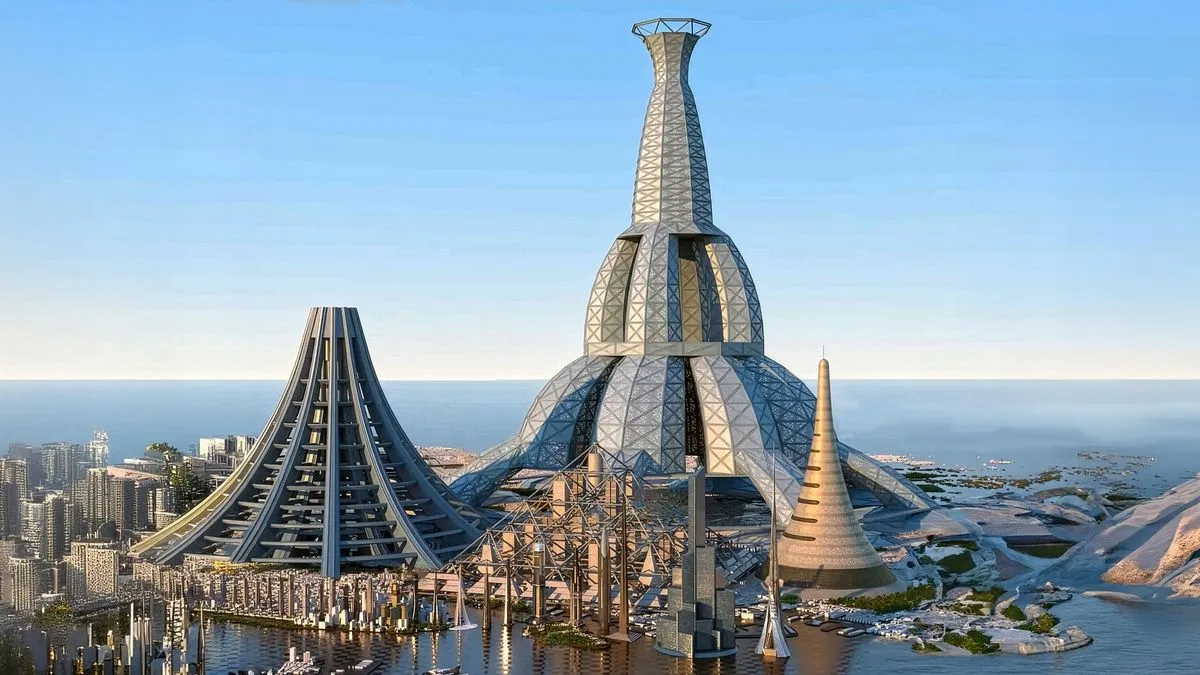
Thirty-four years ago, a proposal emerged for a structure so colossal it would have dwarfed Mount Everest: the Tokyo Tower of Babel. Conceived by Professor Toshio Ojima of Waseda University, the concept envisioned a 10,000-metre-tall skyscraper—1,150 metres higher than Everest—capable of housing 30 million people.
Unveiled at the Brazil Earth Summit in 1992, the tower was inspired by the biblical Tower of Babel. It would have taken 100 to 150 years to complete, with 1,969 floors and a conical shape narrowing as it rose. The base, spanning 110 kilometres, was planned for construction near the Yamanote Line in Tokyo.
The estimated cost was a staggering £23 trillion, largely due to the 10 billion tons of steel required. Additional challenges included relocating local residents and businesses, severe airspace restrictions, and the risk of catastrophic earthquakes. Upper floors would face temperatures as low as -55°C, making them uninhabitable without advanced life support.
Despite never being built, the Tokyo Tower of Babel has been studied for decades, including by the Japanese Hyper Building Study Group formed after the 1994 economic collapse. The design divided the structure into zones: residential, commercial, and even a space development centre.
Online reactions have been sceptical. One Reddit user noted the absurdity of maintaining breathable air and pressure across such heights, while another joked about the impracticality of fire drills on the top floor. The project remains a fascinating 'what if' in architectural history.