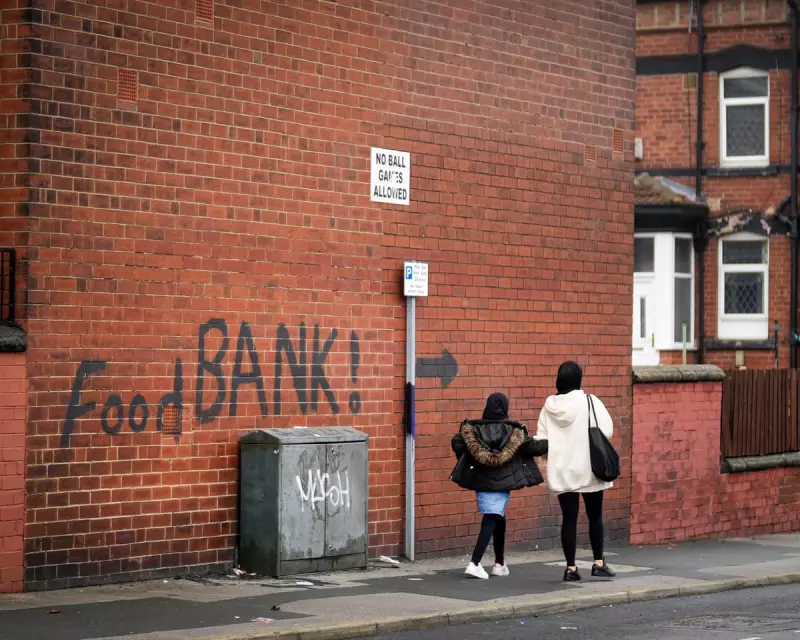
The Labour government has unveiled a comprehensive and groundbreaking strategy to tackle the UK's entrenched child poverty crisis, a plan it describes as central to its mission. The policy, born from a dedicated child poverty taskforce, is set to lift an estimated 550,000 children above the poverty line by 2030, marking the most significant single-parliament intervention on the issue in recent history.
The Stark Reality of Poverty in Working Britain
The strategy lays bare a painful social truth: the face of poverty in Britain has fundamentally changed. Almost three-quarters of children living in poverty now come from working families, shattering the myth that employment alone is a guaranteed route out of hardship. The document details the brutal consequences for millions of children, who go without adequate food, heating, or stable homes, with impacts extending to health and even physical development—British five-year-olds are now up to 7cm shorter than their European peers.
In a politically significant move, the plan confirms the abolition of the controversial two-child benefit limit, a policy identified by experts as the fastest way to rescue children from the most dire poverty. This decision was taken despite YouGov polling showing public opposition, with 56% against its removal. Ministers Liz Kendall, Alison McGovern, and Bridget Phillipson, the strategy's lead authors, have framed this as a necessary act of moral courage.

A Decade-Long Mission Against a Backdrop of Setbacks
The strategy is billed as the first step in a ten-year mission, acknowledging the scale of the challenge. It promises annual updates on causes, effects, and remedies. The shadow of previous progress and subsequent reversal looms large. The article recalls Tony Blair's 1999 pledge to eliminate child poverty within 20 years, which saw good progress by 2010 before being dismantled. The closure or hollowing out of over 3,500 Sure Start centres is cited as a prime example of this vandalism.
The new approach involves cross-departmental initiatives, from health and housing to transport, aiming to make children every ministry's priority. A key promise is to get children out of squalid temporary accommodation located far from their schools. The government also plans to roll out new 'Best Start hubs', aiming for one in every English council area by 2028.
Battling a Toxic Narrative
The strategy explicitly confronts the toxic political narrative that has long framed poverty as a problem of individual fecklessness, promoted by figures like former Chancellor George Osborne and echoed in programmes like 'Benefits Street'. The government's core message is a direct rebuttal: poverty is a structural issue affecting the working population.
This narrative battle is acknowledged as an uphill struggle against powerful right-wing media voices. The article notes immediate attacks labelling the budget a "budget for Benefits Street". Ministers argue they must persistently make the economic case, highlighting the long-term costs of inaction in poorer health, lower skills, and reduced earnings for the nation.
With a cabinet described as the most working-class ever, including ministers like Phillipson and Wes Streeting who come from poor backgrounds, there is hope this strategy will endure beyond a single news cycle. The question remains whether a future government will be given the time to see it through, or if, as before, progress will be reversed.