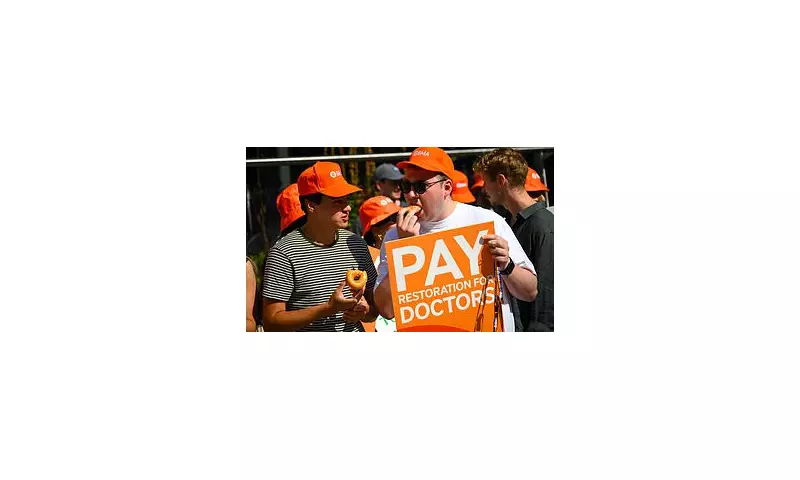
The British Medical Association (BMA), the union representing striking doctors, is now facing accusations of hypocrisy and a formal pay dispute from its own staff.
A Union Divided
The controversy erupted when the BMA awarded its non-medical staff a 2 per cent pay rise. This move was immediately branded as hypocritical by the GMB union, which represents over three-quarters of the BMA's employees. The criticism stems from the fact that the BMA has been heavily criticising the Government for its 2.5 per cent pay offer to medics, which the doctors' union described as 'insulting'.
Meanwhile, resident doctors in England, previously known as junior doctors, have been engaged in industrial action, including a five-day walkout earlier this month, in pursuit of a further 26 per cent pay increase. The GMB has pointed out that it is 'nothing short of hypocritical for the BMA leadership to make their staff a pay offer that they would encourage their own members to reject.'

The Growing Internal Conflict
The GMB union has now initiated a formal pay dispute with the BMA. It claims that since 2012, BMA employees have seen their real-terms pay fall by nearly 17 per cent due to years of sub-inflationary pay awards. Despite management assurances that they wanted to address pay erosion—a key goal in their negotiations for doctors—staff pay has continued to fall below inflation.
A survey of GMB members working at the BMA found that 91 per cent would favour taking industrial action in response to the 2 per cent proposal. A GMB representative stated: 'BMA staff have worked tirelessly to support doctors both during Covid and through multiple rounds of industrial action. We just wish the BMA’s chief executive, board, and council would see the disparity in treatment.'
Wider Consequences and Political Fallout
The ongoing doctors' strikes have had severe consequences for the NHS and its patients. The repeated industrial action has caused widespread disruption, leading to cancelled appointments and operations. Health Secretary Wes Streeting accused the BMA of being 'morally reprehensible' and acting like a 'cartel' that is trying to 'hold the country to ransom'.
Each five-day walkout by resident doctors is estimated to cost the NHS between £250 million and £300 million, significantly hampering efforts to reduce patient waiting lists. Sir Jim Mackey, chief executive of NHS England, has written to the BMA's resident doctors' committee, urging them to end the 'frustrating doom loop' of strikes. He warned that the 'expensive' and 'disruptive' action is blowing a 'hole' in NHS budgets and ironically preventing improvements to the very working conditions doctors are seeking.
The BMA was approached for comment on the developing situation.