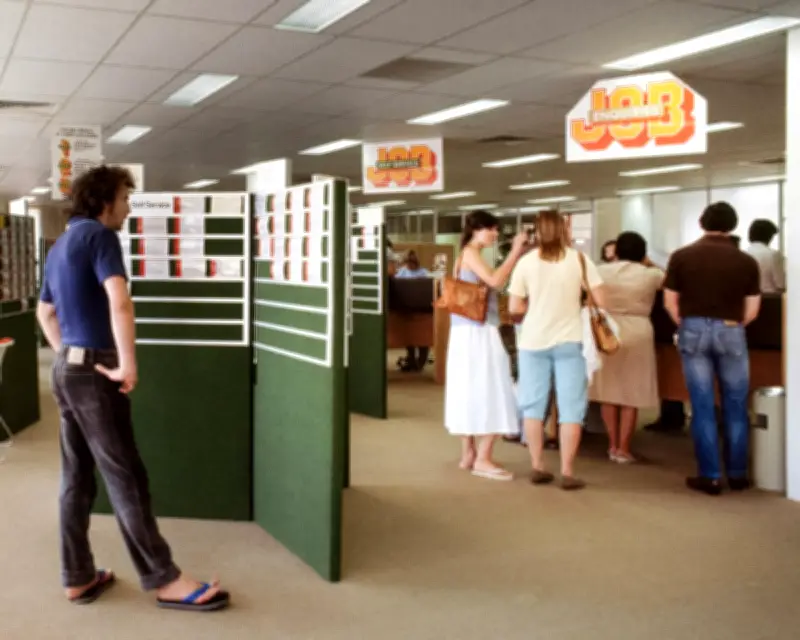
In 1994, Jay Martin graduated with an arts degree into the midst of the 'recession we had to have' under Prime Minister Paul Keating. With few prospects, she registered for the national public service exam but skipped it to buy a cheap fridge for her share house. However, Keating's government had devised a plan to hire dozens of new graduates as employment officers in the Commonwealth Employment Service (CES), offering jobs to everyone who had registered for the exam. In 1995, Martin found herself behind the front counter of the CES, the government office founded in 1946 tasked with finding jobs for people and people for jobs.
Confronting Preconceptions About the Unemployed
Martin admitted she went in with preconceived ideas about 'dole bludgers' and 'welfare cheats', but most people she met desperately wanted to work. It was an employers' market, and they were never the best person for the job. She felt how easily their places could have been reversed. She also saw how people's lives could spiral after losing a job, missing car insurance, or having an accident. Without transport, finding work became ten times harder.
Resources That Made a Difference
Martin had a drawer full of resources—training programs, job subsidies, and bus tickets—to offer clients. She threw herself into helping them. One cabinet maker from Hong Kong struggled to get interviews; she arranged a work experience placement, and two days later his wife called to say he'd been offered a job. 'We are happy we can now contribute to Australia,' she said. Another woman received interview training and a job-winning retail management CV; she later returned to give Martin a pen engraved with her name. Both blinked back happy tears.
The Coercive Side of the System
Not everyone was excited about working. One client working as a carer described a mundane routine: 'I just go to work, come home, watch TV, and do it all again the next day.' Martin reassured him it was a first step. She realized not everyone might have a chance at a fulfilling job. The system was also coercive: people had to take any 'reasonable' job, attend appointments, and comply with legislation. Martin had the power to cut off unemployment payments if they didn't. She used that power humanely, giving tissues to a woman sobbing after racial abuse on a construction site. For young people who spent days playing video games and smoking bongs, she made them turn up for interviews at 9am daily; most eventually chose training or work over the hassle.
Entertainment and Technology
The CES put on a VHS tape of Mr Bean to entertain people while they waited. The whole line—refugees, single mothers, young or old, arts graduates—would ripple with laughter at the same moments. Martin was amazed by her new computer, which allowed her to send messages to any other CES officer and get replies straight away. She was at the 'coalface' of the social services system and the digital revolution simultaneously.
The End of the CES
In 1996, Keating lost the election to John Howard and joined the unemployment line himself. By 1998, CES functions were broken up through the largest public tender of human services in Australia's history. Many resources were cut, and government congratulated itself on cost savings while clients were left wondering what to do. Over time, computers replaced waiting rooms with videos, and clients and staff were measured in KPIs and targets. Eventually came robodebt and a royal commission to understand what went wrong.
Lessons Learned
Martin didn't work at the CES long enough to see all of this, but she still thinks often of what she learned: the privilege of a fulfilling job, never to judge, that many are just an accident away from financial catastrophe, and that the right help at the right time can make all the difference. She still has the pen to prove it.