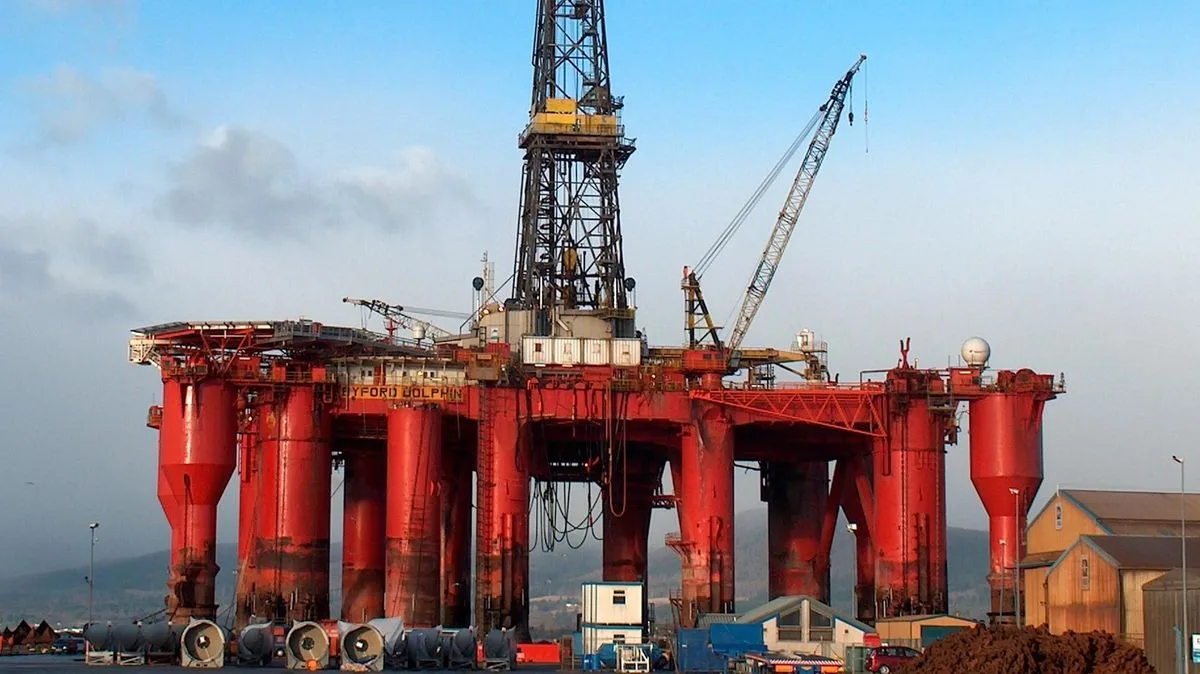
On November 5, 1983, a catastrophic diving accident on the Byford Dolphin oil rig in the North Sea claimed the lives of five men in what has been described as one of the most gruesome deaths in history. The semi-submersible rig, operating across British, Norwegian, and Danish sectors, was the site of a fatal miscalculation during a saturation diving operation.
The victims included British divers Roy P. Lucas, 38, and Edwin Arthur Coward, 35; Norwegian divers Truls Hellevik, 34, and Bjørn Giæver Bergersen, 29; and dive tenders William Crammond, 32, and Martin Saunders, 30. Only Saunders survived. The men were conducting routine maintenance at a depth of 295 feet, living in pressurised chambers to prevent decompression sickness.
The accident occurred when divers Hellevik and Bergersen were returning from a shift via a diving bell. A critical error by an external diver caused the clamp sealing the chamber to open prematurely, before the chamber door was fully closed. This resulted in a rapid decompression from nine atmospheres to one atmosphere in a split second.
The sudden pressure change caused the diving bell to violently propel, killing Crammond instantly. Inside the chamber, Lucas, Coward, and Bergersen were killed instantly as nitrogen bubbles formed in their blood, essentially boiling them from within. Hellevik, closest to the door, was sucked through a 60cm gap, with his organs expelled from his body. The autopsy noted the scalp and hair were present, but the top of the skull and brain were missing.
The incident remains a stark reminder of the dangers of deep-sea diving and the critical importance of safety protocols in pressurised environments. The Byford Dolphin rig continued operations after the tragedy, but the accident is still studied as a cautionary tale in diving safety.