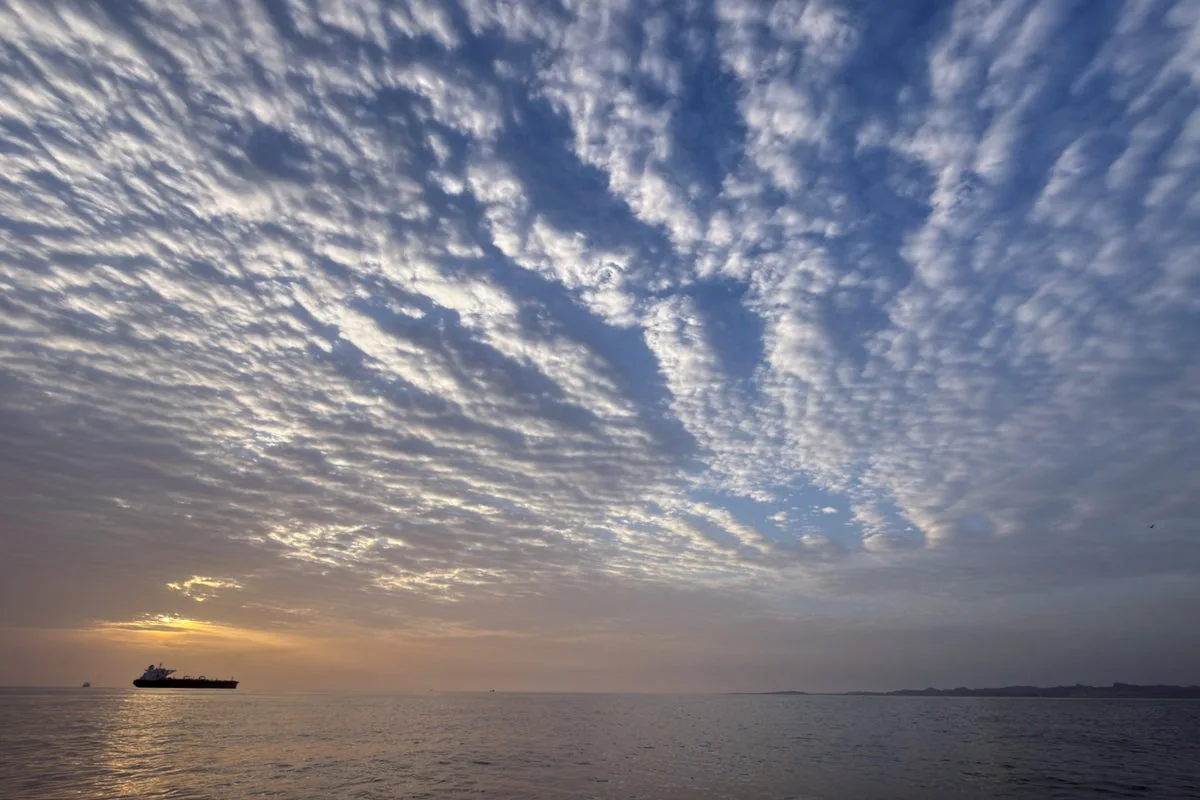
Even as Iran maintains its chokehold on the Strait of Hormuz, the Islamic Republic increasingly finds itself squeezed by an American blockade threatening its oil industry.
Blockade Impact on Oil Exports
With no way to export the oil it is pumping and diminishing storage capacity at home, Iran may be forced to dramatically reduce or cease production from some wells, potentially within two weeks, experts say. While the situation is not as dire as US President Donald Trump suggested—claiming pipelines could explode within days—shutting down aging wells could make restarting difficult, undermining future output. Analysts indicate Iran has already begun dialing back production to avoid outright shutdowns.
The pressure mounts as the US Treasury Department intensifies sanctions on Iranian oil shipments at sea, and the US military has seized at least two tankers off Asia believed to be carrying Iranian oil. With oil trade constrained, Iran sees less hard currency flowing back into an economy battered by weeks of war, months of unrest, and decades of international sanctions. Simultaneously, fewer tankers shipping Iranian oil magnifies the effects of the Strait of Hormuz shutdown, leading to global shortages of jet fuel and rising gasoline prices.
Long-Term Risks for Iran's Oil Industry
Miad Maleki, a former sanctions expert at the US Treasury and senior fellow at the Foundation for Defense of Democracies, noted that Iran's leaders are resisting shutting down wells due to long-term pain. “They’ve been under sanctions, they’ve been isolated for 47 years now. Those oil wells are not maintained well. Their machinery is not maintained well,” Maleki said. Once shut off, he added, the wells won't easily “snap back after a few months.”
Before the war, Iran pumped over 3 million barrels of crude oil daily, with over half for domestic use. Since the American blockade began on April 13, ships have been filled with oil but unable to depart. “It looks like there’s been a significant slowdown in production,” said Antoine Halff, co-founder and chief analyst at Kayrros, an environmental intelligence firm. He pointed to signs that storage at Kharg Island, Iran’s main oil export terminal, is not filling as fast as usual.
Iran is likely storing oil in tankers around Kharg Island, according to Halff. Kpler, a commodities monitoring firm, believes Iran has enough storage capacity for about two weeks of oil production, even after reducing output. “While the immediate revenue impact is limited, operational constraints are now forcing production cuts and setting up a delayed but significant financial squeeze,” wrote Homayoun Falakshahi, an analyst at Kpler. Wood Mackenzie estimates Iran will run out of storage capacity in about three weeks. “If the blockade persists, cuts become inevitable,” wrote Alexandre Araman of Wood Mackenzie, warning that shutdowns of more than a month “risk long-term damage” to Iran’s oil reservoirs, with recovery of older fields “remains uncertain.”
Historical Context and Political Ramifications
Iran’s oil industry has been entangled in regional politics since oil was first struck in 1908. Nationalization efforts sparked the CIA-backed 1953 coup, which solidified Shah Mohammad Reza Pahlavi’s rule and fueled the 1979 Islamic Revolution. During the revolution, oil workers’ strikes reduced production from 6 million barrels a day to around 1.5 million. The industry never fully recovered, facing decades of sanctions that aged its infrastructure.
In his first term, Trump’s “maximum pressure” campaign severely cut Iran’s oil exports through sanctions, costing tens of billions in revenues. Now, Iran faces both heightened sanctions and the blockade. Trump recently claimed Iran was “in a ‘State of Collapse,’” while US Treasury Secretary Scott Bessent wrote on X, “Iran’s creaking oil industry is starting to shut in production thanks to the U.S. BLOCKADE. Pumping will soon collapse. GASOLINE SHORTAGES IN IRAN NEXT!”
No immediate signs of gasoline shortages have emerged, but Iran appears to acknowledge the strain indirectly. State TV segments discussed an oil storage crisis, noting that if empty tankers are blocked from returning, “we won’t be able to export.” Oil Minister Mohsen Paknejad praised terminal staff for their “continuous perseverance.” Maleki warned that if the blockade continues and production slows or halts, oil workers could lose jobs, potentially sparking unrest. “In 1979 when the oil industry was disrupted, in the 1980s war with Iraq... you can go and look at to see how effective they were in really pressuring the regime,” he said. “It’s really going to affect some of the most strategic provinces in Iran and the most strategic industry.”