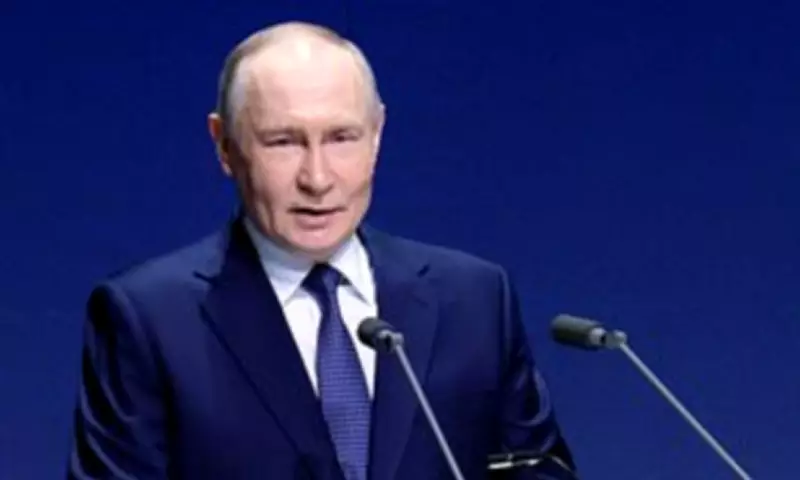
Russia is heading towards a severe financial disaster, despite a recent surge in oil revenues, according to a stark warning from a top intelligence expert. This alarming assessment comes as President Vladimir Putin himself has conceded that the Russian economy is underperforming against his expectations.
An Unsustainable War Economy
Thomas Nilson, the head of Sweden's Military Intelligence and Security Service, has stated that Russia will struggle to continue financing its ongoing invasion of Ukraine as the conflict enters its fifth year. He predicts this will lead directly to a 'financial disaster' for the nation. In an interview with the Financial Times, Nilson described Russia as 'living on borrowed time'.
'It's not a sustainable growth model to produce material for the war that is then destroyed on the battlefield,' Nilson emphasised, highlighting that Russia's profound economic faults have now spread deeply into its defence sector.

Two Grim Economic Scenarios
Nilson outlined that Russia's economy can only conclude in one of two bleak scenarios: 'Prolonged decline or a shock. Either way, they continue their downward spiral towards financial disaster.' He further accused the Russian state of manipulating economic data to mislead Ukraine's allies into believing the country is performing better than it truly is, despite teetering on the brink of crisis.
Official Data Versus Hidden Realities
Putin recently revealed that Russia's GDP fell by 1.8 per cent in January and February. Simultaneously, Russian central bank governor Elvira Nabiullina cautioned that 'external conditions are now getting worse on an almost constant basis — for both exports and imports'. However, Nilson contends the actual situation is far more dire than these official portrayals suggest.
He believes the Russian central bank is deliberately downplaying inflation rates, potentially leaving Putin unaware of the true severity of the economic challenges. 'If you have created a system like Putin has, he might not know how bad the economic situation really is. But even with the false info he gets, you ultimately can't run from all of this,' Nilson stated.
Oil Output Crisis and Revenue Threats
The intelligence chief's remarks follow a forced reduction in Russian oil output during April. This was caused by a combination of Ukrainian drone attacks targeting key ports and refineries, alongside a halt to crude supplies via the sole remaining Russian oil pipeline to Europe.
Reports from Reuters indicate this could represent the sharpest monthly decline in Russian production in the six years since the Covid-19 pandemic, with cuts potentially reaching 300,000 to 400,000 barrels per day from earlier yearly averages.
Oil, predominantly extracted from the Western Siberian basin, remains the lifeblood of Russia's $3 trillion economy. A significant decline in output directly slashes revenue for the world's second-largest oil exporter.
Short-Term Cushion from Global Conflict
These potential losses may be temporarily cushioned by the ongoing conflict in the Middle East, which has triggered a supply and production crisis in the global oil market, driving prices higher. Russian Finance Minister Anton Siluanov noted last Thursday that these elevated prices could help reduce the national budget deficit.
Nevertheless, the structural threats persist. Ukraine has unleashed sustained waves of drone attacks on Russia's major western oil ports in recent weeks, causing vast blazes and damaging refineries.
'Against the backdrop of ongoing attacks on Russia's ports and refineries, it will be difficult to place oil without cutting output, especially with upcoming spring maintenance shutdowns,' an anonymous source told Reuters, highlighting the operational sensitivity.
Historical Context of Russian Oil Production
Russian oil production historically peaked in the late 1980s before collapsing after the 1991 dissolution of the Soviet Union, largely due to chronic underinvestment. A recovery occurred throughout the 2000s and 2010s, culminating in a post-Soviet peak in 2019, just prior to the global pandemic. The current combination of wartime expenditure, external sanctions, and physical attacks on infrastructure now threatens to reverse those gains, pushing the nation towards the financial precipice warned of by intelligence analysts.