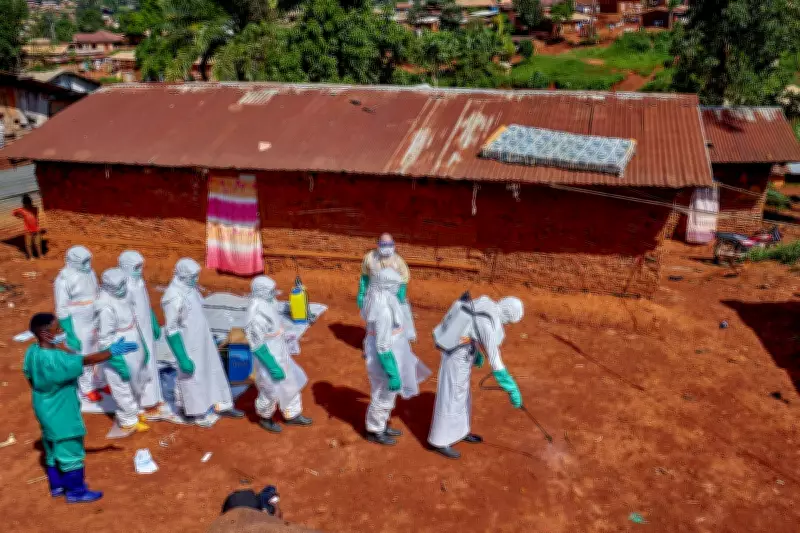
The UK's development minister, Jenny Chapman, has conceded that reductions in foreign aid have proven 'counterproductive' in tackling the escalating Ebola outbreak in the Democratic Republic of the Congo (DRC) and Uganda. Speaking to the BBC World Service during a visit to Kinshasa, Baroness Chapman acknowledged that the global response to the crisis is falling short, with the outbreak expected to persist for months.
Admission of Aid Impact
When asked whether cutting the UK's foreign aid budget from 0.5% to 0.3% of Gross National Income (GNI) and redirecting funds to defence and security had undermined efforts against the outbreak, Baroness Chapman replied: 'Yes, in a way.' She emphasised that the UK still spends nearly £10 billion annually on international development, but acknowledged the need for more effective spending. Bilateral support to individual African countries has dropped by 56%, hitting the continent particularly hard.
Under-Response and Challenges
Baroness Chapman stated: 'I'm not convinced we are sufficiently ready and we are under responding at the moment, but this can change and it does need to change.' She noted that a UK team in Kinshasa is 'working incredibly hard' but the overall response remains inadequate. Health workers have reported delays in confirming the outbreak, which began weeks before official recognition.

The World Health Organisation (WHO) reports 321 confirmed Ebola cases, including 48 deaths, with 15 cases and one death in Uganda. However, suspected cases exceed 1,000, with over 300 suspected deaths. The outbreak involves the rare Bundibugyo strain, which has no proven vaccine or treatment and kills about one-third of those infected.
Government Actions and Warnings
The Congolese government has reopened the airport in Ituri province, the hardest-hit area, reversing a move that had cut off critical supplies. The International Rescue Committee warned on Monday that the outbreak is likely larger and more advanced than official figures suggest, with the virus possibly spreading for up to three months before the first cases were confirmed in mid-May.
The UK has committed £21 million to the outbreak, just 5% of the £427 million spent on the 2014-2015 West Africa epidemic, which saw over 20,000 cases and 10,000 deaths. Rory Stewart, former UK Africa minister during the 2018 Ebola outbreak, warned that aid cuts by both the UK and the US have a 'very strong' connection to such crises, undermining global health infrastructure. He said: 'Pandemic preparedness requires lots of people on the ground in places like DRC or Uganda to detect, respond, quarantine, and prepare. All that infrastructure is being undermined, posing a real threat to the world.'
Long-Term Outlook
Baroness Chapman expects the outbreak to last 'months, if not longer', adding: 'There is going to be a question of resources. We are going to have to spend more money on this outbreak.' She stressed that the DRC authorities ultimately want to build their own capacity to detect and respond to outbreaks without external aid. Future UK development work will focus on strengthening health systems in countries like the DRC, including medical research and vaccine development.
However, she acknowledged that such work is 'very difficult' in Eastern DRC, a region ravaged by war and insecurity. She argued that more aid alone would not automatically solve the situation: 'A lot of this is about conflict prevention, and aid budgets cannot do that on their own. The idea that just putting more international development money into this would have prevented it is not the reality.'
The Foreign, Commonwealth, and Development Office declined to comment on Baroness Chapman's remarks. This article is part of The Independent's Rethinking Global Aid project.