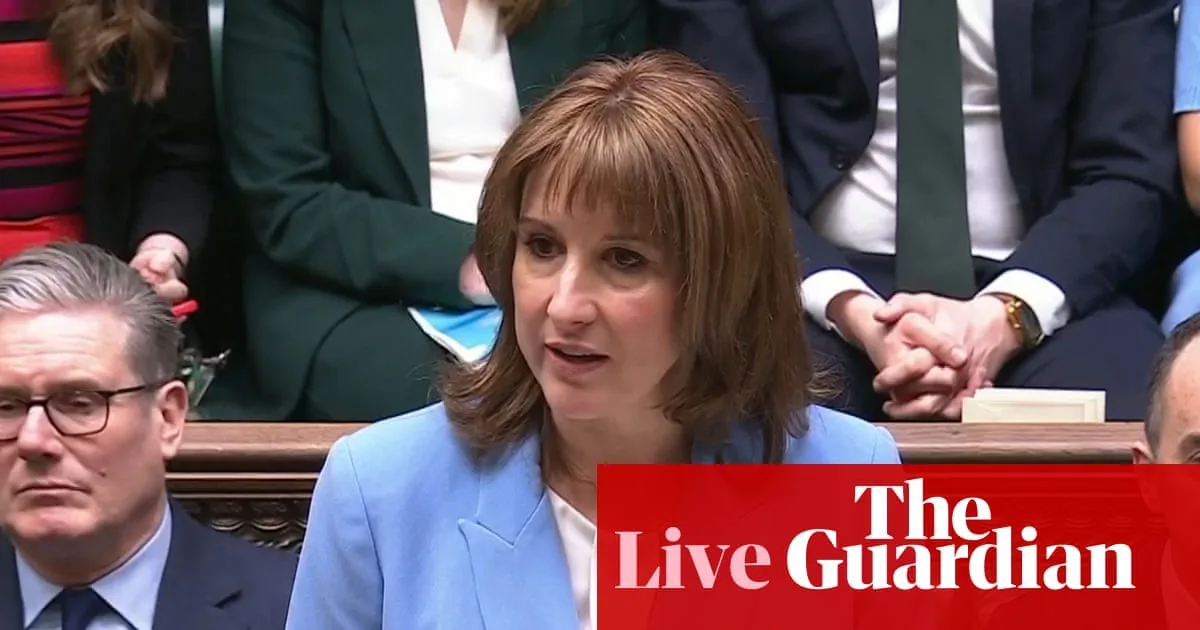
Chancellor of the Exchequer Rachel Reeves has declared she possesses the 'right economic plan' for the United Kingdom, even as the nation's independent budget watchdog significantly reduced its growth projection for the current year. The Office for Budget Responsibility (OBR) unveiled its latest economic forecasts alongside the Chancellor's spring statement, painting a mixed picture of the UK's fiscal trajectory through to 2030.
Key Economic Indicators Revised
The OBR's updated projections reveal a nuanced economic landscape, with several critical metrics adjusted from previous estimates published in November 2025. Chancellor Reeves maintained a confident stance despite the downward revision in near-term growth, emphasising the government's strategic approach to navigating economic challenges.
Gross Domestic Product (GDP)
The UK economy is now forecast to expand by 1.1% in 2026, a notable reduction from the 1.4% growth anticipated previously. However, the outlook improves in subsequent years, with GDP growth expected to reach 1.6% in both 2027 and 2028, up from earlier forecasts of 1.5%. The projections for 2029 and 2030 remain steady at 1.5%, unchanged from the OBR's last assessment.
Inflation Trends
Inflation, as measured by the Consumer Prices Index, is predicted to be 2.3% in 2026, slightly lower than the earlier forecast of 2.5%. The rate is then set to stabilise at the Bank of England's target of 2.0% from 2027 through 2030, aligning with previous expectations and indicating a gradual return to price stability.
Unemployment and Labour Market
The unemployment rate is projected to climb to 5.3% this year, higher than the 4.9% previously forecast. It is then expected to decline gradually, falling to 4.9% in 2027, 4.4% in 2028, 4.2% in 2029, and 4.1% in 2030. While these figures represent a slight upward adjustment from earlier estimates, they suggest a resilient labour market over the medium term.
Public Finances Under Scrutiny
Government Borrowing
Public sector net borrowing is forecast at £132.7 billion for the 2025/26 financial year, below the OBR's previous estimate of £138.3 billion. Borrowing is then projected to be £115.5 billion in 2026/27, slightly above the earlier forecast of £112.1 billion, before declining to £96.5 billion in 2027/28, £86.0 billion in 2028/29, £63.4 billion in 2029/30, and £59.0 billion in 2030/31.
As a percentage of GDP, borrowing is expected to be 4.3% in 2025/26, down from 4.5% previously, then 3.6% in 2026/27, 2.9% in 2027/28, 2.5% in 2028/29, 1.8% in 2029/30, and 1.6% in 2030/31. These figures indicate a gradual improvement in the fiscal deficit relative to the size of the economy.
National Debt Levels
Public sector net debt is forecast to be 94.3% of GDP in 2025/26, lower than the previous projection of 95.0%. The debt-to-GDP ratio is then expected to rise to a peak of 96.3% in 2028/29 before declining to 95.1% in 2030/31, which is a full percentage point lower than the earlier forecast of 96.1% for that year.
Taxation and Welfare Spending
The tax burden, measured as tax revenue as a proportion of GDP, is projected to be 36.3% in 2025/26, unchanged from prior estimates. It is then forecast to rise steadily, reaching 38.5% by 2030/31, which would be the highest level since records began in 1948 and slightly above the previous forecast of 38.3%.
Meanwhile, total welfare spending is set to continue at record levels, increasing from £332.9 billion in 2025/26 to an all-time high of £406.9 billion by 2030/31, reflecting ongoing demographic pressures and social support commitments.
Migration Projections Adjusted
Net migration to the UK is now forecast to average 235,000 annually from 2026 to 2030, significantly lower than the previous estimate of 295,000 per year. The OBR anticipates net migration of 200,000 in 2026, down from 262,000 in the last forecast, with the figure gradually climbing to 281,000 by 2030, still below the earlier projection of 340,000.
Chancellor Reeves' assertion of a robust economic plan comes amid these revised forecasts, which highlight both challenges and opportunities for the UK economy over the coming years. The spring statement provides a comprehensive snapshot of the nation's fiscal health, with the OBR's independent analysis serving as a critical benchmark for government policy and economic performance.