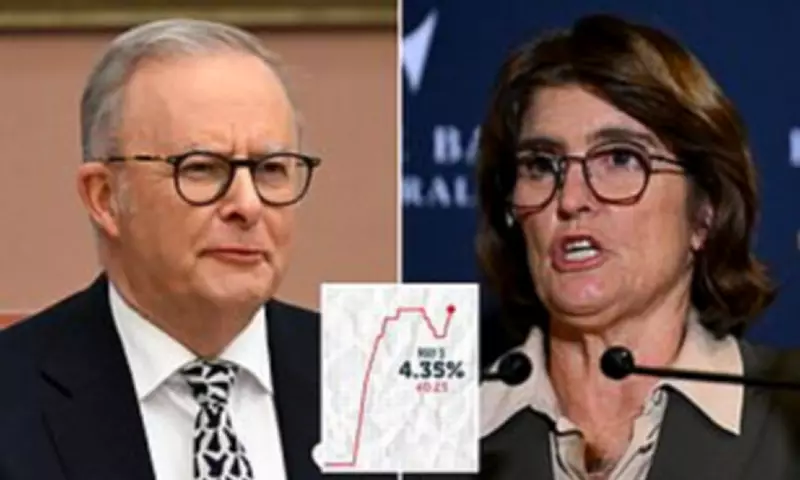
The Reserve Bank of Australia's Governor, Michele Bullock, has launched a scathing critique of the Albanese government, asserting that its spending amid limited resources is a significant driver of persistent inflation. At its Tuesday meeting, the RBA board, led by Bullock, raised the cash rate by 25 basis points to 4.35 per cent, delivering a troubling blow to Australian mortgage holders.
Inflation Persists Despite Government Claims
The decision was prompted by stubborn inflation, which Treasurer Jim Chalmers earlier this year claimed the government had tamed. The Australian Bureau of Statistics revealed last week that headline inflation had risen to 1.1 per cent in March. Annual inflation now stands at 4.6 per cent, up from 3.7 per cent, marking the fastest annual pace of price growth since September 2023.
In a statement, the RBA noted that inflation had picked up 'materially' in the second half of 2025 and was further boosted by the conflict in the Middle East. During her 45-minute press conference, Bullock repeatedly emphasised that the board was working to curb inflation, which is already 'too high'. The RBA's primary tool to achieve this is raising the cash rate, which dampens spending.

Bullock Targets Government Spending
Bullock took direct aim at the government's attempts to buy votes through spending. 'The extent to which (the) government makes up (budget) shortfalls for households by giving them more money makes it harder to dampen demand,' she said. She explained that even before the Iran conflict, demand in Australia exceeded supply, driving up prices. 'The ability of the economy to supply the goods and services that were being demanded in total, including by government and by the private sector, was outstripping the ability of the economy to supply it. That's why inflation was rising.'
Bullock highlighted that the RBA's rate hike aims to slow demand. 'If we are increasing interest rates, what we are trying to do is slow growth in demand and that hits the private sector – typically consumption, investment, those sorts of things. The extent that the government is demanding goods and services of the economy - whether it's direct expenditure or giving money to households to spend on goods and services in the private sector - that adds to demand.'
Australians Left Poorer, More Hikes Possible
Bullock stated that Australians have been left poorer due to surging oil prices amid the Middle East conflict. She warned that further interest rate increases could be on the horizon if the government does not tighten its spending. 'Developments in the Middle East remain highly uncertain but under a wide range of possible scenarios, the conflict adds to global and domestic inflation. If left unchecked, higher costs get embedded into price and wage-setting decisions. These second-round effects could lead to even higher and more persistent inflation and if so, would require even more tightening in monetary policy to get inflation under control.'
Impact on Mortgage Holders
For an owner-occupier with a $600,000 mortgage and 25 years remaining, the latest 0.25 per cent hike adds $91 to their minimum monthly repayments. The total increase across three hikes since February would be $272 per month. This lifts the average owner-occupier variable rate to 6.26 per cent, above the 6.25 per cent mark for the first time since January 2025.
Treasurer Blames Middle East Conflict
Earlier on Tuesday, Treasurer Jim Chalmers attempted to blame the rate hike solely on the war in the Middle East. 'Australians are already paying a hefty price for the war in the Middle East and this decision will make it tougher,' Chalmers said. He noted that March's inflation was driven by higher petrol prices before the fuel tax cut kicked in. 'Higher petrol prices are all about the war in the Middle East. Any objective observer would conclude that now. When it comes to decisions taken in Washington DC, or indeed in Tehran, Australians are hostage to those decisions taken about the conduct of this war and the end of this war.'

The rate hike comes just a week before Chalmers is due to announce the Labor government's fifth Federal Budget. 'The uncertainty and volatility in the global economy mean there is an even greater premium on responsible fiscal management,' he said. 'The budget is already more than $233 billion better than we inherited because the Government has found savings, kept a lid on spending growth and banked revenue upgrades. In the upcoming Budget, we'll continue that record of responsible economic management by saving more than we spend and banking all upward revisions to revenue. This Budget will be focused on fuel security, addressing inflation, boosting productivity and resilience and managing global economic uncertainty, and today's decision highlights why this is so important.'