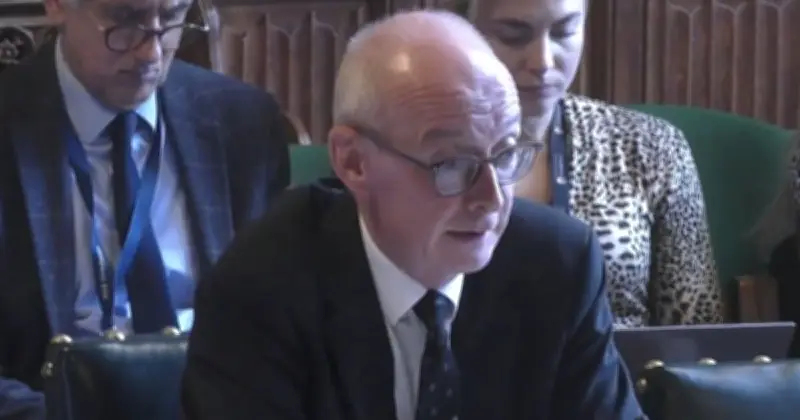
A DWP minister has spoken about making further changes to the state pension eligibility rules to keep the policy affordable. Work and Pensions Secretary, Pat McFadden, warned against misunderstanding how the system works.
The costs of the state pension continue to rise, with payments rising each April in line with the triple lock while more people reach state pension age and start claiming the benefit. Mr McFadden was speaking to the Work and Pensions Committee about the prospect of the Government tightening the rules in efforts to keep the policy affordable.
State pension age increases
Lifting the state pension age is a topical question, as the access age is currently going up, moving up in stages from 66 to 67 between April 2026 and April 2028. Laws are also on the books for another increase in the state pension age, from 67 to 68, between April 2044 and 2046.
'Difficult decisions'
On the question of where to set the state pension age, Mr McFadden said: "These are difficult decisions. You have to take into account affordability for the country, because even though it is a contributory system, it really works as a pay-as-you-go system."
You build up your eligibility for the state pension by paying National Insurance contributions. You typically need 35 years of contributions to get the full new state pension, which currently pays £241.30 a week, or around £12,550 a year.
But the reality is your contributions are not paying into a pot of funds from which you eventually draw down, as with a private pension. Mr McFadden told the committee: "It has to be affordable and give people security in retirement, but it has to take into account the factors that you raise as well.
"We owe that to the public. It is a very delicate decision, which is why we do these careful reviews to take all these things into account."
Labour also announced last year there would be another review of the state pension age, looking at what factors should be used to decide where it is set.
March deadline
The review will examine to what extent life expectancy is a good metric to help decide where to set the state pension age, among other topics. Under the 2014 Pensions Act, there has to be a review of the state pension age at least every six years, so the next one will need to be completed by March 2029.
Asked if the next review is on track to meet this March 2029 deadline, Mr McFadden said: "There are periodic reviews of this built into the process.
"The state pension age has been rising in the last couple of decades. I don't want to pre-empt anything but that review is built into the process. That is the timescale. I have no changes to announce on that here."