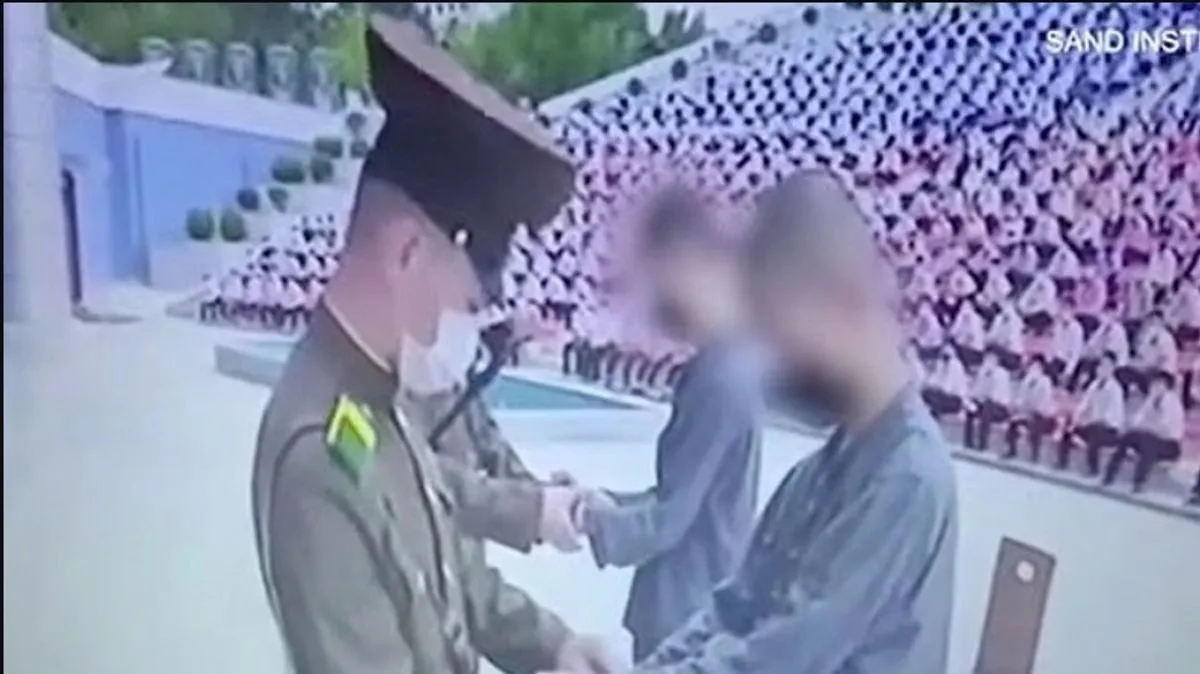
North Korea Executions: Hammer Deaths, Pregnant Woman Shot

A new report by Transitional Justice Working Group has documented harrowing details of extreme punishments in North Korea, including prisoners beaten to death with a hammer and a pregnant woman being shot. The report maps 144 known cases of executions and death sentencings involving hundreds of people, revealing a surge in killings during the Covid-19 pandemic.

Brutal Execution Methods

Of the 111 executions where methods were known, the vast majority (107 cases) were carried out by firing squad using rifles or machine guns. However, the report also documented rare and particularly brutal killings, including two executions using blunt instruments such as an iron mace and a hammer in so-called 'indoor' or non-public executions. Defectors reported witnessing the execution of pregnant women and even minors, despite Pyongyang's claims that such punishments are banned.

Secret Indoor Executions

A source said there had been non-public executions for roughly one or two persons per week at the city-level State Security Department in Hoeryong City, North Hamgyong Province. These 'indoor executions' used blunt weapons, and inmates were killed away from public view.

Wide Pickt banner — collaborative shopping lists app for Telegram, phone mockup with grocery list

Execution Locations

Images included in the report reveal suspected execution sites across North Korea, including firing ranges near airports, football pitches, and remote fields where crowds sometimes gathered to watch. Nearly three-quarters of the executions were carried out in public. The top five localities by number of documented executions are: Hyesan City, Ryanggang Province (23 executions, 20.7%); Pyongyang (22 executions, 19.8%); Chongjin City, North Hamgyong Province (17 executions, 15.3%); Hamhung City, South Hamgyong Province (5 executions, 4.5%); and Hoeryong City, North Hamgyong Province (5 executions, 4.5%).

Increase in Capital Punishment Since Covid-19

Since the Covid-19 pandemic, capital punishment for offences such as consuming South Korean movies, dramas, and music has increased. Death penalty cases related to foreign culture, religion, and 'superstition' jumped by 250 percent after the border closure. The report highlights that executions surged during the pandemic, with a rise in punishments for behaviours deemed threatening to the regime.

Shocking Cases

In some of the most shocking cases, defectors said they witnessed the shooting of minors despite official claims such punishments are banned. The report also documented two hangings, which occurred in Musan County (2012) and Chongjin City (2014), both public executions where the masses were mobilized to observe. The two blunt-force executions, one using an iron mace in 2012 and the other a hammer in 2020, were both non-public executions reported by North Korea–focused media.

Pickt after-article banner — collaborative shopping lists app with family illustration