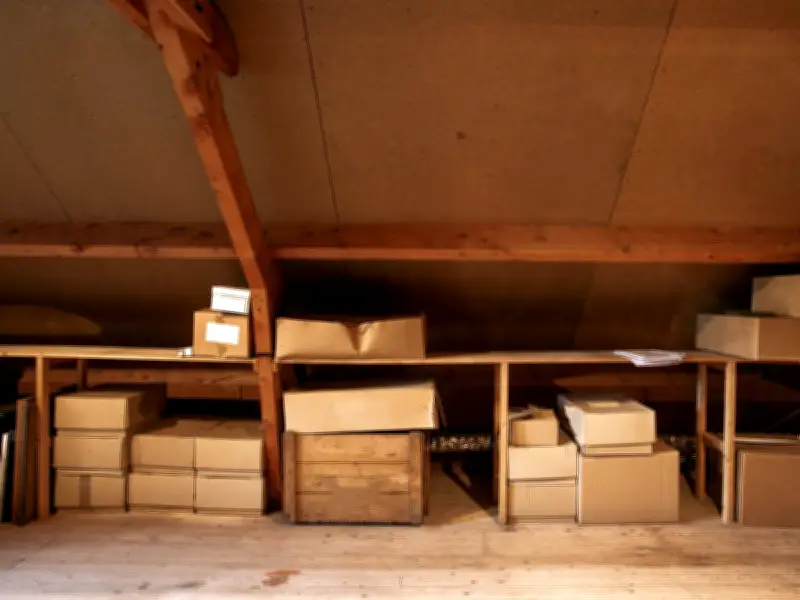
Households across the UK are being urged to move cardboard boxes away from their lofts this week as the country experiences a heatwave, with temperatures soaring above 30°C. Experts warn that a common loft mistake could be making bedrooms feel hotter, disrupting sleep.
Blocked airflow traps heat above bedrooms
Ryan Gorenflo, home improvement expert at The Basement Doctor, explains that blocked loft airflow—often caused by cardboard boxes, insulation, boarding, or DIY work covering vents and eaves—can trap hot air above bedrooms and make the rest of the home feel warmer. “Lofts need airflow. If vents are blocked by storage, insulation or boards, heat and moisture can sit above the living space. During summer, that trapped heat can make upstairs rooms feel warmer for longer, especially in the evening when people are trying to sleep,” Ryan says.
Many homeowners use lofts to store Christmas decorations, old clothes, paperwork, children’s toys, and seasonal items. However, when belongings are pushed tightly into the eaves, airflow can be restricted. Ryan adds: “A loft is not just empty storage space. It is part of how the home manages heat and moisture. If you pack it too tightly or block the areas where air is meant to move, the loft can become hotter, stuffier and less able to dry out properly. That heat can then sit above bedrooms and make upstairs rooms feel uncomfortable even after the sun has gone down.”

Boarding can create heat and moisture problems
Ryan warns that boarding a loft can be useful but must be done carefully. “If boards squash insulation, block airflow or cover ventilation routes, homeowners may solve a storage problem but create a heat and moisture problem.” Bedrooms often feel hotter than other rooms during summer because heat rises and collects at the top of the house. If the roof has absorbed heat throughout the day, a poorly ventilated loft may hold onto that warmth and release it slowly into the evening.
“The reason a bedroom can feel hot at night is that the building has been absorbing heat for hours. The roof, loft and upper walls can all hold warmth. If the loft has poor airflow, it can stay hot for longer, and that makes it harder for the rooms below to cool down,” Ryan explains. “Fresh air helps, but if there is a hot pocket of air above the ceiling, the bedroom may still feel warm and stuffy. People often focus on fans and curtains, which can help, but they forget to check whether the loft itself is trapping heat.”
Moisture and musty smells from stored items
Blocked loft airflow can also create moisture issues. Summer humidity can cause problems if air is not moving properly. Ryan adds: “Heat alone does not cause mould, but heat combined with trapped moisture and poor airflow can create the right conditions for musty smells. If a loft smells damp, stale or musty during warm weather, that should not be ignored.” Stored items can worsen the problem, especially if packed in cardboard boxes or fabric bags. “Cardboard absorbs moisture very easily. If cardboard boxes are pushed into a poorly ventilated loft space, they can start to smell musty and hold moisture against whatever is inside. That can damage clothes, photos, books and sentimental items before homeowners realise there is a problem,” says Ryan.
How to check and improve loft ventilation
Ryan advises homeowners to never climb into a loft if it is unsafe, too hot, or poorly lit. But where it is safe to inspect, they should look for signs that airflow may be blocked. “The first thing to check is whether the loft can breathe. Look at whether belongings are blocking the edges of the loft, vents or any obvious airflow routes. If everything is packed tightly from wall to wall, air may not be moving properly.” He adds: “Lofts can be awkward and unsafe spaces. If you are not sure whether something should be moved, or if you see damp, mould, damaged timbers or electrical wiring, get proper advice rather than guessing.”
The expert recommends moving storage away from the eaves and avoiding pressing boxes directly against roof timbers or vents. “You do not need to empty the whole loft. Start by making sure air can move. Keep storage organised, avoid blocking ventilation, and do not use every inch of the loft as packed storage space,” Ryan concludes.