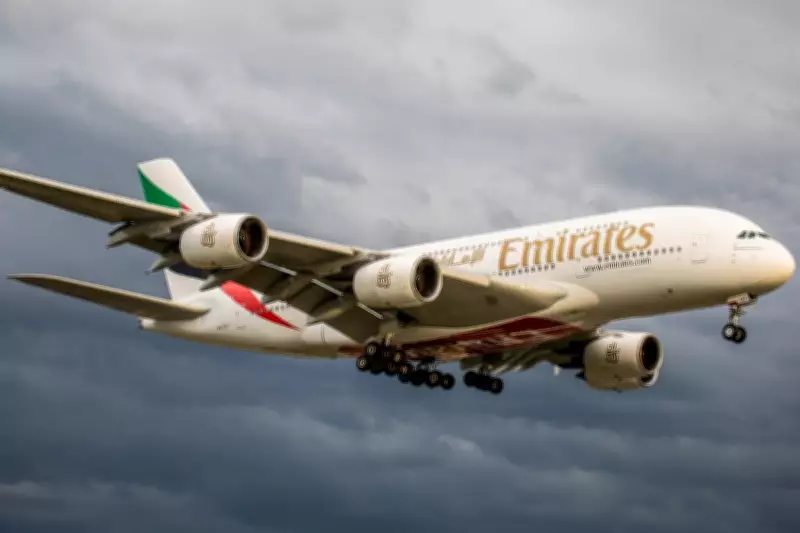
Emirates airline has announced a record full-year net profit of $5.4 billion, asserting its robust financial position to navigate rising jet fuel costs and disruption from the conflict in Iran. The Gulf carrier, posting results on Thursday, cited strong cash reserves as key to its resilience.
Financial Highlights
Net profit for the 12 months ending March rose to $5.4 billion, up from $5.2 billion a year earlier. Higher passenger yields – a measure of ticket prices adjusted for distance flown – offset a slight decline in passenger numbers, which stood at 53.2 million.
The parent group, which includes the eponymous airline and ground-handling firm dnata, reported cash reserves of $15 billion at the end of March. Group revenue reached a record $41 billion, up 3 percent year on year, with plans to pay $1 billion in dividends to its owner, Dubai sovereign wealth fund ICD.

Impact of Iran Conflict
The wider industry faces severe challenges: the US-Israeli war with Iran, which commenced on 28 February, caused widespread disruption. Temporary Middle East airspace closures led to thousands of cancellations, and escalating jet fuel prices pushed up costs, marking the sector's biggest crisis since the Covid-19 pandemic.
Emirates says it has restored 96 percent of its global network since disruptions began, carrying 4.7 million passengers over the period. Major Gulf carriers, including Emirates, are gradually restoring capacity but remain below pre-war levels. Renewed attacks on the United Arab Emirates this week have cast uncertainty over a fragile ceasefire that began last month.
Strategic Resilience
Group Chairman and CEO Sheikh Ahmed bin Saeed Al Maktoum expressed hope for a swift resolution to regional hostilities. "We hope for a clear resolution to the hostilities soon, and a return to market stability. But in the meantime, we are not sitting on our hands," he said in a statement.
He added: "The Emirates Group enters 2026-27 with very strong cash reserves, which enable us to progress with our plans to strengthen our business without knee-jerk cost control measures." Sheikh Ahmed noted that Emirates is well hedged on fuel until 2028-29 and has secured supply for current operations and a return to pre-disruption capacity.
Aircraft deliveries and a retrofit programme "will continue apace, as well as our planned investments in new facilities and equipment," he said.