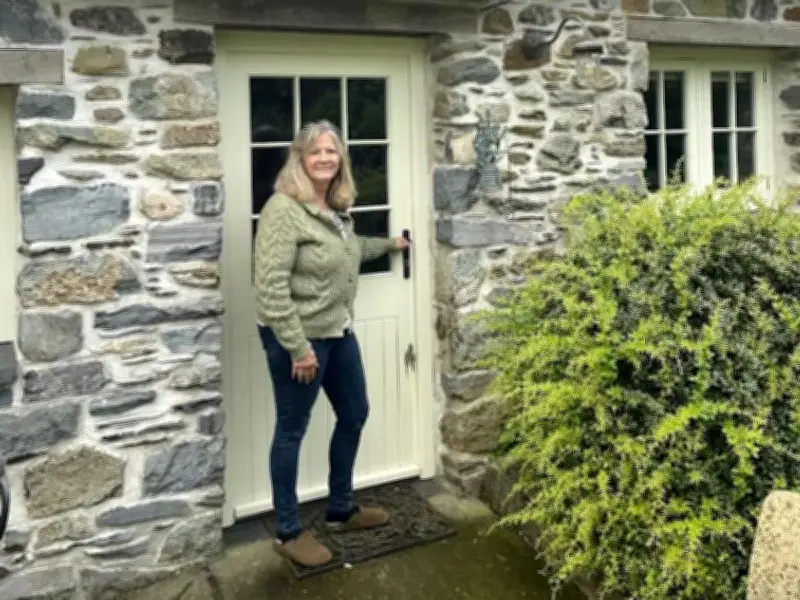
Retiree faces £9,000 annual council tax after converting garden outbuilding into holiday let
Caroline Byford, 62, decided to convert a former milking parlour at the bottom of her garden in Pembrokeshire, Wales, into a holiday let to supplement her pension. However, the move has backfired, as Pembrokeshire Council classifies the building as a separate dwelling, resulting in a council tax bill of more than £9,000 per year.
Byford and her husband, Shaun, 64, purchased the Grade-II listed farmhouse in May 2024. The previous owners had already renovated the dilapidated milking parlour, which stands just three metres from the farmhouse and shares utility services. Byford began advertising it as a holiday rental, but guests can only access the property through her home and garden.
Council tax soars due to second home premium
Pembrokeshire Council imposes a 200% second home premium on the holiday let, increasing Byford's council tax from £6,032.64 in 2024/25 to £6,223.13 in 2025/26, plus £2,941.84 on her main property—totalling £9,164.97. The typical Band D council tax bill in the UK is £2,392 annually, according to the National Association of Local Councils.
Byford called the situation a "parasitic tax" and said Wales is "no longer a place for opportunity or investment." She added, "It seems that the council assumes one size fits all when it comes to defining a second home."
Holiday let rules create challenges
To qualify for business rates and avoid the second home premium, Welsh Government rules require the property to be let for at least 182 days per year and available for 252 days. Byford struggles to meet these targets because she must be on-site to show guests how to access the barn, limiting her ability to travel. The three-bedroom property attracts families who book during school holidays, making it difficult to achieve continuous bookings.
"If someone books a long weekend, then it penalises us achieving the full seven-night booking since the rest of the week is no longer attractive to other visitors," Byford explained. She added that after maintenance, insurance, utility bills, and council tax, she is "not covering our costs."
Byford criticises lack of support for preserving farm buildings
Byford expressed frustration that the council encourages saving old farm outbuildings but penalises owners. "I don't get why we're being encouraged to save old farm outbuildings if there's no benefit; only penalties," she said. She has contacted local MPs but received only holding statements.
"We're constantly worrying about our finances and if we will obtain enough bookings to cover the costs of running, maintaining and insuring the barn," Byford said. "There isn't much more we can do. It's so very stressful."
Council and Welsh Government response
A Pembrokeshire County Council spokesperson said the letting days criteria and second home premium are set by Welsh Government legislation, and advised checking statutory exceptions. The Welsh Government has confirmed a review of the 182-day rule, as pledged by Plaid Cymru in its manifesto to create a "reasonable exemption" for self-catering accommodation.