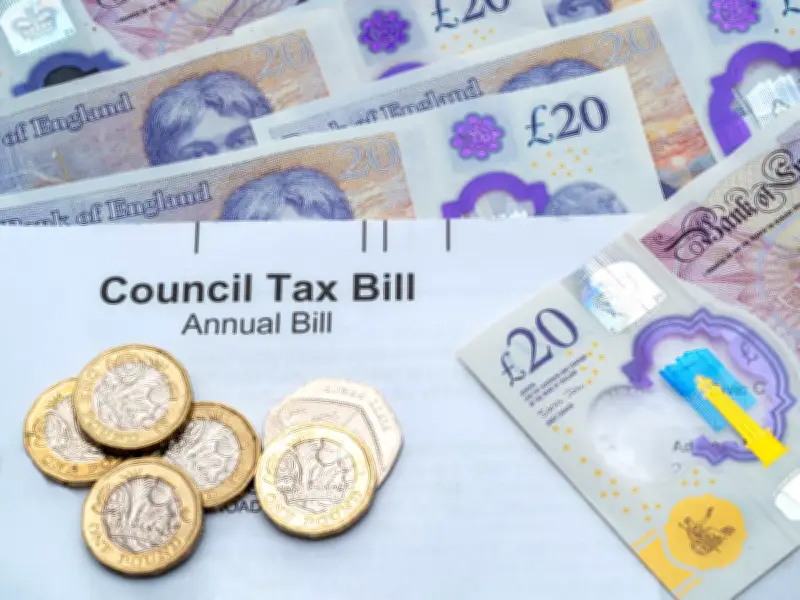
Consumer experts Which? have revealed that many UK households could be overpaying on Council Tax due to outdated property valuations. The average Band D Council Tax for 2026-27 is £2,392, with annual fees ranging from £1,595 for Band A to £4,785 for Band H.
Why You Might Be Overpaying
Your Council Tax band is based on your home's value in 1991, the year Terminator 2 was released. Which? notes that these valuations have barely changed since then, meaning many properties may be in the wrong band.
Council Tax varies by region: Wales revalued in 2003, while Scotland has its own system. In the North East of England, Band A covers homes valued up to £40,000 in 1991, while Band H is for properties over £320,000. Band D applies to homes worth between £68,000 and £88,000 in 1991.
How to Check Your Council Tax Band
Which? offers a simple method to check your band:
- First, check what band your neighbours are in using the government's Council Tax band website. If your home is similar in size, age, and location, you should likely be in the same band.
- Next, look up recent sale prices of similar homes on your street using Zoopla's House Price Calculator. This can estimate what your house would have been worth in 1991.
Risks and Rewards of Challenging Your Band
Which? warns to be careful when challenging your band. It is not guaranteed to save you money, and your band could stay the same, go down, or even increase. Changes could also affect your neighbours' bands.
However, if successful, you may be entitled to a refund of overpaid Council Tax backdated to when you moved in. Which? found that about half of people who challenged their band successfully got it lowered, while only one percent saw an increase.
How to Challenge Your Band
To challenge your banding, visit the Valuation Office Agency website. For residents in Scotland, use the Scottish Assessors Association instead.
Changes That May Affect Your Band
Your property may be moved to a different band if you:
- Demolish part of your property without rebuilding
- Create two or more self-contained units, such as an annexe (each unit gets its own band)
- Split a single property into self-contained flats
- Convert flats into a single property
- Start or stop working from home
- The previous owner made changes to your property
- There are significant changes to your local area, like a new road
- A similar property in your area has its band changed
By following these steps, you could potentially reduce your Council Tax and even receive a refund for overpayments.