The world's leading natural diamond company De Beers coined the term “diamonds are a girl’s best friend” in 1940, positioning these jewels as not merely a fashion piece, but a lifelong symbol of love and luxury. However, in recent years, the enduring popularity of mined diamonds has been disrupted by lab-grown alternatives. Diamonds might be forever, but they aren’t so kind to the planet. The gemstones have a significant environmental and ethical impact: just one carat of diamonds causes up to 3.1 tonnes of earth displacement and requires 8.9 litres of fuel consumption, while leading to the displacement of both people and wildlife.
These concerns have led to a growing demand for artificial alternatives which are not only more sustainable, but also more affordable. One of the first major jewellery brands to introduce lab-grown gems was Pandora. The Danish company uses 100 per cent renewable energy in its facilities when crafting diamonds, with each set in 100 per cent recycled silver or gold. This recycled material could come from jewellery, silverware, coins or even electronics. The carbon footprint of a finished white Pandora lab-grown diamond is around 90 per cent lower than that of a mined diamond – with a 1 carat cut comparable to that of a pair of jeans.
Introducing the Fifth C
In a bid to offer further transparency for shoppers, Pandora has now introduced carbon footprint labelling on all its diamonds, dubbing it the “fifth C” – diamonds are traditionally graded by cut, colour, clarity and carat. The diamonds are “easier on your wallet, and easier on the environment, making them much more accessible,” Jennie Farmer, Pandora’s CMO, said at the Global Fashion Summit in Copenhagen. The annual conference is the biggest of its kind in the world, attracting influential names in sustainable fashion. Over two days, progress, setbacks and goals are shared, fostering collaboration toward a net-positive future. Closely behind oil and gas, the fashion industry is among the earth’s most polluting sectors.

Pandora, now a key player at the summit, has pledged to achieve net-zero greenhouse gas emissions across its entire chain by 2040. “I think the fifth C is really a step forward,” Farmer said. “When the sustainability team first said they were thinking of doing this, I said it sounds amazing, but how? How do we do this in a way that is really factual and rigorous? It's been a lot of work... but we've worked with two external agencies and the report is fully validated by Ernst & Young.”
Pamela Anderson’s Support
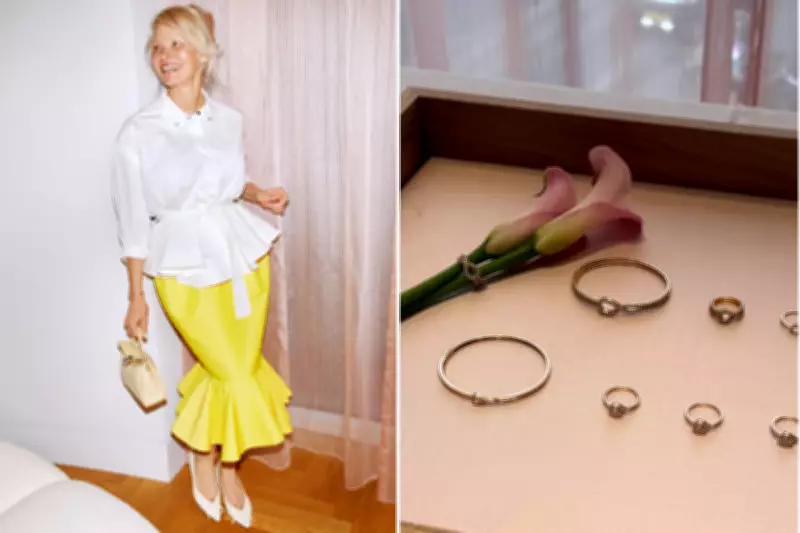
Pamela Anderson – a decade-long advocate for sustainability and animal rights – is an ambassador of Pandora, wearing bespoke lab-grown diamond pieces on red carpets from Cannes to LA. At the Pandora x GFS dinner, the actor complemented her signature bare-face look with understated, dainty silver lab-grown diamond jewellery. Speaking at the summit, she said: “They’re diamonds, they’re the same, and I love that.” She added: “Greater honesty and accountability is becoming a cultural force... in our small little ways, we can make better choices for the planet. I like to think of it as being a romantic activist.”
Consumer-Centric Approach
What’s being made clear at the summit is that brands driving change must also remember to keep the consumer at the heart of their model. “It’s not just about the fact that you could now buy your diamond engagement ring at a much more accessible price – you can decide to buy a beautiful ring or a simple bracelet, and don’t have to wait for those big moments or special occasions,” Farmer said. “It's gifting for Mother's Day or gifting for your partner, or women buying for themselves – I love that, I love the idea that you don't have to wait for your partner to give you a diamond. You can buy all for yourself.”

Importantly, Pandora’s lab-grown stones carry all the same qualities as diamonds, meaning the gems are aesthetically and physically identical to the real deal. But how does Pandora achieve this? “We start with what we call a diamond seed, which is a very, very thin piece of lab-grown diamond,” Farmer explained. “That is then placed in a chamber under conditions of controlled temperature and heat over a number of weeks, where we basically grow a rough diamond. We're essentially replicating the forces that were under the Earth millions of years ago in a laboratory.”
The brand uses technology where a hydrogen gas mixture is heated to 800°C. Over three weeks, a rough diamond is created, and then artisans cut and polish that rough diamond as would be done with a mined diamond. The result is a chemically and optically identical gem.
Top Picks from the Collection
Pandora Era Bezel Lab-Grown Diamond Open Ring
Carat: 0.07, Sizes: 48-60. This ring is a timeless piece, featuring a contemporary open design that is easily adjustable. It has two bezel-set lab-grown diamonds on each end of the open ring band. Lightweight and versatile, it’s a lovely gift at £199.
Pandora Era 14K Gold Lab-Grown Diamond Half Eternity Pavé Band Ring
Carat: 0.11, Sizes: 48-60. A similar diamond band ring from De Beers would cost upwards of £2,000, while Pandora’s lab-grown alternative is less than £500. The 14-carat gold band is encrusted with 27 lab-grown diamonds, offering maximum light refraction. Priced at £399.
Pandora Era Lab-Grown Diamond Bracelet
Carat: 0.05, Sizes: 16cm, 18cm, 20cm. This delicate bracelet is made of recycled 14-carat gold and a single lab-created diamond. The prong-set gem captures light beautifully. Available in three sizes with an adjustable chain, it’s comfortable and secure. Priced at £209.
Pandora Era Lab-Grown Diamond Cluster Paperclip Chain Necklace
Carat: 0.1, Sizes: 45cm. This necklace is crafted from solid 14-carat gold with a paperclip-style chain. It features three lab-grown diamonds in a delicate triangle formation. The necklace emits the same sparkly appeal as mined diamonds. Priced at £399.
Pandora Era Lab-Grown Diamond Cluster Stud Earrings
Carat: 0.19. These understated studs are crafted from 14-carat gold and each is enhanced by a trio of diamonds. The combined carat weight is 0.19, adding elegance to simple studs. Boasting the same shine as mined diamond studs, they are 80 per cent less costly. Priced at £349.
Are Pandora’s Lab-Grown Diamonds Worth It?
The lab-grown portion of the jewellery market is rapidly increasing, projecting to grow from $33.5 billion in 2026 to over $90 billion by 2034. Pandora’s lab-grown collection solidifies the growing desire for ethical alternatives to mined gems. These advancements from one of the biggest jewellers are hopeful signifiers of moves within the industry toward more responsible practices. The carbon footprint labelling not only holds the brand itself accountable but helps with growing awareness towards the ethical and environmental benefits of opting for an artificial diamond. Starting from £100, the pieces are significantly cheaper than their mined alternatives while still being made to last. The timeless pavé pieces, delicate diamond clusters and minimalist gold bands and chains throughout Pandora’s new era collection put a contemporary spin on classic styles.