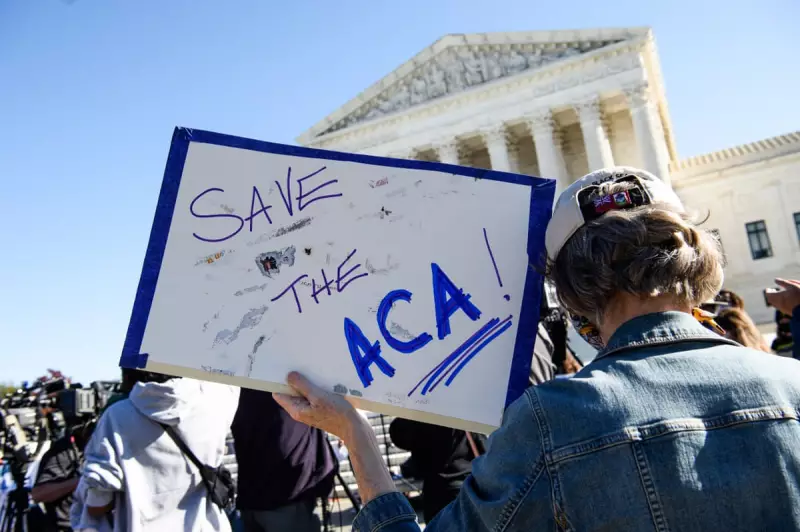
In a significant bipartisan move, the United States House of Representatives has voted to reinstate crucial tax credits for the Affordable Care Act (ACA), directly challenging former President Donald Trump's stance on healthcare. The vote, which saw a notable rebellion from within Republican ranks, aims to prevent a sharp rise in health insurance premiums for millions of Americans.
A Bipartisan Rebuke on Healthcare
The chamber passed the legislation on Thursday by a vote of 230 to 196. The bill seeks to extend for three years the enhanced tax credits that lower premiums for plans under the ACA, often referred to as Obamacare. These credits were initially established under President Joe Biden but expired at the end of 2023.
Every Democrat present voted in favour, and they were joined by 17 Republicans. This cross-party coalition formed despite opposition from Trump and House Speaker Mike Johnson, who has derisively labelled the ACA the "Unaffordable Care Act." The Republican defectors, many from moderate districts, cited an inability to support increased healthcare costs for their constituents as a key reason for breaking ranks.

The Path to a Floor Vote
The vote itself was forced through an unusual procedural manoeuvre known as a discharge petition. After Speaker Johnson refused to bring a compromise deal to the floor, a group of four Republicans, including Representative Brian Fitzpatrick, signed the petition last month to bypass leadership and force a vote on a clean, three-year extension.
"All of those options were rejected, unfortunately, by House leadership, so it left us with two options – either expiration or clean extension. And clean extension is a far better option, in my view," Fitzpatrick explained in an interview.
During preliminary debates, Republican congressman Mike Lawler stated he was voting to send the measure to the Senate, where he expects it to be revised into a final reform package that can pass Congress.
Political Stakes and the Road Ahead
The vote carries substantial political weight with the November midterm elections approaching. Democrats have positioned the extension as a core part of their campaign to address an "affordability crisis," a term House Minority Leader Hakeem Jeffries emphasised is "very real, despite what Donald Trump had to say."
However, the bill's future is uncertain. The Senate, controlled by Republicans, rejected a similar Democratic-backed measure last month. Experts predict that without the subsidies, premiums for ACA plan enrollees could roughly double. Fitzpatrick anticipates the Senate will now "put their stamp on" the extension before it returns to the House for final consideration.
While Trump has dismissed affordability concerns as a "hoax," Speaker Johnson has indicated that Republicans plan to outline their own proposals to reduce healthcare costs in the coming weeks. For now, the House vote stands as a clear, bipartisan signal that the issue of healthcare premiums remains a pressing concern for lawmakers on both sides of the aisle.