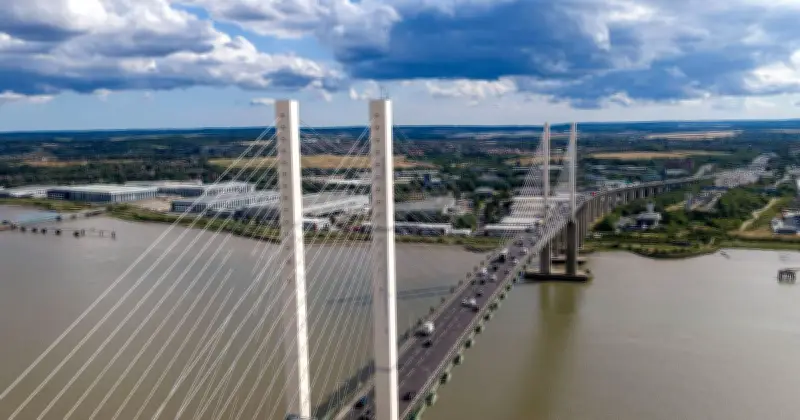
The Dartford Crossing generated £189.2 million in 2025, an increase of around £49 million from the previous year's approximately £140 million, following a Labour-led toll increase. The AA has accused the government of fleecing motorists.
Revenue surge after price rise
The crossing, which links Kent and Essex via the Queen Elizabeth II Bridge and two tunnels, saw its greatest increase in revenue in a single year after charges were raised on September 1, 2025, marking the first price rise since 2014. The standard fee for a car jumped by 40% from £2.50 to £3.50 per crossing, or £2.80 with a pre-pay account.
Other vehicle categories, including motorcycles, buses and heavy goods vehicles, also faced increases, though reduced rates are available to some local and frequent users. The crossing is free between 10pm and 6am, and motorcycles, mopeds and quad bikes cross free at all times.
AA criticises 'money for nothing'
Edmund King, president of the AA, said the revenue showed motorists were being unfairly charged. He argued that ministers had “betrayed” motorists and that successive governments had “continued to fleece” them. He noted the “original agreement was that the Dartford toll should have been abolished when the bridge and maintenance were paid for in 2003”.
“This is money for nothing as drivers have no choice and must cross the Thames. Nobody uses the Dartford Crossing for the heck of it,” he added.
Government defends increase
A Department for Transport spokesperson said: “Every penny of Dart Charge revenue is reinvested in transport projects, including those benefitting people across Essex and Kent, such as supporting the Lower Thames Crossing, which reduces the burden on the public purse.
“Charges were increased last September to keep the crossing safe and running smoothly, as it’s now being used by far more vehicles each day than it was built for.”
The government announced the increase in June 2025, citing growing traffic levels. Minister for Local Transport Lilian Greenwood MP said demand had grown 7.5% in 11 years, with the crossing used by an average of over 150,000 vehicles daily and up to 180,000 on busiest days, exceeding design capacity and causing delays and congestion on the M25.