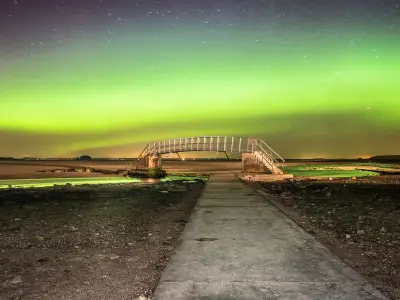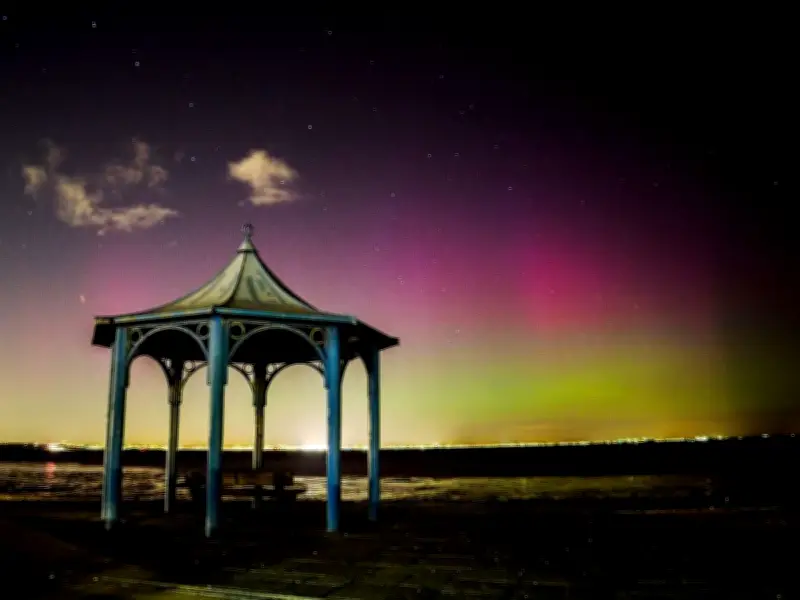
The Northern Lights lit up skies across the UK on Saturday night, with sightings reported as far south as Kent, Hampshire and Devon. The natural phenomenon, also known as Aurora Borealis, was also visible on Friday night, and the Met Office has said sightings could continue until Tuesday.
Further sightings forecast
The Met Office said the lights will likely be seen again across Scotland and northern England during clear skies between October 11 and 13. The display, captured in shades of pink, purple and yellow, comes as experts have previously said 2026 would be a peak year for spotting the Northern Lights due to heightened activity from the Sun, as part of its 11-year cycle.
What causes the Northern Lights
The phenomenon is caused by solar eruptions from the Sun which release charged particles known as solar wind. The Met Office explained: "When these particles interact with Earth's magnetic field – especially when the solar wind's polarity is opposite to Earth's – they are funnelled toward the magnetic poles."
"As these energetic particles collide with gases in the upper atmosphere, they release energy in the form of light. Oxygen produces green and, at higher altitudes, rare red auroras, while nitrogen creates blue and purple hues."
Tips for sky-gazers
Those hoping to spot the lights should look north in a dark, rural area away from streetlights and other artificial light. People can also use the camera on their phones to try and pick up colours that are difficult to see with the naked eye.