
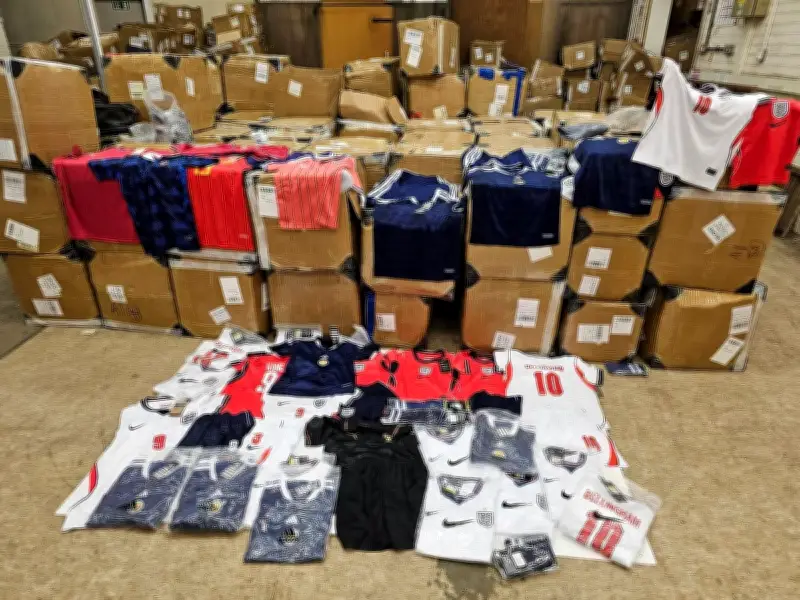
Fake World Cup football kits have flooded Britain because border guards lack the resources to intercept them, experts claim. Border Force officers have confiscated 118,000 bogus shirts destined for the UK black market since 2020, but seizures have plummeted dramatically.
Seizure Numbers Drop Sharply
More than 35,000 counterfeit shirts were confiscated during both the 2022 World Cup and Euro 24 tournaments. Even in 2023—a non-tournament year—almost 20,000 fake tops were prevented from entering the UK. However, last year Border Force seized just 4,300 fake shirts, and up to the start of the World Cup last month, only 2,300 had been confiscated. The figures were revealed by the Home Office in response to a Freedom of Information request by the Daily Star.
Operation BLOXWICH and Edinburgh Seizure
After the FOI request, Border Force launched a special operation codenamed BLOXWICH to target fake kits ahead of the World Cup, seizing 4,400 shirts. But that remains a fraction of the amount normally confiscated in a World Cup year. Meanwhile, Trading Standards investigators made a record seizure of 58,000 fake World Cup football shirts worth £5.5 million at a distribution warehouse in Edinburgh. Undercover officers placed an order via an online ad and followed a trail to the centre packed with nine tonnes of bogus gear. All the Chinese-made kits—largely England and Scotland—were sneaked into the UK past border patrol officers.
Experts Cite Resource Pressures and Changing Tactics
Chloe Long, director general of the Anti-Counterfeiting Group, said: “A fall in detentions should not be mistaken for a reduction in counterfeit football kits entering the UK market. It is more likely to reflect two significant trends—increasing pressure on Border Force resources and the changing tactics of counterfeiters. Border Force officers are stretched across a wide range of priorities. If intellectual property crime is not given the funding, specialist training and strategic focus it requires, fewer illicit goods are likely to be intercepted.” She added that criminals are increasingly exploiting e-commerce and social media to sell directly to consumers, with products arriving in thousands of small parcels that are far harder to detect than traditional bulk imports.
Impact of the Counterfeit Trade
The Home Office says fake kits contain harmful chemicals and fund organised crime. Long warned: “What looks like a bargain is often a false economy. Counterfeit kits are typically poor quality, don’t last, and every purchase helps fund organised criminal activity instead of supporting the clubs, grassroots football and charitable initiatives that official sales help sustain.” Though Border Force’s funding escaped budget cuts, resources have been focused on clamping down on illegal immigration and small boat crossings. A Home Office spokesman said: “Selling counterfeit goods is not a victimless crime. It puts UK consumers at risk, undermines honest businesses, and bankrolls serious organised crime. Border Force officers work round the clock to prevent these products entering the country.”




