
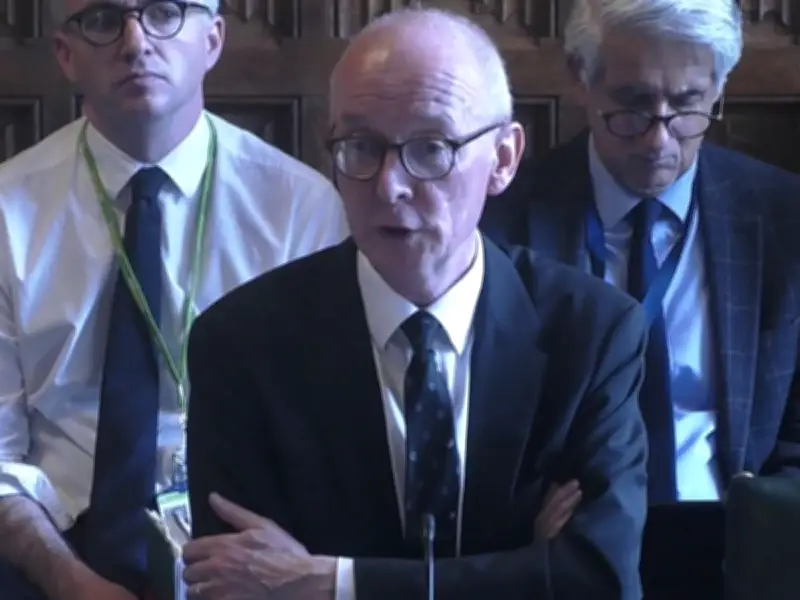
A senior DWP minister has discussed changing the state pension eligibility criteria to keep the policy affordable. Work and Pensions Secretary Pat McFadden spelled out some misconceptions about how the system operates.
State Pension Costs Rising
The state pension bill for the Exchequer continues to climb, with payments increasing each April under the triple lock while more individuals reach state pension age and begin claiming the benefit. Mr McFadden addressed the Work and Pensions Committee regarding the possibility of the Government tightening the rules in efforts to keep the policy sustainable.
Raising the state pension age is a relevant issue, as the qualifying age is currently increasing, rising gradually from 66 to 67 between April 2026 and April 2028. Legislation is also in place for a further rise in the state pension age, from 67 to 68, between April 2044 and 2046.
'Difficult Decisions'
Regarding where to set the state pension age, Mr McFadden said: "These are difficult decisions. You have to take into account affordability for the country, because even though it is a contributory system, it really works as a pay-as-you-go system."
People build up their state pension entitlement by paying National Insurance contributions. Typically, 35 years of contributions are required to receive the full new state pension, which currently pays £241.30 weekly, or approximately £12,550 annually.
However, the reality is your contributions aren't going into a dedicated fund from which you'll eventually withdraw, unlike a private pension. Mr McFadden told the committee: "It has to be affordable and give people security in retirement, but it has to take into account the factors that you raise as well. We owe that to the public. It is a very delicate decision, which is why we do these careful reviews to take all these things into account."
Labour announced last year there would be a further review of the state pension age, examining what criteria should determine where it's set.
March Deadline
The review will consider the extent to which life expectancy is an appropriate measure to help determine the state pension age, among other matters. Under the 2014 Pensions Act, a review of the state pension age must be carried out at least every six years, meaning the next one needs to be finalised by March 2029.
Mr McFadden was asked if the upcoming review is on schedule to meet this March 2029 deadline. He said: "There are periodic reviews of this built into the process. The state pension age has been rising in the last couple of decades. I don't want to pre-empt anything but that review is built into the process. That is the timescale. I have no changes to announce on that here."




