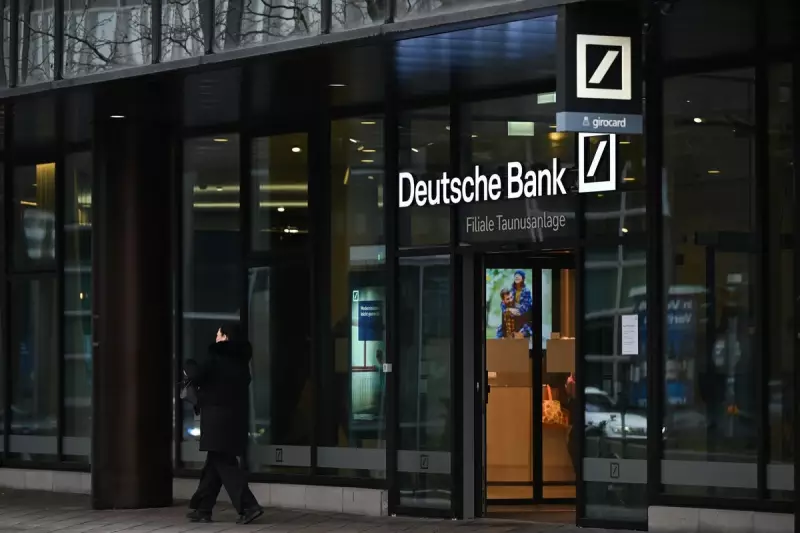
German law enforcement authorities have executed coordinated raids at the offices of Deutsche Bank, the nation's largest financial institution, as part of a significant investigation into suspected money laundering activities. The searches were conducted simultaneously on Wednesday at the bank's headquarters in Frankfurt and at its premises in Berlin.
Prosecutors Target Unknown Employees and Foreign Entities
Prosecutors based in Frankfurt have confirmed that their investigation specifically targets "unknown employees" of Deutsche Bank, alongside prior business relationships with foreign entities. These relationships are believed to have been utilised for conducting illicit financial transactions designed to obscure the origins of funds.
The Frankfurt prosecutor's office has stated that it cannot currently provide additional details regarding the precise nature or scale of the transactions under scrutiny. This lack of specific information suggests the investigation remains at a sensitive stage, with authorities gathering evidence across multiple locations.

Bank Confirms Cooperation with Authorities
Deutsche Bank has officially acknowledged the presence of the Frankfurt public prosecutor's office at its premises. In a formal statement, the bank declared: "We confirm that the Frankfurt public prosecutor's office is on site in our offices. The bank is cooperating fully with the public prosecutor's office. We cannot comment further."
This raid occurs at a particularly sensitive moment for the financial institution, taking place just one day before Deutsche Bank is scheduled to release its highly anticipated 2025 earnings report to investors and the public.
Historical Context of Regulatory Issues
Deutsche Bank possesses a substantial history of regulatory challenges and financial penalties related to compliance failures:
- In 2018, the bank was fined $205 million by New York regulators for manipulating the foreign exchange market
- During 2017, it faced a $41 million penalty from the Federal Reserve for failure to maintain adequate anti-money laundering controls
- Also in 2017, Deutsche Bank paid $629 million in penalties to New York and British regulators for control lapses that enabled wealthy Russian clients to launder approximately $10 billion in illicit funds through the institution
Money laundering, which involves transactions specifically designed to conceal the illegal origins of funds to make them appear legitimate, represents a persistent challenge for global financial institutions operating across international borders.
The timing of these raids, coinciding with the bank's upcoming earnings announcement, raises significant questions about potential impacts on Deutsche Bank's reputation and operational stability as German authorities continue their investigation into these serious allegations.