
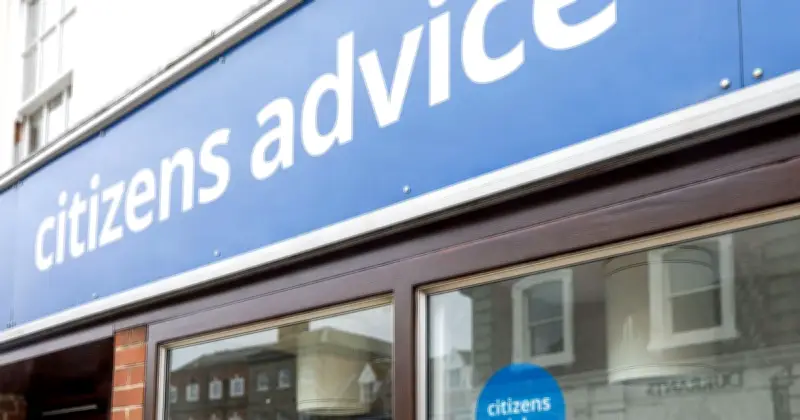
A government review has found that Citizens Advice is increasingly directing households struggling with energy bills or rent towards Personal Independence Payments (PIP), raising concerns that the disability benefit is being used to supplement income rather than cover extra costs from long-term illness or disability.
The review, conducted by Sir Stephen Timms, the social security minister, warns that PIP is not working 'as intended' and that the cost of disability benefits could reach £41 billion a year by the end of the decade. The Department for Work and Pensions (DWP) examined the sharp rise in PIP claims, including a surge in claims related to mental health conditions such as anxiety and ADHD.
Sharp rise in PIP claims linked to financial hardship
According to the review, an increasing number of households are being directed towards PIP after approaching Citizens Advice and other organisations for help with their finances. The review states: 'People may have been seeking additional sources of income to help them meet rising costs, and contact with support bodies, healthcare professionals or benefit advisers may result in being “signposted” towards PIP.'
PIP, which can be worth up to £778 a month, is designed to help people with disabilities or long-term sickness cover extra costs, including home adaptations. Unlike Universal Credit and other benefits, it is not means-tested and can be claimed by both employed and unemployed individuals.
Nearly a quarter of Citizens Advice clients redirected to PIP
The review cites figures from Citizens Advice showing that last year, almost a quarter of people who contacted the organisation about difficulties paying energy bills or rent were later given advice on how to claim PIP. Additional research by Basis Social, which interviewed advisers, medical professionals, and social workers, found that 'financial pressures will, in some cases, be the trigger for initiating a claim.'
The research noted that 'conversations about PIP were a significant part of their day-to-day workload' and concluded that 'seeking general advice on financial hardship may be a starting point for a more specific conversation about PIP.'
PIP caseload nearly doubled since 2018
Official figures show that four million people were claiming PIP in April 2026, up from 2.1 million in April 2018—a near doubling. Of these, 3.3 million were of working age and 700,000 were pensioners. The cost to taxpayers has risen from £12.5 billion in 2019/20 to an estimated £28.7 billion in 2025/26.
Helen Whately, the shadow work and pensions secretary, criticised the trend, saying: 'Anyone encouraging someone to claim PIP should only do so if they genuinely believe they’re entitled to it. PIP is not there to help able-bodied people with their bills – it’s there to help cover the extra costs faced by people with serious illnesses and disabilities.' She added that a Conservative government would carry out a 'root-and-branch review' and introduce face-to-face assessments.
Government promises reform after review
A DWP spokesman said: 'The central conclusion of the Timms Review Interim Report is clear – PIP is no longer fit for purpose. The review’s final recommendations are due this autumn and will lay the foundation for deep, sustainable reform.' The spokesman also highlighted that household incomes have risen 5 per cent in real terms, food bank usage has fallen, and food insecurity is down.
Citizens Advice defends its role
A Citizens Advice spokesman said people often approach the organisation with overlapping problems, such as seeking a fuel voucher but then receiving support for wider financial hardship, including PIP eligibility checks. The spokesman explained: 'PIP is a complex benefit, and our frontline teams help people who have complicated health needs, struggle with digital applications and might otherwise find it difficult to access help they’re eligible for and desperately need.'
They added: 'We regularly speak to people who cannot afford to top up their energy meters because the electricity needed to power a lifeline mobility device, or the extra heating required to manage the side effects of chemotherapy, has left them unable to make ends meet.' Citizens Advice called for fundamental reform to make PIP 'fair, compassionate, and straightforward' for those who depend on it.




