The Bitter End of a Brewing Revolution
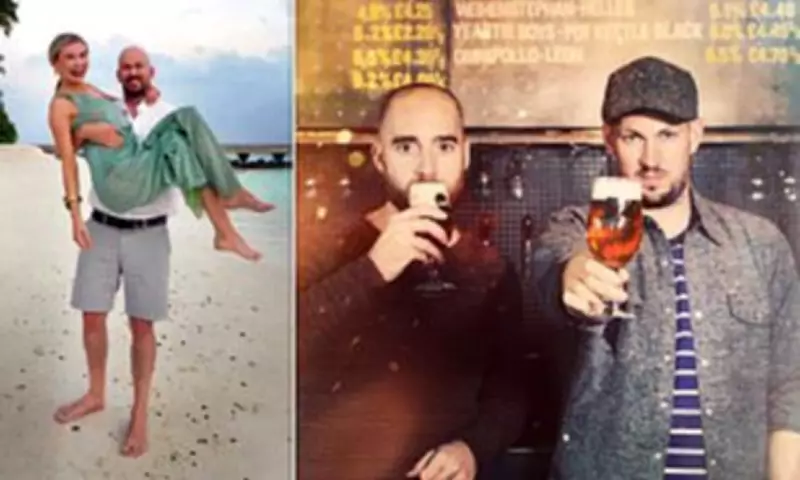
Last Sunday, television personality Georgia Toffolo celebrated her first wedding anniversary to businessman James Watt with an effusive Instagram tribute. "One year married to you," she wrote. "I had a whole fantasy about what marriage would look like since I was about five years old and honestly? What we have is a thousand times better."
A Sudden Corporate Implosion
Less than twenty-four hours after this romantic declaration, 484 employees of BrewDog – the company Watt co-founded and led for seventeen years – received devastating news during a fifteen-minute conference call. They were being made redundant. Earlier that same day, tens of thousands of small investors, known as "equity punks," received emails informing them that BrewDog had entered administration and been sold to American company Tilray for £33 million, with little hope of recovering their investments.
A decidedly unpunkish ending, as one former employee observed: "A company that promised to explode went out like a deflating balloon." This represents a dramatic collapse for a brand once valued at £900 million, built on rebellion and community support, now absorbed by a multinational at a fraction of its former worth.

The Founder's Response and Backlash
On LinkedIn, where Watt describes himself as "Investor – Entrepreneur – Punk," the forty-three-year-old adopted a humble tone in a lengthy post, expressing being "heartbroken" about his company's fate. "During my 17 years in charge there were highs, lows, successes, failures, huge gambles and many mistakes," he wrote, acknowledging this week had been "incredibly hard."
However, this outpouring received significant criticism. Many questioned his sincerity, with one commenter asking: "Are you heartbroken you gave the institutional investor preference over the equity punks?" Another accused him of "continued conceit," while on Reddit, users described themselves as "livid" and accused Watt of "hubris."
The Rise of a Punk Brewing Empire
The extraordinary arc of BrewDog began when Watt and university friend Martin Dickie started brewing craft beer in an industrial unit in Fraserburgh, Aberdeenshire. Armed with savings and a £20,000 bank loan, they challenged Britain's mass-produced lager market with aggressively hopped craft beers.
While Dickie handled production with his brewing degree, Watt – a former fishing boat captain – masterminded BrewDog's marketing through audacious stunts:
- Riding a tank through London to protest banking culture
- Projecting his naked image onto the Houses of Parliament
- Dropping taxidermied cats over the capital to symbolize the extinction of financial "fat cats"
The consistent message was anti-corporate, anti-establishment, and proudly disruptive, encapsulated in Watt's favorite declaration: "Rip up the rulebook."
The Equity for Punks Revolution
Central to BrewDog's meteoric rise was the 2009 "Equity for Punks" crowdfunding campaign, marketed as a financial revolution allowing ordinary beer drinkers to "own a slice of the brewery." Over twelve years, approximately 220,000 investors contributed around £75 million, receiving shares and perks including discounted beer and invitations to Annual General Mayhem events.
However, critical decisions would later contribute to the company's downfall. In 2017, BrewDog sold a 23% stake to TSG Consumer Partners for £213 million, with Watt and Dickie reportedly pocketing £50 million each. TSG's investment came with preferential rights, meaning their capital would be repaid before other investors in any sale – a provision that has now proved crucial to small investors' losses.
Internal Cracks and Cultural Issues
Behind the glitzy facade, problems were brewing. In 2021, an open letter from "Punks With Purpose," signed by dozens of former employees, accused BrewDog of fostering a "culture of fear" where staff were left "burnt out, afraid and miserable." The blame was directed squarely at Watt, who publicly apologized while denying some allegations and promising an independent review.

Former employee Charlotte Cook, who signed the letter after her three-year employment deteriorated following a lupus diagnosis, recalled: "They made it very clear that if you're unwell you can't work there... I had to keep working even though I was literally working myself to death."
The Final Descent
Watt stepped down as CEO in 2024, adopting the title "captain and co-founder" while citing a desire for a "non-operational role." BrewDog began struggling with rising energy costs, supply chain pressures, and higher alcohol duties affecting independent brewers across the sector.
In February, BrewDog confirmed it had put itself up for sale, citing a "challenging economic climate." The uncertainty culminated in Monday's mass redundancy announcement, where employees received just twenty-five minutes notice before the fifteen-minute video meeting that ended their employment.
Bryan Simpson of the Unite union told the BBC: "I've been representing bar workers for over a decade and it is the worst mass redundancy I have dealt with, including during the pandemic."
Investor Losses and Aftermath
Small business adviser Richard Fisher from Suffolk, who invested £12,000 attracted by BrewDog's branding, is now writing off the sum. "Maverick, independent, to a certain extent rebellious – it was all good stuff," he said. Another investor, Phil Halsey, has written off his £2,500 investment, expressing disappointment while acknowledging he hadn't sold his shares when he had the opportunity.
Meanwhile, Watt maintains a significant personal fortune estimated around £250 million and has launched a new venture called Social Tip – a platform paying users to post about brands. His goal, announced after stepping down from BrewDog, is "becoming a unicorn" – achieving a valuation over $1 billion, just as BrewDog did in 2017.
A Legacy of Contradiction
The collapse of BrewDog represents a profound irony: a company built on tearing up the rulebook was ultimately undone by conventional business realities. While Watt reflects that "the mistakes hurt far more than the successes console," these words ring hollow for those who lost jobs and investments.
The BrewDog story serves as a cautionary tale about the tension between punk ethos and corporate growth, community ownership and preferential investor rights, revolutionary marketing and traditional business vulnerabilities. What began as a rebellion against establishment brewing ended with the most establishment of outcomes: administration, acquisition, and significant financial losses for the very community that helped build the brand.