

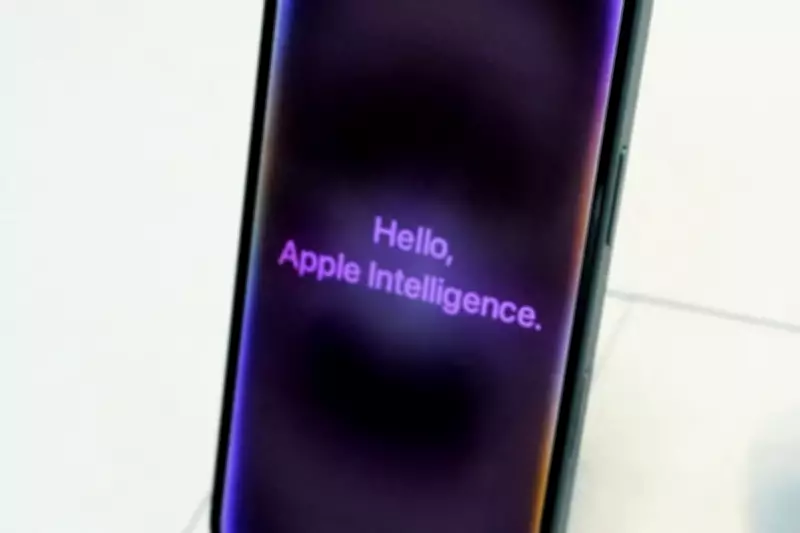
In a landmark move to bolster its artificial intelligence capabilities, Apple has completed the acquisition of the secretive Israeli startup Q.ai for a staggering $2 billion. This transaction represents the tech giant's second-largest acquisition in its history, surpassed only by the $3 billion purchase of Beats Electronics in 2014.
A Strategic Push in the AI Arena
The acquisition comes at a pivotal moment for Apple, as the Cupertino-based company intensifies its efforts to compete with leading AI rivals such as Google, Meta, and OpenAI. This strategic push involves a comprehensive overhaul of its AI offerings, aiming to close the gap with its competitors.
Central to these plans is a significantly revamped version of Siri, Apple's virtual assistant, which is scheduled for launch next month. Furthermore, Apple is integrating Google's market-leading Gemini AI into its Apple Foundation Models, signalling a collaborative yet competitive approach in the rapidly evolving AI landscape.

The Technology Behind Q.ai
Q.ai, founded in 2022, has operated largely under the radar, with limited public information available about its operations. However, patent filings reveal that the startup has developed pioneering technology that enables users to communicate with AI chatbots silently through "facial skin micro movements."
This innovative approach allows for non-verbal interaction, potentially revolutionising how individuals engage with artificial intelligence. The technology can be embedded into various wearable devices, including headphones and smart glasses, offering a seamless and intuitive user experience.
Upon the company's founding, Chief Technology Officer Yonatan Wexler hinted at the groundbreaking nature of their product in a social media post, stating, "I can't tell you anything yet about our product, but I bet it will leave you speechless." The startup's enigmatic website further emphasises its mission with the phrase: "In a world full of noise we craft a new kind of quiet. Magic. Realised."
Apple's Foray into AI Wearables
Alongside the Q.ai acquisition, Apple is reportedly developing a new AI wearable device, often referred to as an "AI pin." This device is rumoured to be roughly the same size as an Apple AirTag and is designed to be worn on the user's body.
The AI pin is expected to feature multiple cameras, microphones, and a speaker, but notably will lack a screen. This design choice aligns with the silent communication technology acquired from Q.ai, facilitating discreet interactions with AI assistants. Industry insiders suggest that this device is unlikely to launch before 2027.
The Competitive Landscape
Apple is not alone in exploring the potential of AI-powered wearables. OpenAI, the creator of ChatGPT, is also venturing into this space, having acquired a startup led by former iPhone designer Jony Ive. While details remain scarce, OpenAI CEO Sam Altman has claimed that their product will be "the coolest piece of technology that the world will have ever seen." This device is anticipated to launch sometime in 2026.
The race to dominate the AI wearable market underscores the strategic importance of such technologies in the future of personal computing and human-computer interaction. Apple's acquisition of Q.ai positions the company at the forefront of developing intuitive, non-verbal communication methods with AI, potentially setting a new standard for the industry.






