
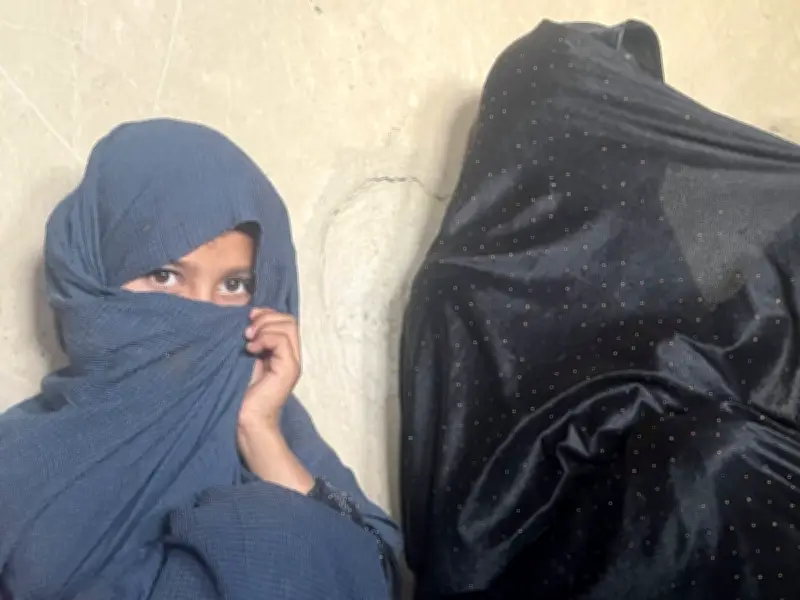
Sima* is 18, but has already given birth four times. Her youngest is a newborn, the eldest is four. Sitting with her children in their mud-brick room in Badghis province, Sima says: “After the Taliban entered the country, I had just finished the sixth grade and was supposed to start the seventh. But two months later, my father pressured me immensely to marry my cousin. After being beaten by my father several times, I was forced to accept.”
At 13, Sima became a bride inside the compound where she still lives, and where she has given birth to her children. One child died of pneumonia aged one. She does all the housework: fetching water, tending the cows, baking naan in a tandoor. All the while, her children cling to her legs, crying.
Rising Number of Underage Mothers
Sima’s case is no longer exceptional. Interviews with workers at one public hospital in northern Afghanistan revealed that 42 underage girls gave birth in the first five months of this year. Six were in their second pregnancy. Five had ectopic pregnancies – a leading cause of maternal deaths – and 18 had caesarean sections. Two died, though their babies survived.
They are victims of a growing trend toward child marriage, driven by Taliban policies legalising the practice and forcing girls out of school, combined with a deepening humanitarian crisis in which families are forced to sell their daughters to pay debts or buy food. As well as Sima’s family, the Guardian and Zan Times spoke to three other families with daughters under nine who were traded in marriage to settle debts. The youngest was two months old when she was promised as a bride, with all the families pledging to give the girls to their future husbands when they reached between seven and nine years old.
Regression Under the Taliban
Child marriage is not new to south Asia. But while the practice across the region has been declining, the Taliban takeover reversed that trend in Afghanistan. Shabnam*, a midwife, says: “Since the new government came to power, the number of child mothers has increased dramatically. In the past, perhaps only two child mothers visited the hospital each month, most of whom were from illiterate families. But now, literate and illiterate families marry off their daughters at a young age.”
Globally, “underage” means under 18, protected as a minor under the UN Convention on the Rights of the Child. The World Health Organization separately warns against pregnancy below the age of 20, as mothers and babies risk “major health consequences”.
Shabnam recalls a 2024 case in which a 13-year-old came to her with severe bleeding after suffering a miscarriage. “I was deeply saddened. I spoke with her mother, and the response I heard from her still echoes in my mind. When I asked why she allowed her 13-year-old daughter to marry a man nearly 30 years old, she said: ‘To feed my other children, I had to sacrifice one of them.’”
Some families falsely believe the younger the mother, the healthier and smarter the child. Mothers who are still children themselves often haven’t completed their physical or psychological growth and face higher risk of severe bleeding, anaemia, miscarriage, obstructed labour and premature birth, along with a greater likelihood of a low-weight or unhealthy infant.
Sima says she is still feeling the effects of bearing children so young. “During my pregnancy, I fainted several times because my blood pressure dropped very low. I always have a headache. My kidneys ache. I feel like a 70-year-old person,” she says.
Shabnam says families often resist caesarean section, believing they limit future pregnancies. Two young mothers in her care recently died in childbirth because their husbands refused to permit one.
High Maternal Mortality
A report in June by the UN’s Office for the Coordination of Humanitarian Affairs put Afghanistan’s maternal mortality rate at 600 per 100,000 live births, compared with 16 in Iran, 155 in Pakistan, and 12 in the UK. The report cites restrictions on women in healthcare and a shortage of rural health workers, and calls investment in education and female health staff vital.
Sima is one of more than 2.2 million Afghan girls who have been barred from education above the sixth grade (about 12 years) since the Taliban returned to power. Many are now forced into marriage and premature motherhood. The Afghanistan Human Rights Center reports that one teacher estimated 70% of girls pushed out of school had been driven into forced marriages, while a smaller survey of 15 such girls found 66% of them were under 18.
While the country’s pre-Taliban laws criminalised marriage under 15, a new decree this year set no minimum age at all. It follows the closure of schools and universities to women and growing restrictions on their mobility. The new laws have cut women and girls off from education and work, compounding Afghanistan’s economic distress amid rising unemployment.
Economic Desperation
Sima’s 24-year-old husband is unemployed; he went to Iran seeking work but returned empty-handed after three months. She wishes she could work, but as a mother of three with responsibilities at home, there is no opportunity to earn or learn a skill. “Five families live in one compound: my parents, my uncle with his two wives, and my brother with his wife,” says Sima. “Whenever others have something left over, they give it to us. Most of the time, we are hungry.”
After the Taliban closed school gates and banned women from most public jobs, Sima’s family used her to settle a debt: her father owed his brother 200,000 afghani (about £2,380), and Sima was given to the brother’s son in lieu of a bride price.
A recent UN Development Programme report shows three-quarters of Afghanistan’s population, about 28 million people, cannot afford basic needs and more than 80% of households are in debt. With the gutting of USAID and rollback of aid commitments in Europe and the UK, international assistance to the country fell by more than 16% in 2025, closing or restricting hundreds of medical clinics. Without investment in employment and services, the report warns, prospects for rebuilding people’s lives are poor.
Girls Being Sold as Toddlers
The other three families interviewed for this report, all in western Afghanistan, say their daughters had been used to settle debts – money paid in advance, the daughters to be handed over later. Three of the girls are still under 10, unaware of the future that has been planned for them.
Golnar*, 57, holds her one-year-old granddaughter in her arms as she speaks. The girl was sold to settle her father’s debt, she says, after he fled creditors. They had no food to eat. The sale, explicitly for future marriage, was for 200,000 afghani in cash and the clearing of some debts.
“When she turns eight, they will take her from us,” says Golnar. “They gave 100,000 afghani upfront, and they will give another 100,000 after they take the girl from me. We gave it directly to the creditors for the debts.” She worries about her granddaughter’s future, remembering girls sold years ago in her neighbourhood: “They have no future. Whether they leave us to burn in a fire or face anything else, we will not know.”
Saheb Jan*, 51, pledged away her granddaughter at two months old to settle a debt, with a promise to hand her over at the age of seven. Jan is comforted that they at least know the buyer, but upset that no cash changed hands and their hunger continues. “We gave this girl away for the debts and that was it,” she says. “God is witness that even now, our living conditions are terrible and miserable.”
Sabza*, 44, sold her now seven-year-old daughter when the child was three, for a debt of 300,000 afghani (about £3,570), after returning from Pakistan to find nothing to eat and a husband too sick to work. She is now distraught that her daughter will be taken within a year. “If there were someone to give us this money, I would be so happy; if my daughter stays with me, I will be overjoyed,” she says.
Her other children always ask why she sold their sister, she says. “If my daughter goes to her aunt’s house, she comes back in a panic and asks me where her sister went. I don’t know what state they will be in after she is taken away. When I think that they will take my daughter in a year, the sky collapses on my head. I tell myself there is only one year left, no more.”
*Names have been changed




