The European Union has shelved the controversial Entry/Exit System (EES) in at least nine countries, according to a report in the Sunday Times. Portugal, Italy, France, Belgium, the Netherlands, Germany, Malta, Greece and Switzerland are all understood to have been granted permission to postpone full implementation of the scheme, with no apparent deadline for adoption.
Background to the system
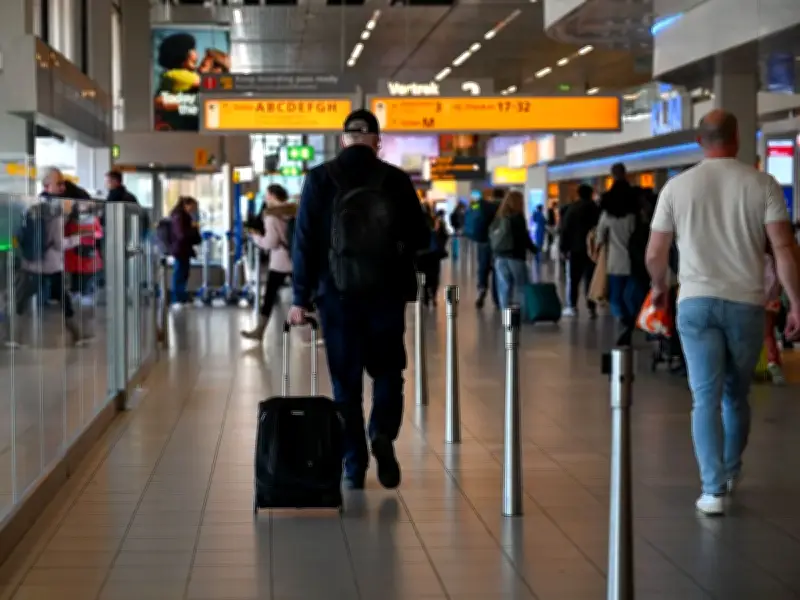
The EES is described by the EU as an automated IT system designed to register non-EU nationals travelling on short stays each time they cross the external borders of participating European countries. It forces non-EU residents to queue at special machines in airports before gaining entry to 29 nations within the Schengen area.
Following years of postponements, the system was rolled out from October 2025, with full implementation originally anticipated by the following April. However, faced with the prospect of significant border queues due to software failures, officials granted countries a 150-day grace period during which they could drop the checks to avoid travel chaos. That rule ended on September 6, and the EU previously insisted there would be no extension.

Countries given informal permission
Yet the Sunday Times reports that at least nine Schengen countries are understood to have told the European Commission, which is responsible for overseeing the EES, that they would not enforce the new controls in full until the technology and systems were working correctly. They have informally been allowed to do so with no time limits apparently in place to adopt the system.
One of the main purposes of the system is to track whether non-EU citizens have spent more than their permitted 90 days in the bloc in a rolling 180-day period. The scheme has faced fierce criticism from Ryanair and others, with persistent reports of lengthy delays – some stretching to as long as four hours.
Passenger experiences
Social media has been awash with debate about the scheme. One post on Reddit saw a traveller say: "They made a mess of it. Seems many basic things like it is hit and miss on the document scanning but also things like people walk up with hats and headphones and the machine doesn't tell them to remove them, and organisational things like if the machine errors the traveller has to back out and has no where to go."
Another person said: "The general lack of functionality of so many IT systems across the EU is kind of astonishing." A third added: "It's worse than that. There isn't even consistent protocol/IT support within a single EU airport." Another put it more simply, saying: "I just miss having stamps."
Impact on travellers
Nadia, from Greater Manchester, told the Guardian in August she had made two trips to Schengen areas this summer. A trip to Tenerife in June was "quite straightforward", but her experience in July at Frankfurt airport where she was picking up a connecting flight home, was much less so.
"The queue there was ridiculously long, and there was very limited information," she says. "People were wandering around trying to work out where they needed to go." Eventually, her passport was checked. "He didn't actually take fingerprints then," says Nadia, who is a solicitor. "I think the queue was so long they decided to dispense with that."
Ryanair chief executive Michael O'Leary has repeatedly complained about EES. Speaking earlier this year, he said: "There's a bit of Brexit in this too. Here, you voted for Brexit - f***ing join the queue."