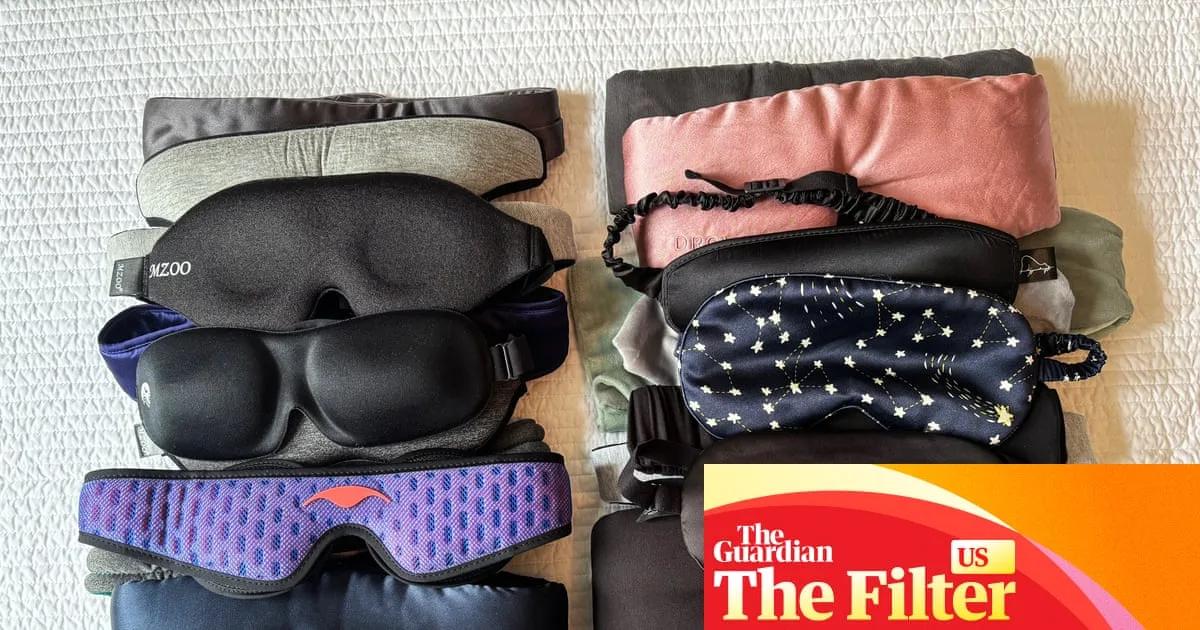
A journalist tested 32 sleep masks over nine weeks to determine which features matter most for a good night's rest. The masks were assessed on comfort, light blocking, durability after two washes, and whether they stayed on overnight. Testing took place in various settings including a bedroom, a tent, and an Airbnb with broken blinds.
There are two main types of sleep masks: flat and contoured. Flat masks lie flush against the face, holding the eyes shut, and are suitable for side and stomach sleepers. Contoured masks have eye cups that distribute pressure around the eyes, allowing them to open and close, but are not ideal for stomach sleepers and may bother some side sleepers.
An adjustable strap is crucial to prevent the mask from being too tight or slipping off. The fabric should be soft, breathable, and able to withstand frequent washing. Light-blocking ability is essential, as any exposure to light can suppress melatonin production and disrupt sleep.
Sleep masks are portable and relatively inexpensive compared to blackout shades, making them ideal for travellers. The journalist noted that while free airline masks are available, they often have thin, non-adjustable straps that cause discomfort or slip off.
All masks were provided by manufacturers. After testing, most were donated to Community Warehouse in Portland, Oregon.