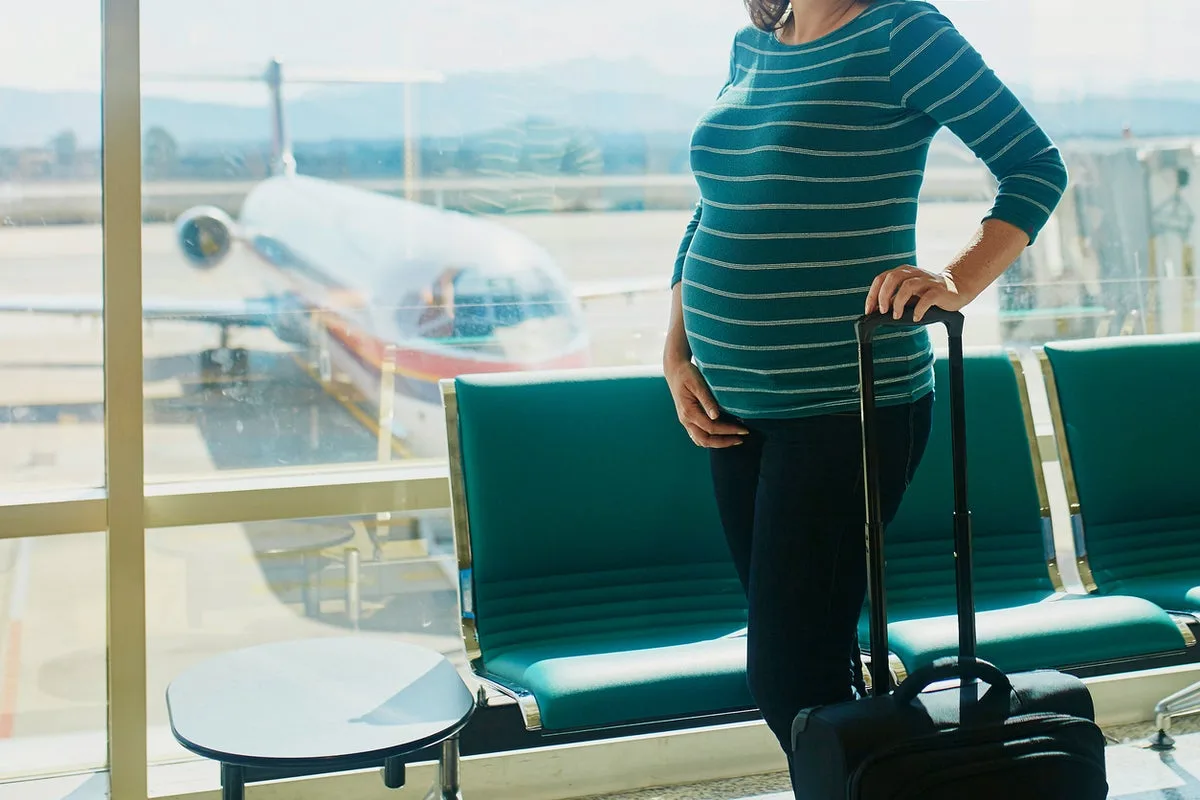
When a passenger gave birth on a flight from Kingston, Jamaica to New York City on April 4, she became part of a very exclusive club: there have been fewer than 100 births on commercial aircraft.
Despite its rarity, cabin crew are trained to deliver babies at 35,000 feet, and former Emirates flight attendant Marika Mikusova, author of Diary of a Flight Attendant, reveals how they deal with such an incredible event.
Mikusova told The Independent: “Although we do receive training for childbirth on board, it’s not something we’re tested on annually. So, if a childbirth were to happen during a flight, our first step would be to immediately ask if there is a doctor on board and contact ground medical support for guidance on how to proceed, to make sure we are doing everything we can.”
The next step is moving the passenger to an area of the plane where there’s a bit more room. Mikusova said: “If circumstances allow, the delivery would ideally take place near the bulkhead seats. As stated in the manual, we would place the passenger in a comfortable position, preferably upright with knees parted and drawn back against the bulkhead. However, since bulkheads are located in front of passenger rows, in reality we would most likely move the situation to the galley, as it offers the most space, especially on aircraft like the Boeing 777 and Airbus A380.”
Planes aren’t known for having spotless floors but Marika explained that it’s just common sense for flight attendants. She said: “The cleaning of the area, floors and adjacent surfaces isn’t included in the manual, but it’s only logical. Having said that, cleaning and disinfecting the surrounding space would be the last thing we’d have time for at that moment. We would place the labouring passenger on a clean blanket that had been unwrapped from plastic beforehand and the delivery would be conducted using rubber gloves, with disinfectant kept close at hand.”
Mikusova also explained that ground medical support would guide the crew through using the onboard delivery kit. “We have a delivery kit on board, which includes items such as a mucous extractor, scissors, cord clamps, and absorbent pads – so we are fairly well prepared,” she said. “That said, it’s important to stress that we are not doctors. We must strictly follow procedures and only perform tasks we are trained for.”