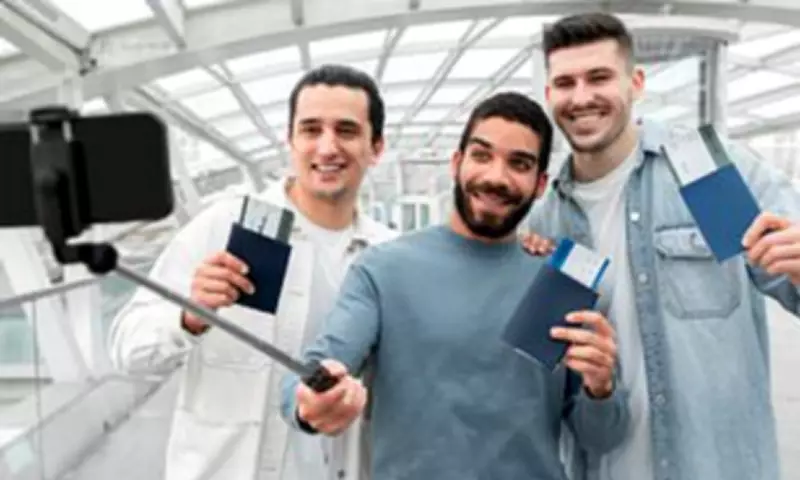
A holiday selfie has become a standard ritual for countless travellers worldwide - that essential digital memento capturing the excitement of your journey. However, this seemingly innocent practice could potentially derail your entire vacation before it even begins, according to a leading authority on international travel security.
The Hidden Dangers in Your Holiday Snap
Jamie Fraser, an expert specialising in international working holidays and travel safety, cautions that what many consider a harmless holiday habit actually exposes travellers to significant privacy breaches and security threats. The core of the problem lies in those partially visible boarding passes that sometimes appear in the background of celebratory selfies.
Fraser identifies posting boarding passes on social media platforms as one of the most dangerously underestimated mistakes modern travellers regularly make. He elaborates: 'People commonly believe that covering their name or obscuring the barcode renders a boarding pass safe for sharing, but this assumption is fundamentally flawed.'

Why Partial Visibility Still Poses Full Risk
Even when less than thirty percent of the QR code or personal information remains visible, determined scammers can frequently reconstruct the complete data using relatively basic digital tools, Fraser explains. This reconstructed information provides sufficient access for malicious actors to infiltrate booking systems, modify seat assignments, cancel flights entirely, or harvest sensitive personal data for identity theft purposes.
Boarding passes typically contain encoded data including the passenger's full name, frequent flyer membership numbers, unique booking references, and occasionally even passport-related details. 'With only minimal technical expertise, scammers can either decode the barcodes directly or utilise the visible fragments of information to retrieve complete booking details through airline websites,' Fraser adds.
Real-World Consequences for Unwary Travellers
The potential dangers extend far beyond theoretical scenarios. Fraser reports: 'We have documented numerous cases where travellers arrive at their destination only to discover their return flights have been mysteriously altered, their preferred seats reassigned to strangers, or their airline loyalty accounts compromised. Investigation consistently traces these incidents back to boarding pass photographs shared online.'
The primary risks travellers face include sophisticated identity theft operations, targeted phishing scams specifically designed to exploit travellers while they are abroad and potentially distracted, and unauthorised access to valuable airline loyalty accounts containing accumulated points and personal information.
Common Misconceptions That Increase Vulnerability
Fraser highlights several widespread but dangerous misconceptions that leave travellers exposed:
- Believing that simply blurring a barcode provides adequate protection
- Assuming posts are secure because social media accounts are set to private
- Thinking the risk disappears once the initial flight has departed
Fraser emphasises: 'The risk persists throughout your journey and even beyond, as boarding pass information can be used to access your accounts long after you've returned home.'
Safe Sharing Alternatives and Protective Checklist
For those eager to share their travel excitement digitally, Fraser recommends safer alternatives: 'Instead of risking sensitive information, post a photograph of your airport coffee, the wing view from your window seat, or the destination landscape once you've safely arrived.'
To assist travellers in maintaining their security, Fraser has developed a straightforward pre-flight checklist for social media sharing:

- Carefully examine whether the image displays any portion of a boarding pass or travel ticket
- Verify that your full name, booking reference, or specific seat number isn't visible
- Consider whether someone could screenshot your post and zoom in on details later
- Ask yourself: Am I posting this before my return journey is completely finished?
Fraser concludes: 'Taking a moment to apply this simple checklist could prevent your dream holiday from becoming a security nightmare. Your travel memories should remain joyful, not compromised.'