Storm Goretti brought a potentially deadly mix of violent winds, ice, heavy snow and rain on Thursday, forcing schools to close and leaving more than 65,000 homes without power. Gusts of up to 99mph were recorded as authorities issued a rare red warning – the highest level – for winds in the Isles of Scilly and Cornwall. Emergency alerts were sent to mobile phones in the area, sounding an alarm even if set to silent.
According to the National Grid, more than 65,000 properties in southwest England are without power, along with at least 11,000 homes in the West Midlands and 2,600 in Wales. A red warning officially means “it is very likely that there will be a risk to life, with substantial disruption to travel, energy supplies and possibly widespread damage to property and infrastructure”. The Met Office advises: “You should avoid travelling, where possible, and follow the advice of the emergency services and local authorities.”
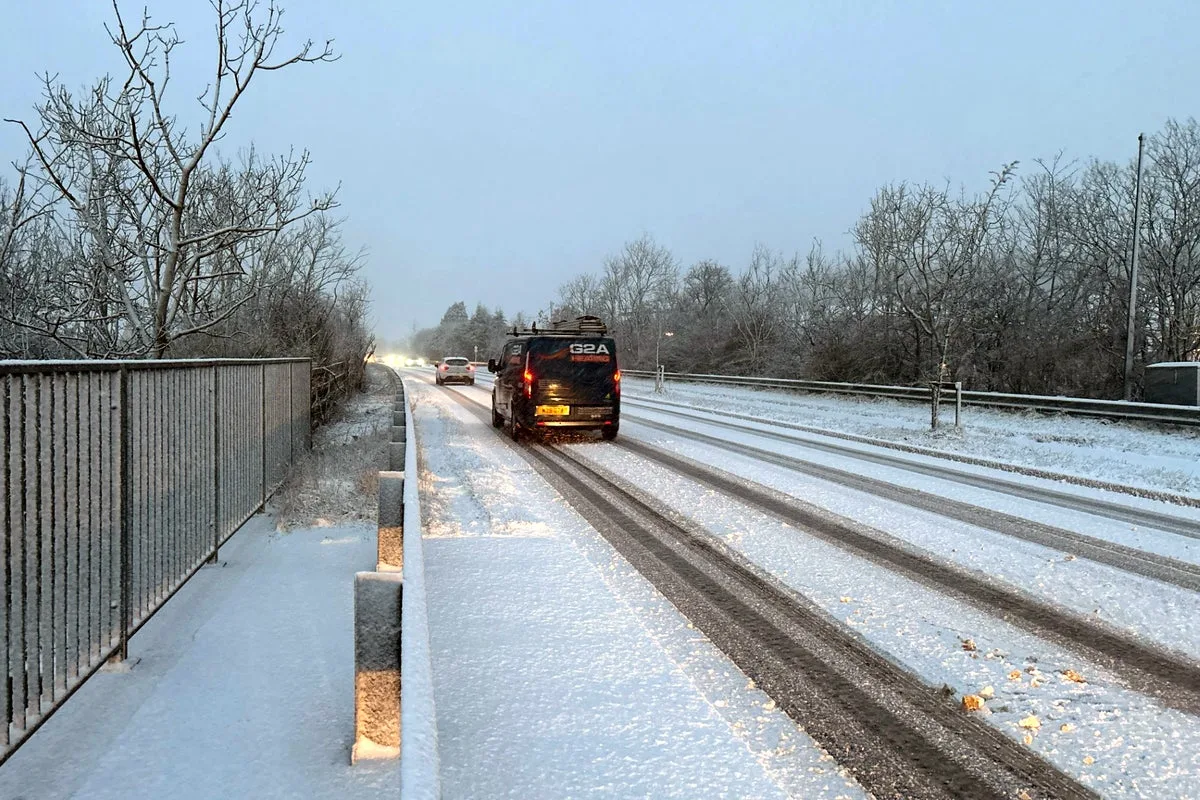
Rain turned to snow in the west country, the Midlands, Wales and the Pennines as part of the “weather bomb” hitting the country. Officials in the Midlands fear the worst is yet to come, with 30cm (11in) of snow expected on Friday, causing widespread travel disruption. An amber warning for snow was in place across a swathe of the UK from southeast England to south Wales and southwest England to Yorkshire and Scotland. Yorkshire and the east of England were under a yellow warning for rain overnight.
Winds of 99mph were recorded at St Mary’s Airport on the Isles of Scilly – a new record for the site. Dozens of schools in Cornwall finished lessons early on Thursday, and others in the Midlands and Wales decided to close on Friday. In Scotland, more than 250 schools remained closed for a fifth day on Friday following several days of intense snow, ice and sub-zero temperatures.
Travel faced severe disruption. All trains in Cornwall were suspended from 6pm on Thursday, and in Devon, services on the Exeter-Okehampton and Exeter-Barnstaple routes were suspended. In Wales, six railway lines closed at 3pm on Thursday, with reduced service on the remainder. Avanti West Coast cancelled one in three trains between London and Birmingham and Manchester. Passengers were advised not to travel, with services disrupted again on Friday morning. No replacement buses were running due to hazardous road conditions. British Airways cancelled 30 flights to and from London Heathrow.
The RAC warned drivers of the risk of falling trees and cars being thrown about. Spokesperson Alice Simpson said: “A red weather warning is every bit as serious as it sounds: avoid the roads – unless absolutely essential – until the storm winds have passed. Exposed routes and coastlines pose the greatest danger as motorists are completely exposed to the elements and risk being ‘buffeted’ across the road by sudden gusts.” Storm Goretti, named by French forecaster Météo France, also prompted a yellow warning for wind for the rest of the south coast of England and for Wales, where gusts of up to 70mph were forecast.