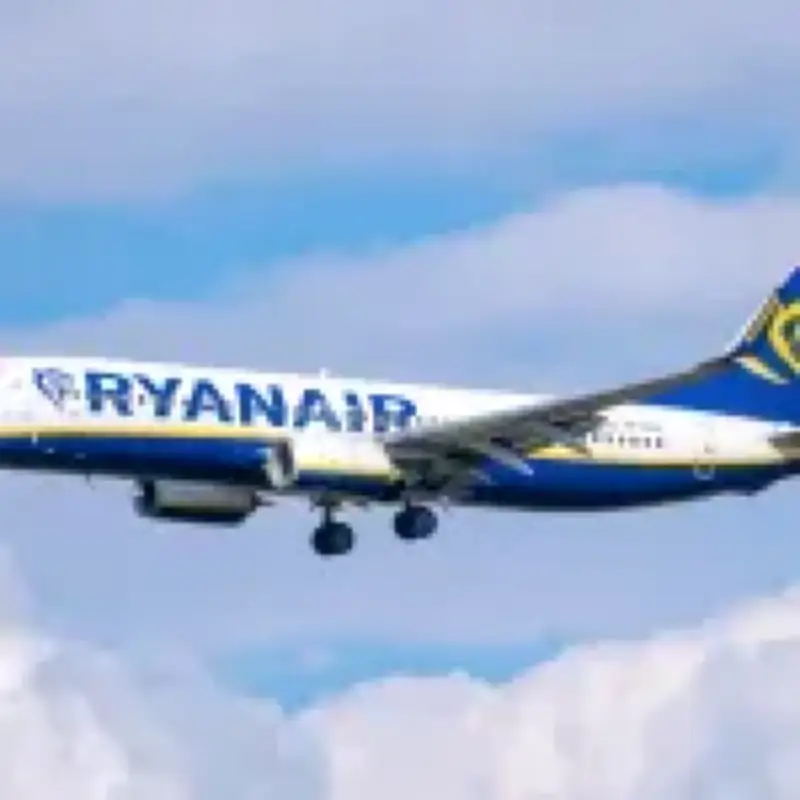
A Ryanair flight from Dublin to Newquay was diverted to Bristol and then flew nearly 1,000 miles to Alicante, Spain, after high winds from Storm Boelo made landing conditions unsafe.
Flight FR2955 departed Dublin Airport at 10.19pm on Saturday, heading to Newquay, Cornwall. The journey typically takes just under 90 minutes, but the Boeing 737-800 had to abort its landing approach at Bristol Airport when conditions on the ground were reported to be 'far from forgiving'. The aircraft reached a cruising altitude of 27,000 feet before beginning its descent.
Three-Hour Detour to Spain
According to AirNav Radar, the plane crossed the Channel through France before arriving in southern Spain. Three hours after departing Dublin, the aircraft landed at Alicante-Elche Airport at 1.16am on Sunday.
A Ryanair spokesperson explained: 'This flight from Alicante to Newquay Cornwall (24 Oct) diverted to Dublin due to high winds at Newquay Cornwall Airport. During this time, passengers remained onboard so the aircraft could depart as soon as a slot became available; however, this flight subsequently returned to Alicante due to the adverse weather conditions.'
The airline told Metro that 'passengers booked on this flight received communications via email and push notifications and were also kept up to date by ground staff in Alicante Airport'. 'Affected passengers were advised of their options, provided with overnight accommodation, and reaccommodated onto the next available flight.'
Widespread Disruption and Power Outages
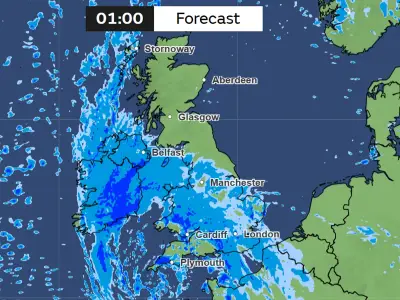
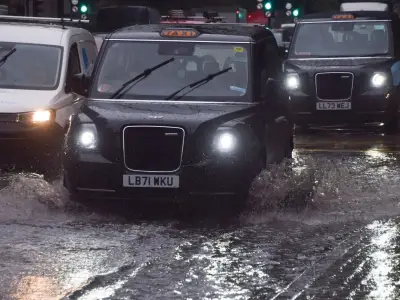
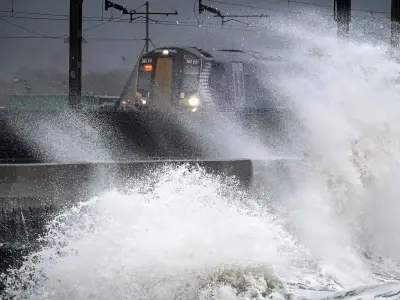
Storm Boelo caused widespread disruption across the UK over the weekend, with gusts exceeding 80mph. Dozens of flights were cancelled by the UK's busiest airports, Heathrow and Gatwick. Leeds Bradford Airport, the UK's highest commercial airport, cancelled 36 incoming and outgoing flights on Sunday. Up to 100 flights were called off, including at Edinburgh, Manchester, Cardiff, and Belfast, as a result of the back-to-back storms, which began with Austen before Boelo struck.
The Met Office issued warnings ahead of the storms, advising people to be mindful of disruption to transport services, damage to trees and buildings, and unsafe conditions along coastlines. Yesterday, two men were killed by falling trees – one in his 20s, pronounced dead in north London after his car was hit while he was driving, and a 60-year-old man who died in Dumfries and Galloway.
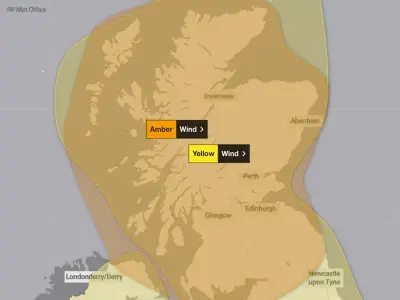
A yellow warning for strong winds is in place from 6pm tonight to 3am on Tuesday across the west coast of England, Wales, and Scotland, plus eastern parts of Northern Ireland. The Met Office has cautioned that areas covered by the warning should be prepared for power outages and ensure they have torches and batteries ready.
As the clean-up begins, the Energy Networks Association (ENA) said around 90,000 properties are still without power as of Monday. CEO Lawrence Slade said it had been 'a tough weekend', telling BBC Radio 4's Today programme that sustained high winds are still prohibiting them from restoring power nationwide. 'Until that weather system passes, we can't safely get engineers out to replace poles, to get wires back up, so today is going to be a hive of activity in getting engineers out into the field.' He insisted money had been spent to prepare for such scenarios, but they should discuss how best to mitigate the impact of future storms as a result of climate change.