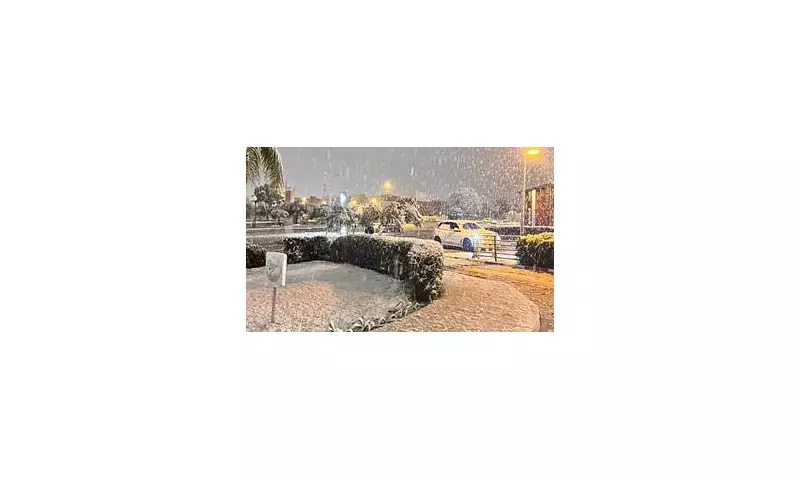
Residents of a North African city have been treated to a rare and spectacular winter event, witnessing significant snowfall for the first time in approximately a quarter of a century. Locals in heavy coats were seen enjoying the unusual conditions as snow settled on streets and palm trees.
A Historic Weather Event
On 7 January 2026, the northeastern Moroccan city of Oujda recorded around two centimetres of snow in its urban centre. The surrounding villages were even more heavily blanketed, with accumulations reaching up to 10 centimetres. This extraordinary event was driven by a powerful low-pressure system and a mass of cold air, causing a sharp temperature drop across parts of North Africa.
For Oujda, a city situated near the Algerian border in a semi-arid region where winter temperatures typically range from 4C to 10C, such snowfall is highly unusual. While snow is common in Morocco's High and Middle Atlas mountains, home to ski resorts, it is exceptional for this eastern city. Although some local reports suggest notable snow fell about 14 years ago, many sources, including Arabia Weather, cite a much longer period of around 25 years since the last comparable event.

Scenes of Joy and Disruption
The unexpected white blanket stirred considerable excitement among Oujda's inhabitants. They quickly took to social media to document the phenomenon. Footage shared to Instagram on 9 January showed residents in the city centre marvelling at the snow, trudging through it in hooded coats. Youths enthusiastically built snowmen and engaged in snowball fights, capturing a moment of pure, wintry joy.
In rural areas, stunning scenes unfolded as motorists navigated slushy roads with caution, while thick flurries continued to fall beneath snow-dusted palm trees. The visuals prompted amazed reactions online, with one viewer commenting on the surreal sight of snow in Morocco. Another noted Oujda's geographical position, being further north than Buenos Aires is south, and its inland elevation, explaining the rare possibility of snow despite its proximity to the Sahara.
Broader Weather Impacts and Travel Chaos
This rare North African snowfall coincided with severe winter conditions causing significant travel chaos across Europe. In a stark contrast, British tourists in Finland's Lapland described a 'nightmare' scenario, with thousands stranded after flights were cancelled due to extreme cold. Temperatures at Kittilä Airport were expected to plummet to nearly -40C, creating extremely difficult conditions for aircraft de-icing, maintenance, and refuelling.
Cancelled flights included routes to major hubs like London, Manchester, Paris, and Amsterdam. Airlines attempted to put passengers on buses to reach other airports, but heavy snow, high winds, and icy roads exacerbated the local travel problems. Meanwhile, the cold snap has prompted an unlikely surge in British male travellers heading to Morocco, though reports indicate the reason is unrelated to the weather or cuisine.
The event in Oujda served as a powerful reminder of nature's variability. As one social media commenter solemnly reflected, it highlighted the formidable force of the natural world. For the delighted residents of Oujda, however, the primary response was to simply enjoy the extraordinary and fleeting winter wonderland.