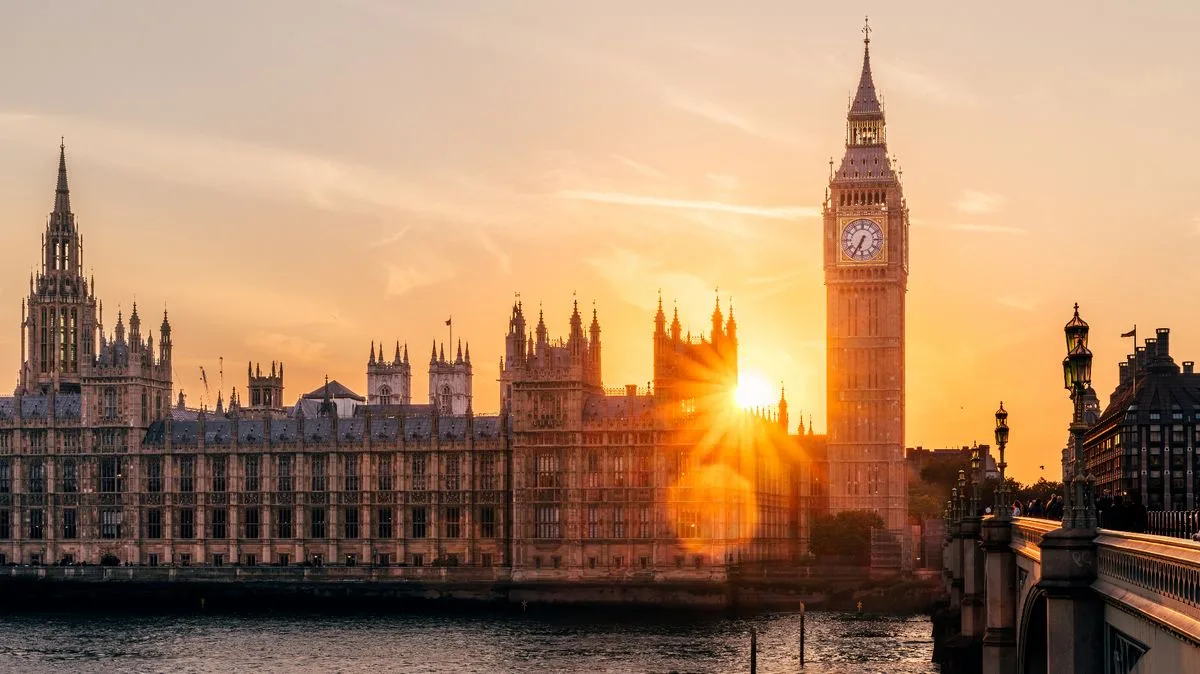
Britons are witnessing the first signs of winter's retreat as evenings across the United Kingdom begin to brighten, with sunset times set to lengthen progressively from tonight until October. This celestial shift heralds the gradual return of extended daylight hours, offering a welcome reprieve from the darker months.
Tonight's Sunset and the Lengthening Trend
The sun is scheduled to set at approximately 5:04 PM this evening, providing around nine hours and eighteen minutes of daylight across the UK. This marks the beginning of a consistent pattern where sunset times will advance later almost daily for several months, culminating in brighter evenings that persist well into the summer season.
Astronomical data indicates that sunset is now occurring a few minutes later each day. For instance, in Preston, sunset will shift from about 5:04 PM today to roughly 5:20 PM by mid-February, with this upward trajectory continuing throughout spring. This phenomenon is observable nationwide as the country moves further from the winter solstice, the darkest period of the year.
The Science Behind Longer Evenings
Earth's Tilt and Seasonal Changes
The primary driver behind these lengthening evenings is Earth's axial tilt. Scientists explain that seasons and variations in daylight occur because our planet is tilted on its axis while orbiting the Sun. When the Northern Hemisphere tilts away from the Sun, winter ensues, resulting in shorter days.
Following the winter solstice in December—the shortest day of the year—daylight incrementally increases as the Northern Hemisphere begins tilting back toward the Sun. Without this tilt, seasonal changes would be negligible, and day length would remain relatively constant throughout the year.
Understanding Solstices
Solstices are a direct consequence of this same axial tilt. The summer solstice, typically around June 21, represents the longest day of the year because the Northern Hemisphere is tilted most directly toward the Sun. The term solstice originates from Latin, meaning the Sun appears to "stand still" before reversing its apparent motion in the sky.
Conversely, during the winter solstice, the Northern Hemisphere tilts away from the Sun, yielding the shortest day and longest night of the year.
The Timeline for Daylight Changes
The UK will continue to gain daylight until the summer solstice in late June. Subsequently, daylight will gradually diminish, with the pace accelerating into autumn. Scientists attribute this reduction to Earth's ongoing orbit, which causes the Northern Hemisphere to begin tilting away from the Sun again.
By October, sunset will occur significantly earlier than in summer, ushering in darker evenings across Britain once more.
Why Cold Persists Despite Longer Days
A phenomenon known as seasonal lag explains why temperatures often remain low even as daylight increases. Although daylight expands after the winter solstice, landmasses and oceans require time to absorb and retain heat, meaning the coldest weather frequently arrives weeks after the shortest day.
Implications for the UK
For now, the trend is unmistakable. Residents across the UK can anticipate later sunsets, longer evenings, and more daylight with each passing day. With sunset already occurring after 5:00 PM in some regions, spring is steadily approaching, even if wintery conditions have not fully abated.
This gradual extension of evening light offers a psychological and practical boost, enhancing outdoor activities and overall well-being as the nation transitions from winter to spring.