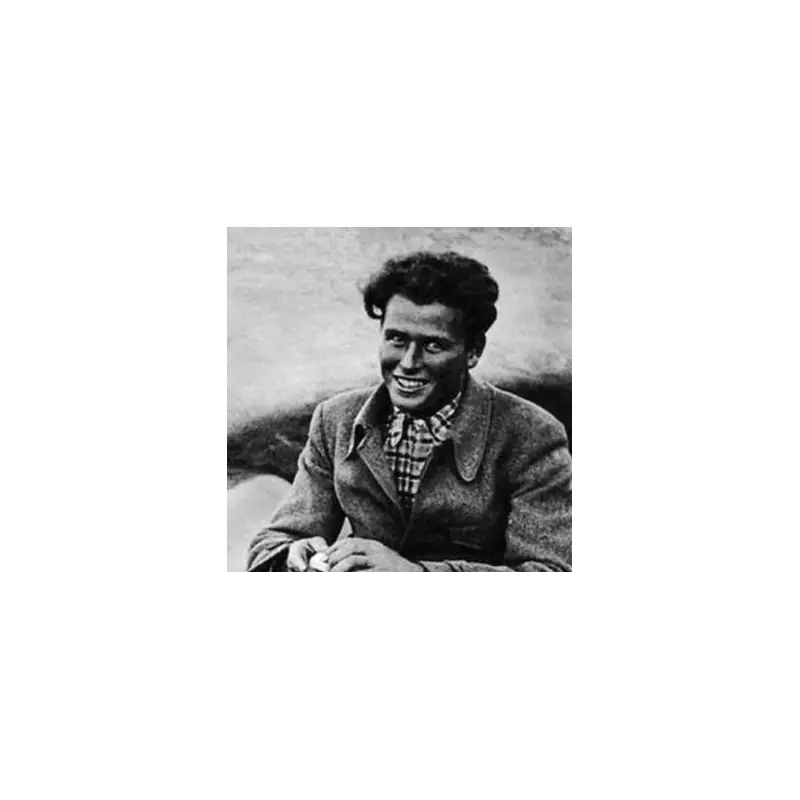
In one of mountaineering's most chilling tragedies, a young climber endured a days-long ordeal suspended from a rope on a treacherous Alpine face, ultimately perishing within agonising reach of his would-be saviours.
The Ascent of the Murder Wall
Toni Kurz, born in 1913 in Berchtesgaden, Bavaria, was a natural climber whose skills were honed by a metalwork apprenticeship and service in Germany's elite mountain infantry. Alongside his inseparable climbing partner, Andreas Hinterstoisser, he pioneered new routes through the Alps. In July 1936, the 23-year-old Kurz, Hinterstoisser, and Austrian climbers Willy Angerer and Edi Rainer set their sights on an unconquered beast: the 1,800-metre North Face of the Eiger, notoriously dubbed 'Die Mordwand' or 'The Murder Wall'.
Despite their experience, the team was poorly equipped for the face's notorious hazards: ice-cold limestone, sudden storms, collapsing ice fields, and lethal avalanches. Their climb began with a historic manoeuvre by Hinterstoisser, who executed a daring diagonal traverse across a smooth, blank section of rock, fixing a rope for the others. This would later be immortalised as the Hinterstoisser Traverse. In a decision that would prove catastrophic, the team then removed the rope after crossing, planning to descend by a different route.

A Fatal Retreat and Mounting Disaster
The mountain's fury was swift. A violent storm erupted, coating the rock in a deadly layer of ice known as verglas. Angerer was struck by falling rock, severely injuring his leg. Forced into a retreat, the climbers' horror was complete when they found their escape route—the Hinterstoisser Traverse—rendered impassable by the slick ice. They were trapped.
The situation rapidly unravelled. Hinterstoisser slipped and fell to his death. The injured Angerer succumbed to exposure. Rainer, while attempting to lower Angerer, lost his balance and both men died. Only Toni Kurz remained alive, stranded on the murderous face.
For two days, villagers at Kleine Scheidegg could see Kurz's tiny figure clinging to the vast wall. Swiss mountain guides Christian Almer Jr. and Hans Schlunegger bravely ascended in a desperate rescue attempt. Kurz, communicating through the freezing gale, explained the disaster. His rescuers urged him to descend, and in a grisly necessity, Kurz was forced to cut away the bodies of his dead companions to lower himself towards hope.
The Final, Heartbreaking Twist
After hours of painstaking effort, Kurz finally drew within an arm's length of the rescuers' stance. It was then that the final, cruel twist of fate revealed itself. His rope was too short. Exhausted, frozen, and after days of superhuman endurance, he could go no further.
His final words, "I can’t go on," have become immortal in climbing lore. He then fell still. The disaster sent shockwaves across Europe and later inspired Heinrich Harrer’s classic account, The White Spider. The climbers are remembered in the mountain's geography: the Hinterstoisser Traverse, Rainer’s Overhang, and the site of Kurz’s last stand.
The story of Toni Kurz endures as a stark testament to the fine line between triumph and tragedy in the high mountains, where a single decision can echo for eternity.