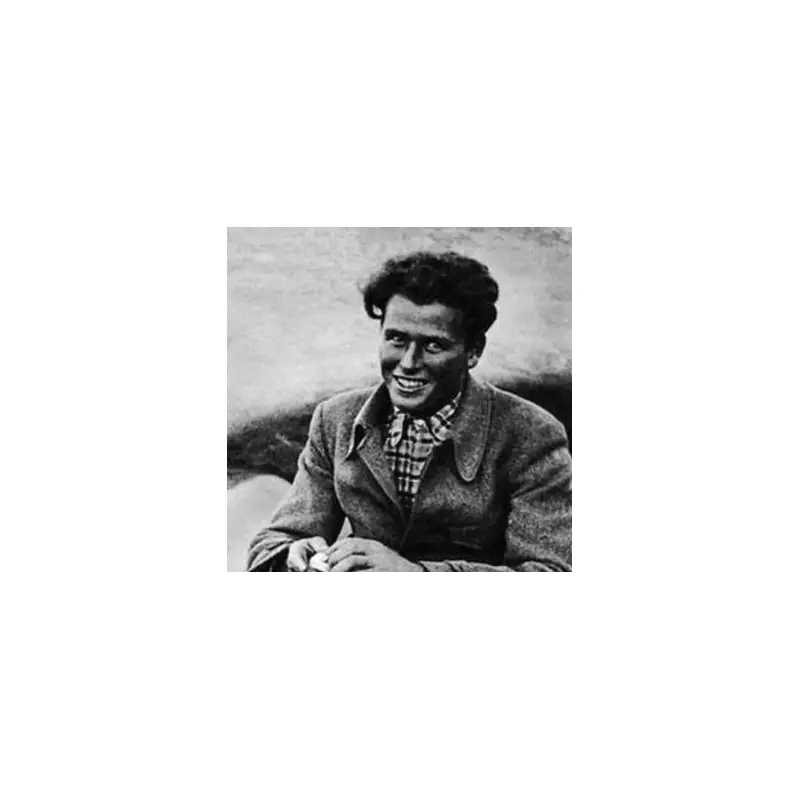
In one of mountaineering's most haunting tragedies, a German climber was left dangling for days on a sheer ice face, uttering five final, desperate words to rescuers who were agonisingly close yet unable to save him.
The making of a mountaineer
Toni Kurz was born in 1913 in Berchtesgaden, Bavaria, where the surrounding peaks shaped his destiny. He began climbing the local rocky terrains from an early age. His first apprenticeship as a metalworker, which he started at sixteen, honed his strength and precision. These skills served him well when he joined the elite German mountain infantry in 1934, becoming a disciplined and confident climber.
The fatal ascent of the Murder Wall
In July 1936, Kurz, aged just 23, teamed up with his regular climbing partner Andreas Hinterstoisser and two Austrian climbers, Willy Angerer and Edi Rainer. Their goal was the unconquered and notoriously treacherous North Face of the Eiger, nicknamed 'Die Mordwand' or 'the Murder Wall'. The 1,800-metre face presented a lethal combination of limestone, collapsing icefields, and frequent avalanches.

The team began their climb in deteriorating conditions. Hinterstoisser made a crucial, pioneering move—a diagonal traverse across a smooth, polished section of rock. He secured a rope for his companions to follow, in a manoeuvre now immortalised as the Hinterstoisser Traverse. In a catastrophic decision, the team then removed the rope, believing they would descend by a different route.
A desperate retreat and mounting disaster
A fierce storm broke out, covering the rock in a deadly layer of ice called verglas. The climbers decided to retreat but found their escape route—the Hinterstoisser Traverse—now impassable. The storm claimed its first victim when Angerer was struck by falling debris, severely injuring his leg. As they attempted to descend, Hinterstoisser slipped and fell to his death. The immobilised Angerer later succumbed to exposure, and Rainer died during a failed attempt to lower him to safety.
Only Toni Kurz remained alive, stranded on the frozen wall. For days, villagers at Kleine Scheidegg watched his desperate struggle. Swiss guides Christian Almer Jr. and Hans Schlunegger launched a daring rescue attempt, urging the hypothermic climber to descend towards them.
The final, cruel twist of fate
In a final, devastating turn, Kurz, after cutting loose the bodies of his comrades and lowering himself towards his rescuers, discovered his rope was too short. He was left hanging, tantalisingly close to salvation but utterly out of reach. After two days clinging to the face, his strength finally failed. His last, chilling words shouted to the guides were: "I can't go on." He then fell still.
The legacy of a climbing tragedy
The 1936 Eiger disaster shocked Europe and became a seminal story in mountaineering lore. It later provided inspiration for Heinrich Harrer's classic book, The White Spider. The climbers are remembered through features on the mountain that bear their names: the Hinterstoisser Traverse, Rainer's Overhang, and the site of Kurz's Last Stand. Their story remains a stark reminder of the brutal and unforgiving power of the Alps.