In the wake of a devastating winter storm that swept across the United States, communities are grappling with the harsh realities of extreme weather conditions. With significant snowfall and icy temperatures, the impact has been severe, leading to widespread disruptions and personal hardships for residents in multiple states.
Widespread Power Failures and Infrastructure Damage
Official reports indicate that the storm has resulted in more than forty fatalities, alongside the closure of schools and cancellation of numerous flights. A critical issue persisting several days after the initial weather event is the extensive loss of electrical power. Data from monitoring services shows that nearly three hundred thousand households remain without electricity, highlighting the scale of the infrastructural challenge.
Personal Accounts from the Storm's Path
Residents from various affected regions have provided firsthand accounts of their experiences, painting a vivid picture of the storm's intensity and the subsequent struggle for normalcy.

Nashville's Icy Ordeal
Meghan Chrobot, a twenty-five-year-old music business professional living in Nashville, Tennessee, described an unprecedented scene. "I've genuinely never seen anything like this before," she remarked. Waking to a power outage, the familiar hum of highway traffic was replaced by the ominous sound of ice-laden trees cracking and branches collapsing. Forced to seek warmth and charge her phone in her car, Chrobot considered herself fortunate when power was restored after thirteen hours, noting many friends were still in the dark. Fallen trees and thick ice made roads impassable, confining her to her apartment for days.
Michigan's Property Crisis
In Michigan, Linda, a seventy-year-old resident, faced a distressing property disaster. Despite winterising a house they were selling by adding antifreeze and maintaining heating, she and her husband discovered a side door had blown open in high winds. The interior temperature had plummeted to minus two degrees Celsius. "The propane was empty, the geothermal unit outlet was completely frozen shut, there was ice in the toilets even with the antifreeze," Linda explained, anticipating broken water pipes. The couple endured a night on the floor with emergency heaters, facing fuel costs three times higher than normal. She reflected on the relentless winter, stating, "It's just been one storm after another. You just barely get dug out from one, and then there's another."
Pennsylvania's Driving Peril
G H Hovagimyan, a seventy-five-year-old digital artist from northeastern Pennsylvania, recounted a frightening skid into a snowdrift while driving. "I hit the brakes, and I started skidding," he said, describing how he avoided a collision by steering into the drift. Stranded without his mobile phone, he was aided by two strangers from a fuel delivery company who dug out his car. His area received an unusual twenty-seven inches of snow at once, complicating travel despite ploughing efforts.
Unexpected Leadership in New York
A moment of community spirit emerged in Brooklyn, New York, where Eric, fifty-two, witnessed Mayor Zohran Mamdani assisting a stranded motorist. "There was no press and no fuss, just Mayor Mamdani helping a random New Yorker," Eric observed. The mayor and his crew stopped to shovel out a repairman's car during the storm, an act noted for its sincerity in a quiet neighbourhood.
Broader Implications and Community Response
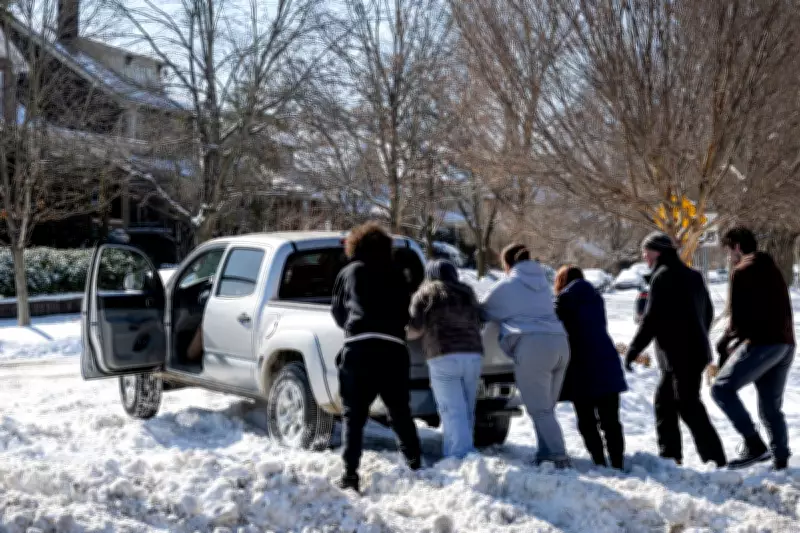
These individual stories underscore a collective narrative of resilience and adaptation. From Louisville, Kentucky, where locals banded together to push a truck from a snow pile, to the shared struggles with heating, travel, and basic amenities, the storm has tested preparedness and highlighted the importance of community support. As recovery continues, the experiences serve as a stark reminder of the power of nature and the human capacity to endure and assist one another in times of crisis.