Union Reiterates Call for Extreme-Weather Leave Amid Ongoing Flood Threat
The Unite trade union has renewed its demand for the introduction of paid climate leave, arguing that workers should not face financial penalties when extreme weather makes travel to work impossible. This call comes as communities across Ireland continue to grapple with the aftermath of Storm Chandra, which brought heavy winds and torrential rain earlier this week.
Widespread Disruption and Clean-Up Efforts
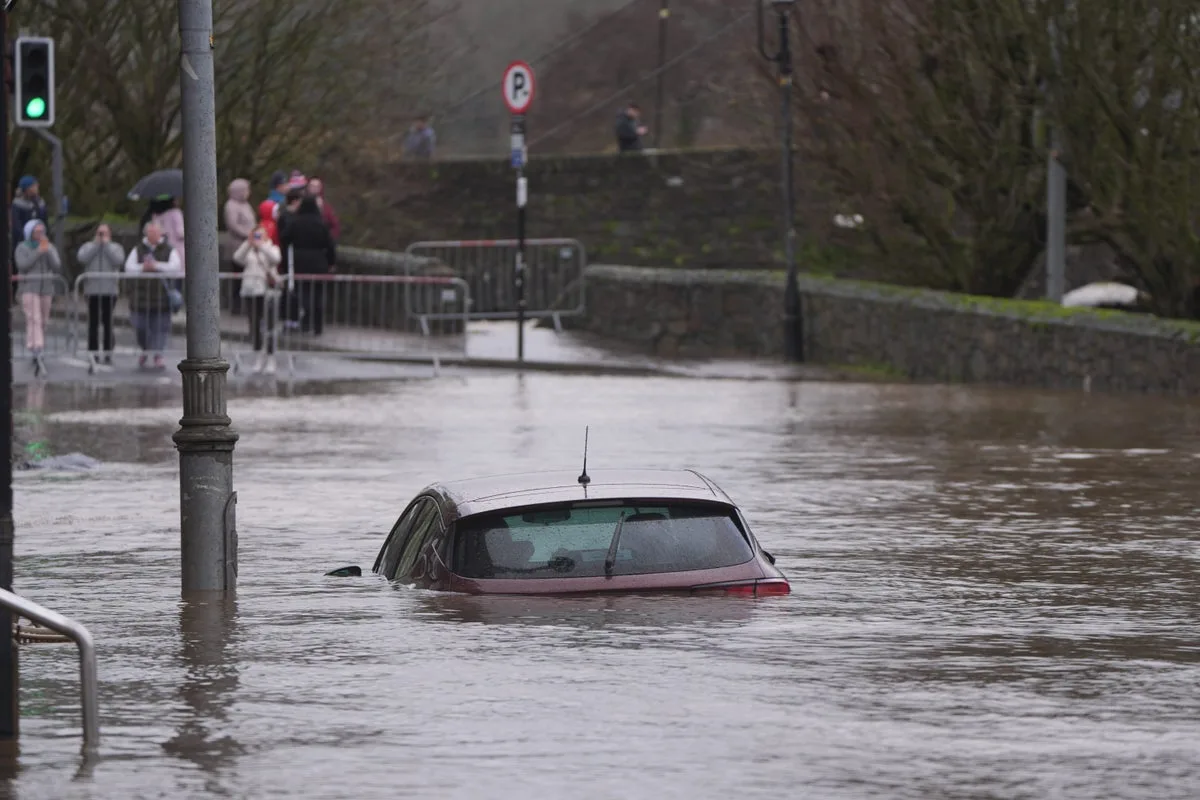
On Tuesday, severe weather conditions caused significant disruption throughout the island of Ireland. The storm resulted in widespread power outages, numerous flight cancellations, and the closure of approximately 300 schools in Northern Ireland. Rivers, including the Slaney in County Wexford and the Dodder in Dublin, burst their banks, while fallen trees were reported across many regions.
At the peak of the storm, up to 20,000 properties were left without electricity. The scale of the flooding has prompted questions about whether warnings from forecaster Met Eireann and the government were adequate. Clean-up operations are underway in some of the worst-affected areas, such as Enniscorthy and Aughrim, as well as parts of South Dublin.
Transport Chaos and Infrastructure Damage
The storm's impact on transport networks was severe. A burst water main in Dublin's Fairview area exacerbated weather-related commuter chaos in the capital. Additionally, subsidence caused a tree to fall onto the Dart rail line near Portmarnock, temporarily closing the service between Portmarnock and Howth Junction. This line, which also affects services to Belfast, has since reopened.
Minister of State for the Office of Public Works, Kevin "Boxer" Moran, visited some of the flood-damaged areas on Thursday to assess the situation. His visits occur amid growing frustration over delays to flood relief schemes nationwide.
Unite's Comprehensive Workplace Safety Proposals
Unite has put forward a series of proposals designed to protect workers during extreme weather events. The union is calling for:
- Four days of paid leave when extreme weather makes it impossible to travel to work.
- An additional four days of paid leave to address urgent needs at home caused by such weather.
- A legal obligation for employers to implement graduated, alert-based responses. This would mean non-essential outdoor work ceases during amber or orange alerts, and all non-essential work stops during red alerts.
- Guaranteed payment for workers on days when work is halted due to weather conditions.
The union also advocates for specific heat management protocols, including a 24°C "action level" where controls must be implemented, and an absolute maximum of 30°C beyond which work should stop if risks cannot be mitigated.
Union Leaders Emphasise Urgent Need for Reform
Unite's Irish secretary, Susan Fitzgerald, stressed the urgent need to update health and safety legislation to reflect the latest scientific evidence on climate change. Meanwhile, Phil Ni Sheaghdha, president of the Irish Congress of Trade Unions, highlighted the disparity between workers who can work from home and those who cannot.
"When storms strike, many workers are advised to work from home where possible," Ni Sheaghdha said. "But many others can't work from home, either because their employer can't or won't facilitate that or because they are essential workers. All employers must be compelled to prioritise staff safety and ensure that workers do not pay the price, financially or in terms of their wellbeing, for extreme weather events."
Ongoing Weather Warnings and Future Risks
Met Eireann has issued a yellow rain warning for the entire day on Thursday for counties Carlow, Kilkenny, Waterford, Wexford, Wicklow, and Dublin. Heavy rain falling on already saturated ground and high river levels could lead to further flooding.
In Northern Ireland, the Met Office has issued a yellow weather warning from midnight until 6pm on Friday. While the wettest conditions are expected over Antrim and Down, many areas could see 10-25mm of rainfall, with 40-60mm possible over some hills. This additional precipitation threatens to exacerbate existing flooding issues.