Uncertain Path for Next Major US Storm as East Coast Braces for Prolonged Arctic Blast
Winter's relentless grip on the United States East Coast shows no sign of abating, with forecasters warning of a continued onslaught of severe conditions. The coming days are set to bring subfreezing temperatures plunging deep into the typically warm Florida peninsula, alongside the threat of a powerful blizzard that could strike the Atlantic coastline. This persistent cold snap is expected to linger at least into the first week of February, setting the stage for a potentially historic winter event.
Potential 'Bomb Cyclone' Forms Off the Carolinas
Meteorologists are closely monitoring a rapidly intensifying storm system forecast to develop off the Carolinas from Friday night into Saturday. This event, described as a potential "bomb cyclone"—a winter version of a hurricane characterised by swift intensification—poses a significant threat. "A major winter storm appears to be coming to the Carolinas," stated Peter Mullinax, a meteorologist at the National Oceanic and Atmospheric Administration's Weather Prediction Center.
The storm could dump substantial snowfall, with at least six inches (15 centimetres) predicted alongside white-out conditions across the Carolinas, northern Georgia, and southern Virginia. Its subsequent trajectory remains highly uncertain, with models suggesting it might turn and plough through the Interstate 95 corridor late Saturday into Sunday, potentially paralysing regions from Washington to Boston with heavy snow. Alternatively, it could deliver a glancing blow to areas like Cape Cod or veer harmlessly out to sea.

Forecast Models Disagree on Critical Storm Track
"The confidence is much higher that in the coastal Carolinas and Virginia that there will be significant snowfall this weekend," explained James Belanger, Vice President for Meteorology at the Weather Channel. "The real question is going to be the trajectory it takes from there." Private meteorologist Ryan Maue, a former NOAA chief scientist, characterised the situation for the mid-Atlantic and north as a "boom or bust" scenario, noting that if the storm tracks along the coast, "it's going to be a big-time event."
Forecast models initially showed wide divergence on Tuesday, ranging from an out-to-sea path to one moving inland toward Philadelphia. By Wednesday morning, consensus began forming around a powerful coastal storm developing east of North Carolina, off the Delmarva coast, though significant disagreement persists on its precise location. Mullinax noted that chances of the storm veering away entirely had diminished but not disappeared, with the forecast for areas from Washington D.C. up to New York remaining particularly unclear. A mere 50-mile (80-kilometer) shift in the storm's centre could prove critical.
High Winds and Frigid Conditions Expected Nationwide
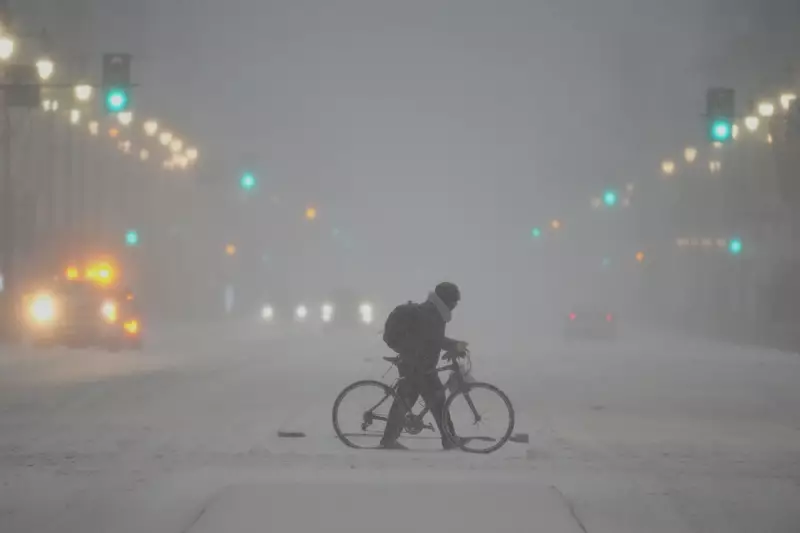
This weekend's storm system differs markedly from its predecessor, which featured minimal wind. The developing cyclone is expected to generate high winds across a broad area, even in regions missing the heaviest snowfall. Gusts could reach 40 mph (65 kph) in the Washington area, plunging wind chills near subzero Fahrenheit (minus 18 Celsius). "It looks like a pretty strong and explosive storm so everybody is going to have some gusty winds," said AccuWeather Senior Meteorologist Dan Pydynowski, noting that inland locations like Pittsburgh will experience strong winds taking daytime temperatures in the teens down to feeling below zero.
Belanger described the system as "more of a classic nor'easter," forming around the U.S. Gulf Coast before crossing into the Atlantic and travelling northward along the coast. The storm's potential strength is amplified by warmer-than-normal waters in the Gulf of Mexico—partly attributable to human-caused climate change—and the consistently warm Atlantic Gulf Stream. "When that happens the storm pulls in more moisture and it gives it more strength," explained Bernadette Woods Placky, Chief Meteorologist for the nonprofit Climate Central.

Arctic Chill Descends Deep into Florida
While the storm's path remains uncertain, the prolonged Arctic chill affecting the Midwest and East is virtually guaranteed to continue through mid-February, with only slight warmups that would still register below seasonal norms. This new weekend storm "is going to take that cold and it's going to spill right down the heart of the Florida peninsula," Pydynowski warned. Orlando is forecast to plunge well below freezing, with a high of only 48°F (9°C), potentially smashing temperature records. Even Miami and Key West will flirt with record cold on Sunday and Monday.
The severe cold outlook for Florida has raised concerns about potential damage to the state's valuable citrus and strawberry crops. "We're going into a brutally cold period," Maue stated emphatically. Looking beyond this weekend, long-range models suggest another storm system could arrive by the end of the first week of February, perpetuating a pattern of bitter cold and snowstorms driven by plunging Arctic air and warm ocean waters.
A Pattern of Consecutive Winter Storms
Meteorologists attribute the East Coast's current predicament to a persistent atmospheric pattern combining frigid Arctic air with unusually warm maritime conditions. "East Coast snowstorms don't happen too often, but when it happens, it happens in bunches," observed former National Weather Service director Louis Uccellini, who has authored textbooks on winter snowstorms. This sequence of storms underscores the volatile and impactful nature of this winter season, with communities from the Deep South to New England preparing for extended periods of severe weather.