The United Kingdom is navigating a treacherous and "messy transition" in its weather today, as the bitter Arctic cold of recent days collides with a front of milder air moving in from the west. This clash is creating a hazardous cocktail of heavy snow, freezing rain, and strong winds across large parts of the country.
Critical Warnings and Forecast Impacts
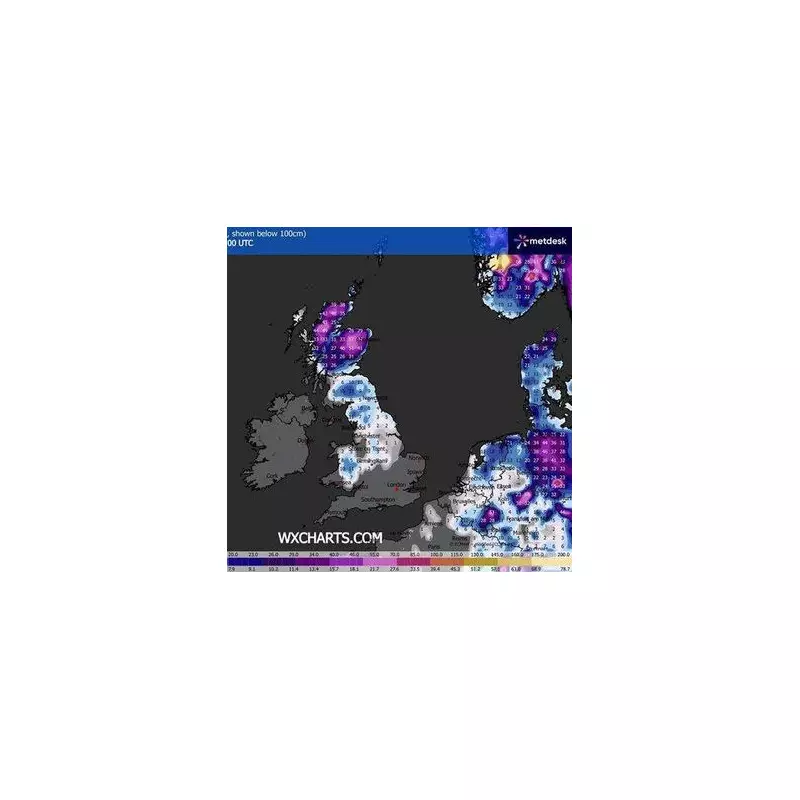
Forecasters have issued a series of severe weather alerts. Most notably, an Amber Warning for snow remains active until 2pm today for parts of northern and central Scotland, covering areas like Aberdeenshire, Moray, and the Highlands. In these regions, an additional 5–15cm of snow is expected at low levels, with a staggering 30cm possible on ground above 300 meters.
A broader Yellow Warning for snow and ice is in force until 3pm, affecting much of Scotland, Northern England, the West and East Midlands, and Yorkshire. A band of snow is moving eastwards, potentially depositing 2–5cm at lower levels and up to 20cm on higher ground before it turns to rain.

Hidden Dangers and Rising Threats
One of the most significant hazards today is the risk of freezing rain. As milder air overrides the cold air at the surface, rain can fall and freeze instantly on contact with the ground, roads, and pavements. This creates "black ice," a nearly invisible glaze that is far more dangerous for drivers and pedestrians than snow or slush.
As temperatures begin to rise, a new threat emerges: flooding. The Scottish Environment Protection Agency (SEPA) and the Met Office have warned that the rapid melting of lying snow, combined with heavy rain, could lead to localised flooding. Yellow rain warnings are in place for Southwest Scotland and Cumbria, where up to 90mm of rain and meltwater could accumulate.
Travel Chaos and Ongoing Disruption
The severe conditions continue to cause major travel disruption. Snow gates are closed on several major routes, including the A939 between Cock Bridge and Tomintoul. National Rail has reported "continued disruption" until at least Monday, with several lines in Scotland and Northern England facing delays due to snow-blocked tracks and ice on the points.
Furthermore, thousands of homes remain without power following the impact of Storm Goretti, and today's heavy snow and high winds are likely to hamper restoration efforts for engineers.
Public health remains a key concern. The UK Health Security Agency's Amber Cold Health Alert has been extended for all regions of England through to noon on Monday, January 12. This highlights the continued risk to vulnerable groups after a week of sub-zero temperatures, which plunged as low as -13°C in Braemar.
The good news is that a change is finally on the horizon. Forecasters indicate that the UK will "say goodbye" to this Arctic air by tomorrow. Temperatures are expected to climb to 9–11C in the south and 6–8C in the north by Monday afternoon, marking a return to more typical, unsettled, wet, and much milder winter weather.