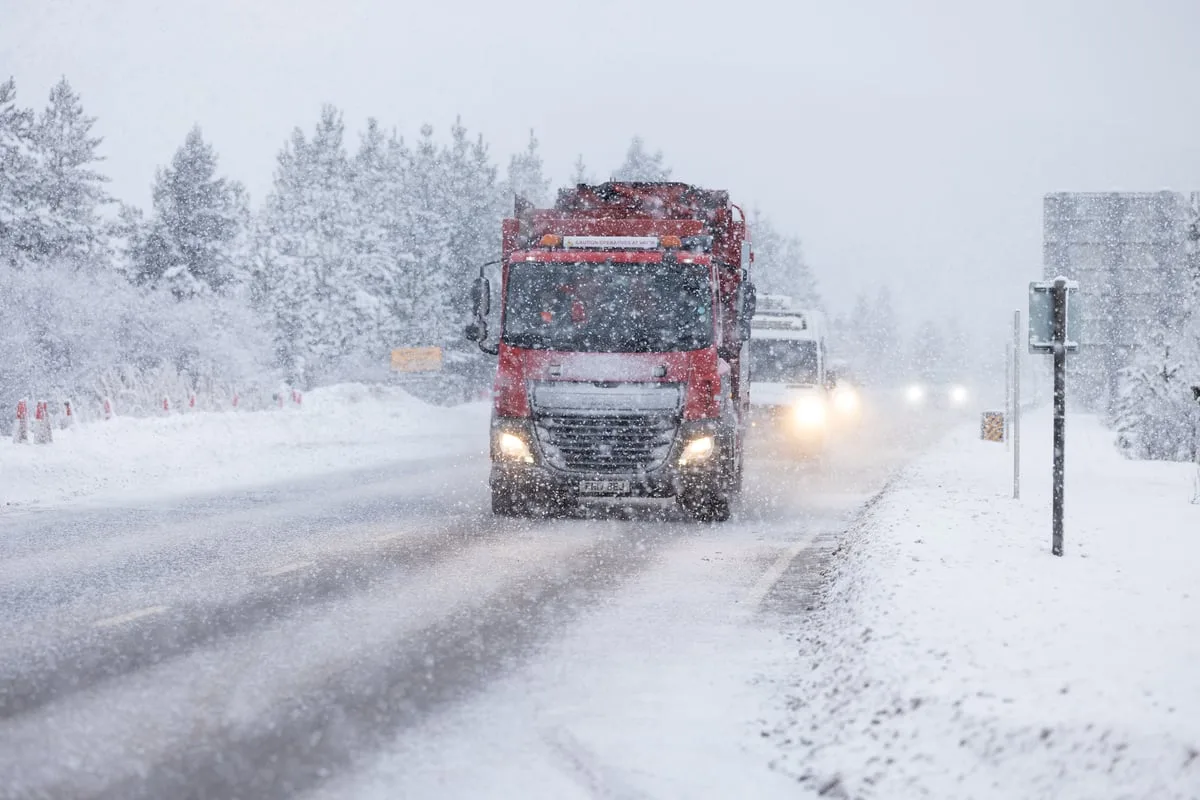
The Met Office has issued a rare red “danger to life” weather warning for Cornwall as Storm Goretti hits the UK with winds of up to 100mph and heavy snow. The warning is in place from 4pm to 11pm on Thursday and warns of life-threatening flying debris, closed roads and railways, and large waves threatening seaside homes.
The storm, named by Météo-France, has been described as a “multi-hazard event” by the Met Office. Up to 30cm of snow is possible in parts of Wales and the Midlands, while wind gusts could reach 100mph in the South West. Weather warnings for snow, wind, rain and ice have been issued across the country, with “disruption and dangerous travelling conditions” expected.
Met Office chief forecaster Neil Armstrong said: “Storm Goretti will be a multi-hazard event, with the most significant impacts from snow in parts of Wales and the Midlands and the very strong winds in the far South West, though heavy rain in some parts of Wales and East Anglia also has the potential to bring disruption to many.” He added: “This is a complex spell of severe weather and I’d advise people in the warning areas to keep up to date with the forecast and messages from local authorities.”
The storm is also expected to bring a “weather bomb”, or explosive cyclogenesis, where central pressure drops rapidly. According to the BBC, Storm Goretti will see a pressure drop of 36 millibars in 24 hours from 6pm on Wednesday, exceeding the 24-millibar threshold. The Met Office said winds in a weather bomb can be “strong enough to bring down trees and cause structural damage”.
Transport disruption is anticipated, with Network Rail and East Midlands Railway planning to close branch lines in the east from 8pm on Thursday. Two Night Riviera Sleeper services have been cancelled. Dan Matthews, Network Rail operations director, said: “We are doing everything we can to prepare the railway for the impacts from Storm Goretti. In more remote parts of our network we’re anticipating the storm impact on roads will mean that our own staff will struggle to reach signal boxes and, potentially, to respond to incidents on the railway.”