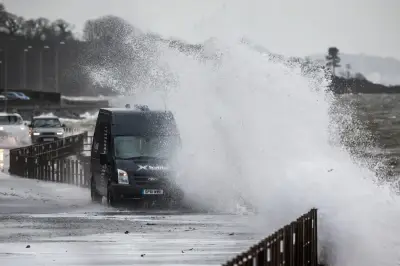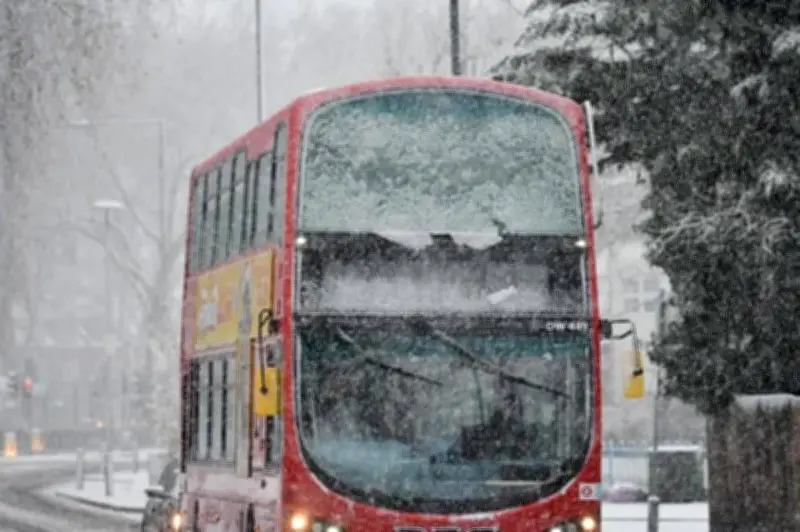
Londoners are being warned to prepare for potentially freezing conditions this winter as a powerful "Super El Niño" disrupts the polar vortex and threatens severe weather patterns across the globe.
The polar vortex is a massive ring of swirling, icy air trapped high in the stratosphere above the Earth's North Pole. Held in place by a strong jet stream, it safely confines the most extreme Arctic conditions to the northernmost parts of the globe.
What is Sudden Stratospheric Warming?
However, things turn dangerous for the capital if this system weakens or fractures. When a phenomenon known as Sudden Stratospheric Warming (SSW) occurs, it can shatter the vortex, sending a blast of bitter, freezing air directly toward Europe.
A major SSW happens when colossal atmospheric waves travel upward from the Earth's surface and crash into the stratosphere. If the polar system buckles this winter, London could face a severe icy snap reminiscent of previous historic freezes, such as the infamous "Beast from the East" in 2018.
High risk of disruption
The chances of an atmospheric disruption are unusually high this year. Meteorological models are currently tracking an imminent, potentially record-breaking event, with forecasting odds sitting between 61% and 86% for a major stratospheric disturbance.
Forecasters warn that while a total collapse is never guaranteed, a disruption of the vortex acts as a catalyst that can ultimately swap London's typically mild winter rain for heavy snow and sub-zero chaos. If the system fractures, the impact on the ground is rarely instant; it typically takes two to four weeks for the freezing air to filter down to the UK.
Potential impact on the capital
Should the system fully collapse, Londoners could face plunging temperatures by late winter. Such a freeze would likely cause major travel disruptions across the capital's transport network and place an immense seasonal strain on household energy bills.
Long-range models indicate that because the planet is experiencing a historically strong climate cycle, a second, powerful signal for a full-scale polar vortex collapse and wind reversal could lock in later in mid-to-late winter.