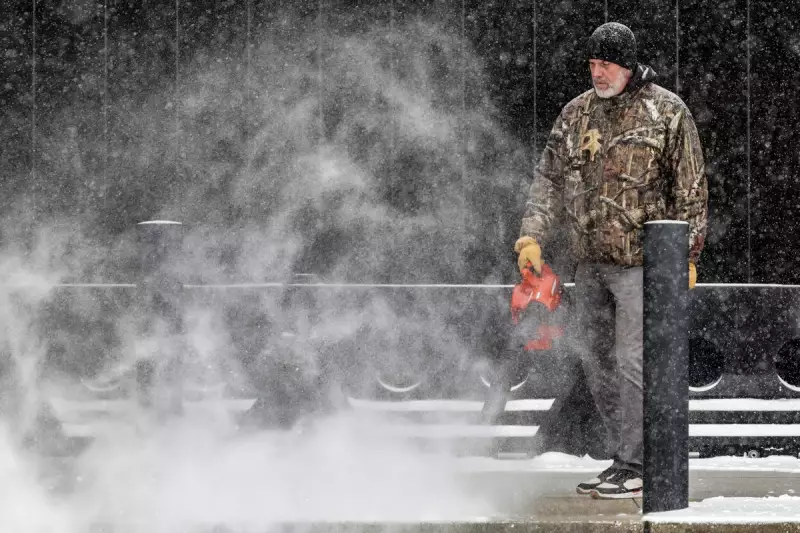
Residents across regions experiencing bitter cold snaps have reported startling loud booms and faint tremors, phenomena meteorologists identify as frost quakes or cryoseisms. These unusual winter events occur when water trapped in soil rapidly freezes during sudden temperature drops below freezing.
Understanding the Mechanics of Frost Quakes
Frost quakes are a fascinating cold-weather occurrence where rain or melted snow saturating the ground quickly freezes. As this water solidifies into ice, it expands, creating immense pressure within the surrounding soil and rock. This pressure eventually causes the ground to crack, producing the characteristic booming sounds and minor vibrations that can be felt as light shaking.
Meteorological Insights and Public Reports
Evan Webb, a meteorologist with the National Weather Service in Louisville, Kentucky, confirmed that his office has received multiple reports of these "loud booms" during recent periods of extreme cold. "I think some people initially wonder if it’s an exploding tree or something," Webb noted, highlighting how unexpected and alarming the sounds can be to those unfamiliar with the phenomenon.

Webb explained that frost quakes are "relatively rare, especially in Kentucky … we don’t get quite cold enough very often to have saturated soil in the winter time to be able to freeze that quickly." He emphasised that while the noises and vibrations can be startling, the events are "mostly harmless" compared to other winter hazards like single-digit temperatures with dangerous wind chills.
Official Communications and Public Reassurance
The National Weather Service has taken to social media to educate and reassure the public about these events. In one post, they clarified: "Those loud booms aren’t paranormal—they’re cryoseisms (Frost Quakes)!" The service notes that the noises can be particularly startling when they occur at night, but they generally pose no significant threat to property or safety.
Key characteristics of frost quakes include:
- Sudden onset during rapid temperature declines below freezing
- Requirement of saturated soil conditions from recent precipitation or snowmelt
- Localised effects rather than widespread seismic activity
- Typically harmless nature despite their alarming presentation
While these cryoseismic events capture public attention during cold spells, meteorologists remind residents that the primary winter concerns remain extreme temperatures, wind chill factors, and associated weather hazards. The phenomenon serves as a reminder of how dynamic and occasionally surprising Earth's natural processes can be, even in familiar winter settings.