Unprecedented Heatwave Engulfs Australia, Shattering Historical Records
Australia's vast interior is currently gripped by an extraordinary and prolonged heatwave, with numerous temperature records being obliterated across the continent. This blistering event has seen mercury levels soar to unprecedented heights, challenging historical benchmarks that have stood for generations.
Record-Breaking Temperatures Across the Outback
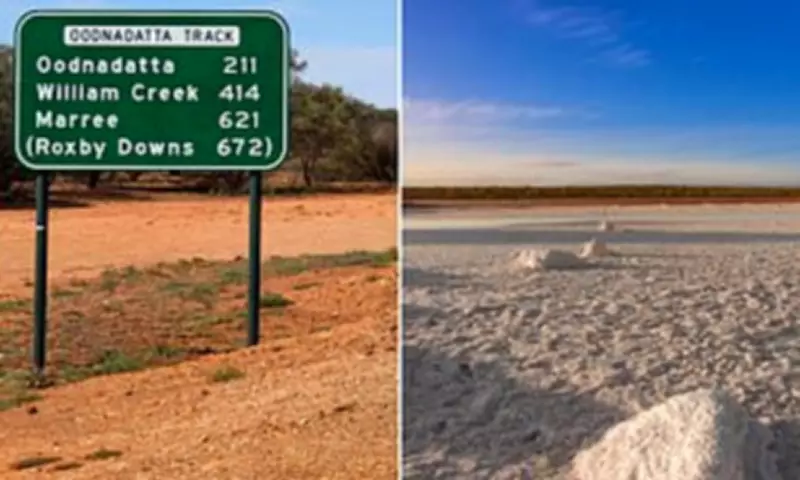
The outback South Australian town of Maree emerged as the epicentre of this extreme heat, recording a staggering 49.8 degrees Celsius. This temperature not only set a new local record but also positioned Maree as the hottest location on the entire planet for that day, according to data from the online world temperatures site El Dorado Weather.
Other locations experienced similarly historic conditions. Roxby Downs reached 49.6C, Woomera hit 48.5C, and Leigh Creek climbed to 48.2C. Crucially, all these figures represent temperatures never before documented in these areas, underscoring the exceptional nature of this weather event.

A Nation Dominates Global Heat Charts
Remarkably, Australia claimed all fifteen of the world's hottest recorded spots over a recent 24-hour period ending at 8am on Thursday. This complete domination of global heat charts highlights how intensely concentrated this thermal event has been across the Australian continent.
Senior meteorologist Dean Narramore from the Bureau of Meteorology explained that this heatwave has broken dozens of temperature records across South Australia, New South Wales, and Victoria over the course of a single week. What makes this event particularly unusual, according to Mr Narramore, is its exceptional longevity.
The 'Blocking Pattern' Phenomenon
'This situation had a bit of a blocking pattern,' the Bureau of Meteorology forecaster told AAP. 'So the heat has just sat over us and just kind of wobbled around the southeastern part of the country with no strong cold front to come in and clear it out.'
This meteorological blocking pattern has allowed heat to accumulate steadily over an extended period, creating what experts describe as a 'heat dome' effect. The absence of cooling fronts has meant sustained exposure to extreme temperatures across affected regions.
Century-Old Records Fall
Mr Narramore emphasised that the records being broken are truly multi-generational, with some having stood for a full century. 'They're not just 10 or 20 years old, they're 30, 50, 80 and in some cases 100 years old,' he noted. 'A lot of the records have been similar to a heatwave back in 1939, so that's going back a long way.'
The significance of these records falling cannot be overstated – they represent thermal benchmarks that have withstood decades of weather patterns until this unprecedented event.
Widespread Heatwave Warnings Continue
Heatwave warnings remain firmly in place for multiple Australian states and territories, including New South Wales, Victoria, Queensland, Western Australia, South Australia, the Australian Capital Territory, and the Northern Territory. Forecasters anticipate another day of extreme conditions, with Maree, Port Augusta, Roxby Downs, and Moomba in South Australia expected to endure temperatures ranging from 47C to 49C.
Other regions face similarly challenging forecasts, with Birdsville predicted to reach 47C, Mildura 46C, Broken Hill 45C, and Wagga Wagga 43C. Among capital cities, Adelaide faces 41C while Canberra contends with 40C temperatures.
Climate Change as a Contributing Factor
Mr Narramore explicitly identified climate change as a significant contributing factor to these extreme conditions. 'Obviously there is background warming so there's more energy and more heat in the atmosphere,' he explained. 'So when the systems align for these extreme scenarios, they are just a little bit warmer and last that little bit longer.'
He further noted that average temperatures across Australia are now between one to one and a half degrees higher than they were a century ago, providing important context for understanding these record-breaking events.

Government Projections and Future Risks
The federal government's National Climate Risk Assessment, released last September, projects alarming increases in heatwave frequency and severity. According to the assessment, the number of severe heatwave days per year would double with 2C of warming and quadruple with 3C of warming. Even more concerning are projections that heat-related deaths could quintuple at 3C of warming.
Relief in Sight, But More Heatwaves Possible
The severe to extreme conditions are forecast to ease for almost all parts of the country by Sunday, bringing a temporary end to the so-called 'heat dome'. However, meteorologists caution that more heatwaves may be in store this summer, with the whole of February and March still to come.
This extraordinary weather event serves as a stark reminder of Australia's vulnerability to extreme heat and the growing impact of climate change on weather patterns. As historical records continue to fall, the need for adaptation and mitigation strategies becomes increasingly urgent for communities across the continent.